They are jornaleros, day laborers who trekked more than 3,000 miles from their native Ecuador, Guatemala, and El Salvador to find hope in Spring Valley, N.Y. The village 22 miles north of Manhattan is a popular terminus for undocumented immigrants seeking construction and service industry jobs.
While ICE agents have arrested many of the arrivals, Jim Waters’ concerns hew more to the existential: He wants to ensure that every person, regardless of immigration status, has access to healthy food.
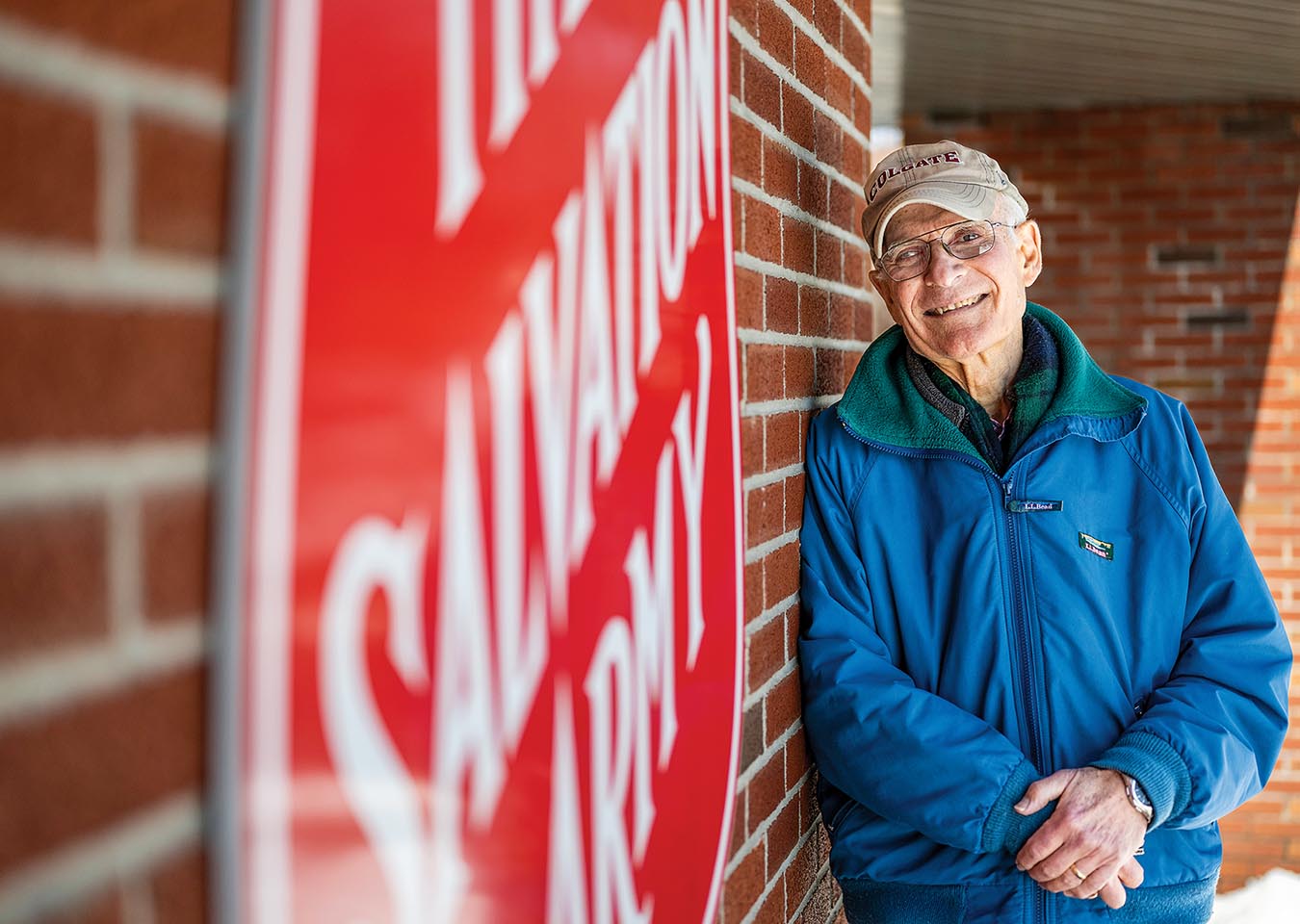
A retirement adviser who is now retired himself, Waters ’69 has volunteered on behalf of the Salvation Army’s Canteen Feeding Program since 1993. He ventures into the community every Saturday behind the wheel of a 15-passenger van packed with cold cut sandwiches, fruit, juice, and day-old pastries donated by the local Panera.
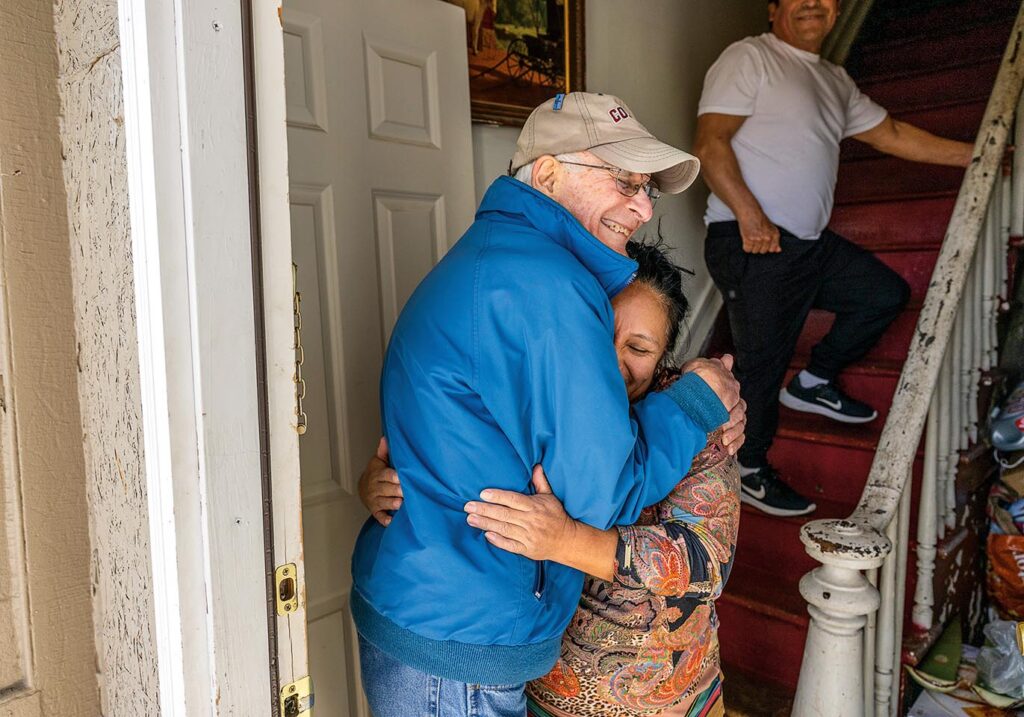
The van visits five sites where would-be workers gather in hopes of earning wages. As Waters and his five-member crew distribute 120 sack lunches, he offers greetings in rudimentary Spanish — often accompanied by an embrace.
“I believe in hugs,” the grandfather of six says. “I have no hesitation, and these guys welcome hugs. These are human beings, just like the rest of us. They warrant the same consideration as all human beings here on Earth.”
Waters first heard about the program in 1992, at his Presbyterian congregation. He eagerly signed on. He’s a person of faith, but he eschews tendencies by organized religion to dispense facile morality. “What counts in life are the actions you take, not beliefs,” he says.
More than 30 years ago, the program catered mostly to Black, white, and Latino people in need. As economics have changed, so too has the makeup of Spring Valley’s arrivals.
The Salvation Army provides food throughout the week, with Waters, who lives in nearby Pearl River, running the five-hour Saturday shift. In 2013 he was honored with the organization’s Others Award, the highest distinction bestowed on a nonmember for community service.
Waters’ sensibilities were shaped in no small part by his time at Colgate, where an introductory political science course “opened my mind to the elasticity of views” in the body politic, he says. “I was 20 years old, and it made my mind plastic and moldable. If you’re a complete human being … you’ve got to have a mind that’s open to people’s different experiences.”
Waters majored in economics and minored in mathematics at Colgate before going on to earn his MBA at the Wharton School of Business.
It’s on the streets of Spring Valley where he’s received some of his most important lessons. Empathy is a constant item on the menu. But empathy is more than an idle intellectual exercise for Waters, particularly given humankind’s evolutionary tendencies to be suspicious of members outside of their own ethnic “tribe,” he says.
Waters overrides such adaptations with a meal, a smile, and a moment of shared humanity. At the same time, he doesn’t get waylaid by the larger political and social headwinds.
“I recognize that there is very little I can do about the overall world in which I live,” he says. “I’m glad to do my tiny thing to make life a little bit easier for people.”