

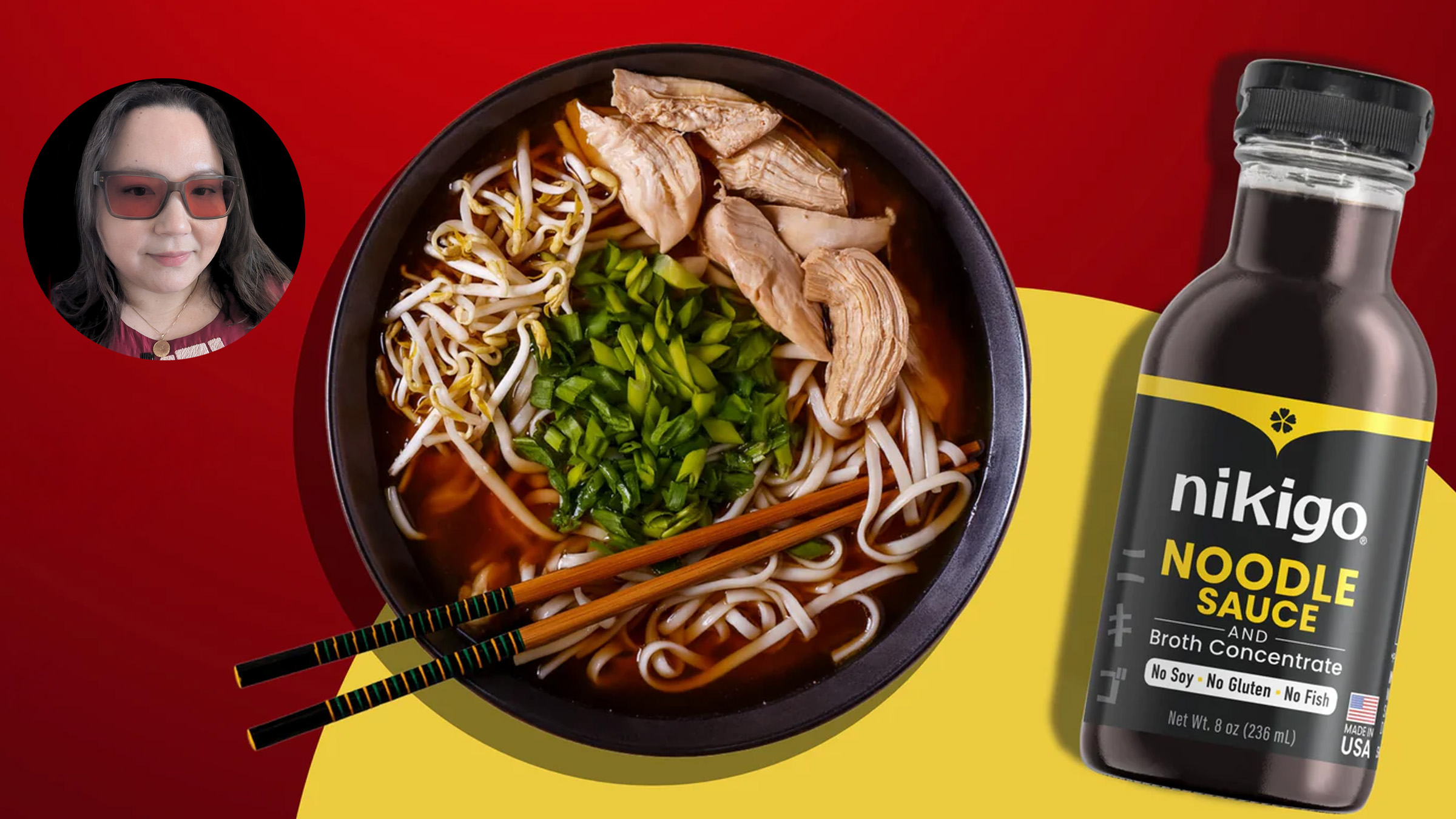
In her 20s, Nicole Gordon ’10 committed several years to taking a closer look at her health — specifically focusing on food allergens. “I wanted to try to see if it was food that’s making an impact,” she said on a recent episode of Colgate’s podcast, 13. She discovered that she had a legume allergy, but she also loved Asian cuisine, so, with the help of her family and their palates, Gordon developed Nikigo, a soy-free alternative to soy sauce, in 2021. In 2022 she connected with a network of alumni through the University’s Thought Into Action incubator to grow her business and, eventually, partner with one of the largest mushroom farms in the country.
Learn more about Gordon through these snippets from the 13 conversation:
A Health Crisis Turned Catalyst
“During my junior and senior years at Colgate, I developed debilitating migraines and all these other health issues…. Once I figured out the food allergies, it really was night and day for my health. All of a sudden I had energy, I didn’t feel sick. I just felt great.
“I’d written off most Asian food at that point. Then I heard about the grandchild of one of my mom’s friends who couldn’t eat soy or sesame, and I thought, ‘I can’t imagine a baby having to write off [those foods] for the rest of her life.’ I thought, if I use unusual ingredients, I bet I can make allergy-friendly products that taste delicious. I was like, ‘Let me go to the store and buy a whole bunch of mushrooms and see what I can do.’ Pretty quickly we had a prototype. It didn’t taste anything like the original, but it was enough of a way there that it was like, OK — we’re all in on this.”
What Nikigo Is Made of — and Why
“When you’re making a product for people with food allergies, you have to live it as if you are the consumer. It needs to be allergy- friendly by true ethos, not just ticking boxes. I did not want a soy sauce alternative that was also a legume, because there’s so much cross-reactivity with legumes. Nikigo is just mushrooms, sea salt, and water. And no, it doesn’t taste like mushrooms.”
On Moving to ‘The Mushroom Capital’
“[In 2022] I realized that if I wanted this to succeed, I needed to move to where the mushrooms grow. Chester County, Pa., is basically the land of mushrooms in America — about 60–70% of U.S. mushrooms are grown here … [which] was great for developing relationships with the mushroom industry.”
Thought Into Action and a Turning Point
“In 2022 there was a performance by one of the [Colgate] a cappella groups very close to us. I ran into [TIA mentor] Jane Porter ’74, who lives in this area. She got a chance to try Nikigo, and she’s like, ‘I really think that TIA really might be able to help you take the next step.’ So I sent off an email and managed to jump through the necessary hoops to present at the TIA showcase in 2024. After that we were about 75% of the way handshaked to a deal that should have gotten us into production. But about two weeks after the showcase, for certain reasons, that deal fell apart. That’s really where the [TIA] mentors stepped up. Now we’re partnered with one of the largest mushroom farms in the country. Our product is going to be farm-to-bottle in a dedicated production facility. That’s coming fully on board very soon.”
Why the Product Matters
“The first thing I made with Nikigo was Korean short ribs. I did actually cry. It was the first time I’d had it in more than five years — it was like the taste of childhood.
“We had somebody come by our table at [the Specialty Food Association’s Fancy Food Show] in June who’d been recently diagnosed with a soy allergy, and she got to try it, and she was getting teary-eyed herself. She said ‘I thought I had to write that [type of food] off in my life, and now I don’t.’”