As a youngster in Fayetteville, N.Y., Craig Williams ’76 and his siblings piled into the family station wagon for trips to places like the Canal Museum in Syracuse and historic Fort Ticonderoga on Lake Champlain. That sturdy station wagon would also take him each Saturday to a not-so-historic place: the town dump. Williams was fascinated by what was piled high there and what stories lurked among the debris.
This fascination would later be stoked by a history degree from Colgate and a job with former professor of history and archivist Howard Williams ’30 (no relation) in Case Library.
“I spent afternoons working in the library archives with Howard,” Williams recalls. “I was a sponge.”
The history degree would turn into a 31- year career at the New York State Museum in Albany. One of his projects, involving suitcases owned by patients at a shuttered psychiatric center, drew nearly a million visitors, inspired books, and even led to a theatrical production.
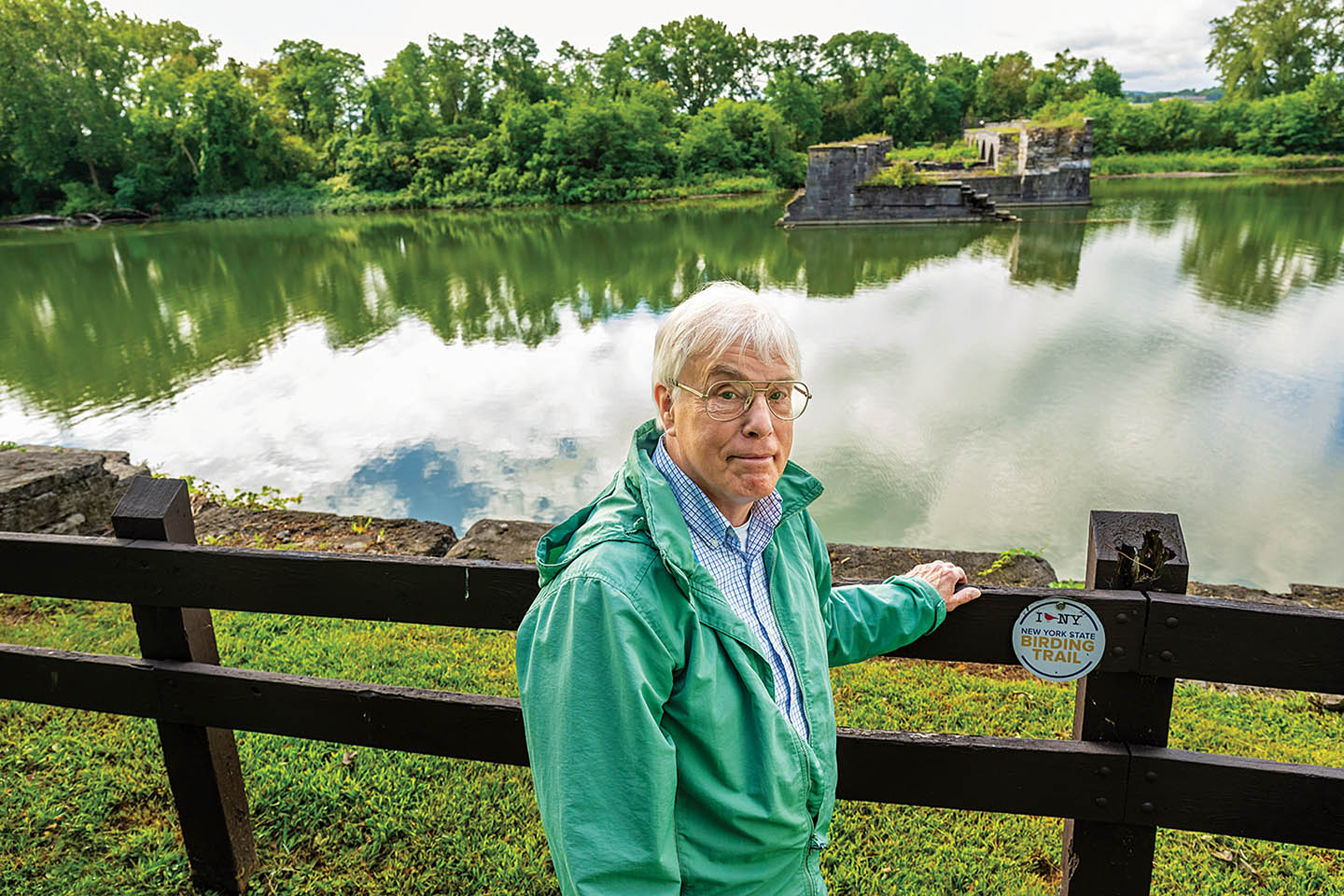
Williams retired from the museum in 2014 but continues to fan his passion for history by volunteering for the Canal Society of New York. As it happens, the town dump in Fayetteville he visited so often as a kid was along the old Erie Canal. This familiarity bloomed into a love affair with the waterway that transformed America and now celebrates its 200th birthday.
In his 53rd year with the Canal Society, Williams is now its vice president, and he’s spent innumerable hours at the society’s Erie Canal Heritage Park at Port Byron.
“Last year we had visitors from over 50 countries,” says Williams. “You could have a family visiting from Germany or South Asia and, invariably, the little kids will start singing ‘Low Bridge, Everybody Down.’ The Erie Canal has a powerful cachet.”
Williams leads popular tours along the canal, which was completed in 1825 and originally stretched 363 miles from Buffalo to Albany (it’s since been shortened by just a few miles). There are hundreds of events this year celebrating its 200th birthday, from concerts to kayaking to a World Canals Conference.
Williams points out that while the Erie was built using designs and construction practices modeled after canals in Europe, it was unique in that it was a public works project.
“To coordinate the paperwork, contractors, payments, accounting — none of that had happened here before at that scale. To pull together those human resources into a common effort, that’s really remarkable.”
While people might know the role Governor DeWitt Clinton or engineer Benjamin Wright played in building the canal, Williams explains that there was a cast of thousands involved in its construction.
Collection A1125 in the state museum archives comprises 11 boxes with thousands of receipts, contracts, notes, and other paperwork from 1810 to just after 1825. Williams was the first person to dig into it (pun intended).
“There are receipts for people making shovels, supplying hay, providing canvas, or doing laundry — all connected to the canal. There’s a receipt for painting a bridge in 1825, probably for the grand opening. And the guy who signed that one just happens to be [religious leader] Brigham Young.
“That commonality, that shared experience, is what the canal means to me.”
A conversation with Williams about history can’t stop at the canal’s edge. It shifts to the idea of empathy and to his role in the preservation of 400 suitcases left behind by Willard Psychiatric Center patients — each filled with fragments of a forgotten life. Instead of discarding them, he brought the entire collection to Albany.
An exhibition he oversaw, Lost Cases, Recovered Lives, drew 900,000 visitors to the state museum in 2004. “You would look at these everyday artifacts and immediately feel empathy toward that individual,” Williams says. “That, to me, was an incredibly powerful example of history at work.”
Whether it’s working on a museum exhibition or explaining the construction of an aqueduct along the Erie Canal, Williams finds satisfaction in bringing the past — and the sometimes forgotten — to life.
“There was a plethora of ordinary people who had an impact on the canal, folks you wouldn’t even think about. It’s this common heritage that’s always been approachable and that we still can experience today, some 200 years later.”
Did You Know?
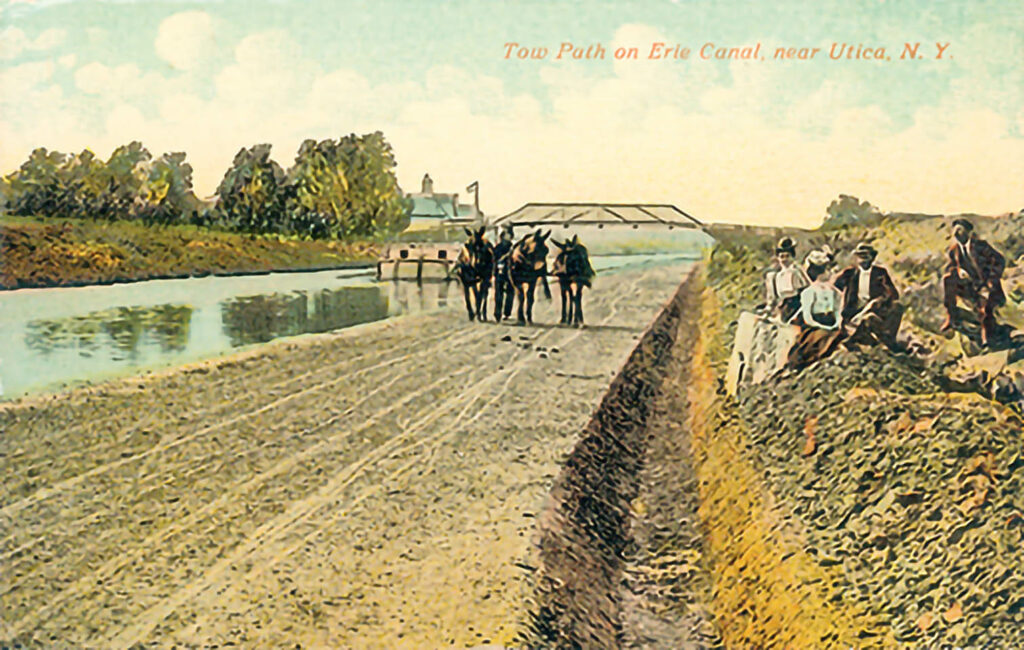
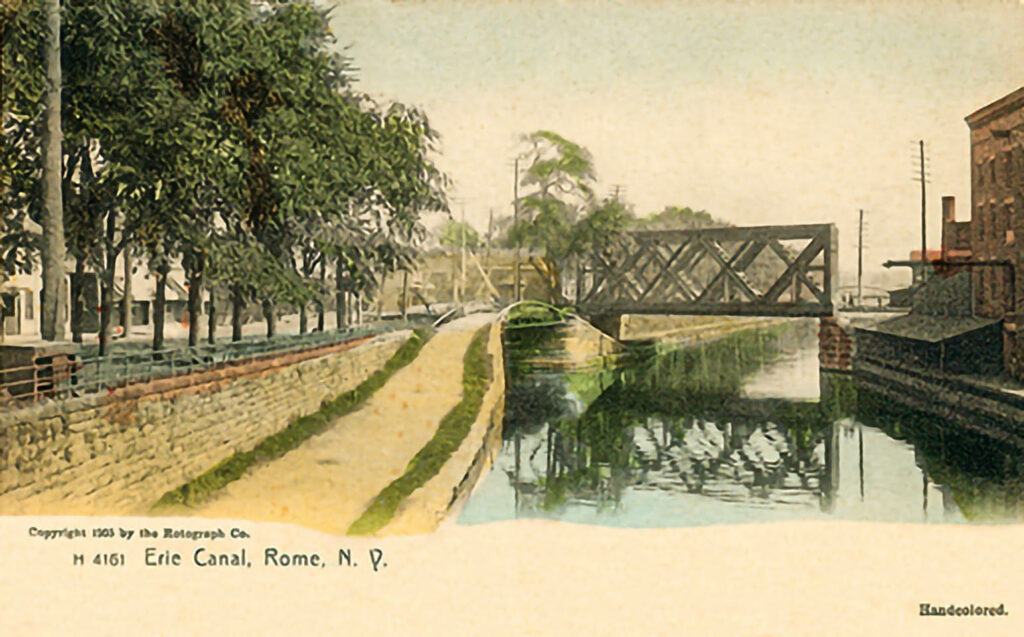
→ The Erie Canal was dug almost entirely by hand using shovels, picks, and wheelbarrows. Construction began July 4, 1817, in Rome, N.Y. (30 miles from Colgate).
→ The canal climbed almost 600 feet from Albany to Buffalo using 83 locks.
→ Critics mocked the canal for being unrealistic and costly, but it repaid its $7 million cost ($200 million in today’s dollars) in just nine years through tolls.
→ Cities like Rochester, Syracuse, and Buffalo exploded in size — Buffalo’s population grew 20-fold in two decades.
→ Traveling from Albany to Buffalo in 1825 took five days on the canal compared to two weeks by stage coach.
→ Thanks to the canal linking the Atlantic to the Great Lakes, New York City became the nation’s busiest port and commercial capital.
→ The Erie is now part of New York’s canal system that’s used primarily for recreation, though General Electric in Schenectady still uses it to transport massive turbines.