

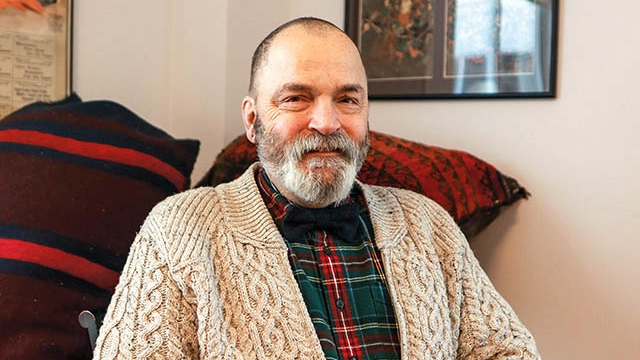
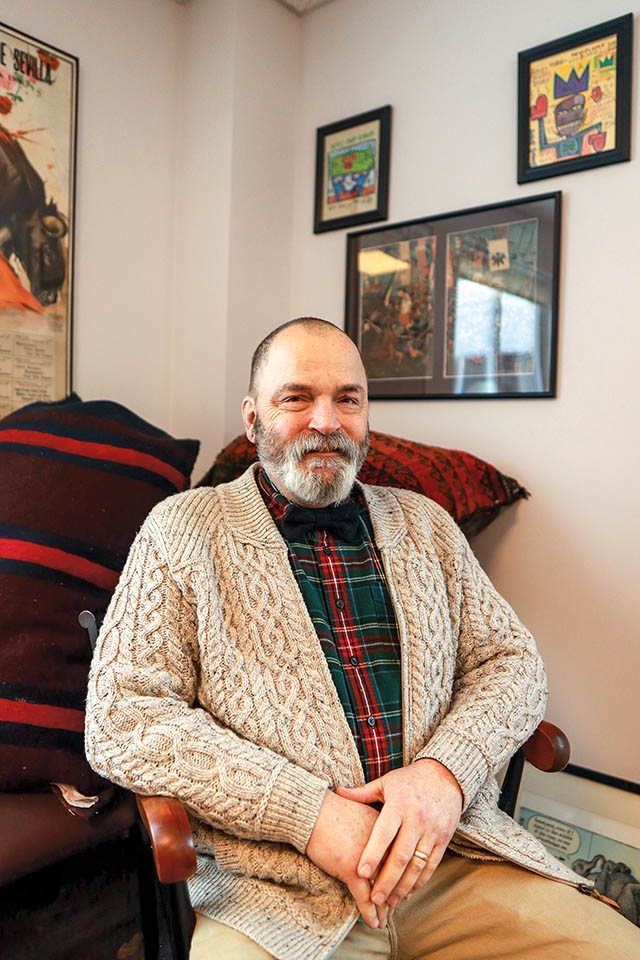
When Rick Berger ’88 crossed the stage on commencement day in May 1988, he wasn’t just celebrating the completion of his history degree. He was marking five months of sobriety.
Now more than 37 years sober, Berger has made a career helping others navigate the path to recovery. A certified addiction counselor and an instructor of addiction studies and diagnostics at Williams College, Berger embarked on a new venture this spring with the opening of Greylock Recovery, a rehabilitation center in Williamstown, Mass. The inpatient center addresses a growing need in rural New England — a region hit hard by the opioid crisis — and specializes in treating substance use disorders related to drugs and alcohol.
As the center’s director of clinical services, Berger says his treatment philosophy is informed by his own experience — and focuses on building support systems for patients and treating underlying mental health issues beyond substance abuse.
Here’s more on Berger’s approach.
“In the traditional 12-step model, a lot of oxygen is sucked up treating the fire of addiction in the individual patient, and not enough time is spent addressing the support systems these people have when they leave treatment. The Betty Ford Center has done very good work with bringing in families, and there are adjacent recovery groups for family members, but we’re taking it further at Greylock. We have educational programs for family and friends of people with substance use disorders and a weekly Zoom meeting that teaches people how to be supportive while setting effective boundaries. The data bears this out — the more support a person has when they leave treatment, the more likely they are to be successful.
“When people come into recovery, they have an awful lot of shame, stigma, and guilt. But we’re learning more and more about how [substance use disorder] is a brain disease, not a moral failing. Nobody says, ‘Boy, I can’t wait to wake up one morning and find myself addicted to drugs.’ It comes on slowly, and then it comes on quickly. In my opinion, medication-assisted therapies have revolutionized what we do with treatment and, along with education, can help us treat the brain disease at the root of the substance use. It also helps that there are folks who are living out loud in their recovery and are normalizing sobriety. That’s important progress.
“There’s a wall people tend to put up when talking to a counselor. My own experience in recovery can help to break that down more quickly, though skilled counselors are used to working through that [wall] whether they’re in recovery themselves or not. My personal story gives me a little bit more insight and informs how I practice, but it’s not the most important thing. The most important thing is simply being empathic and finding out what works best for the person we’re working with at that moment.”