

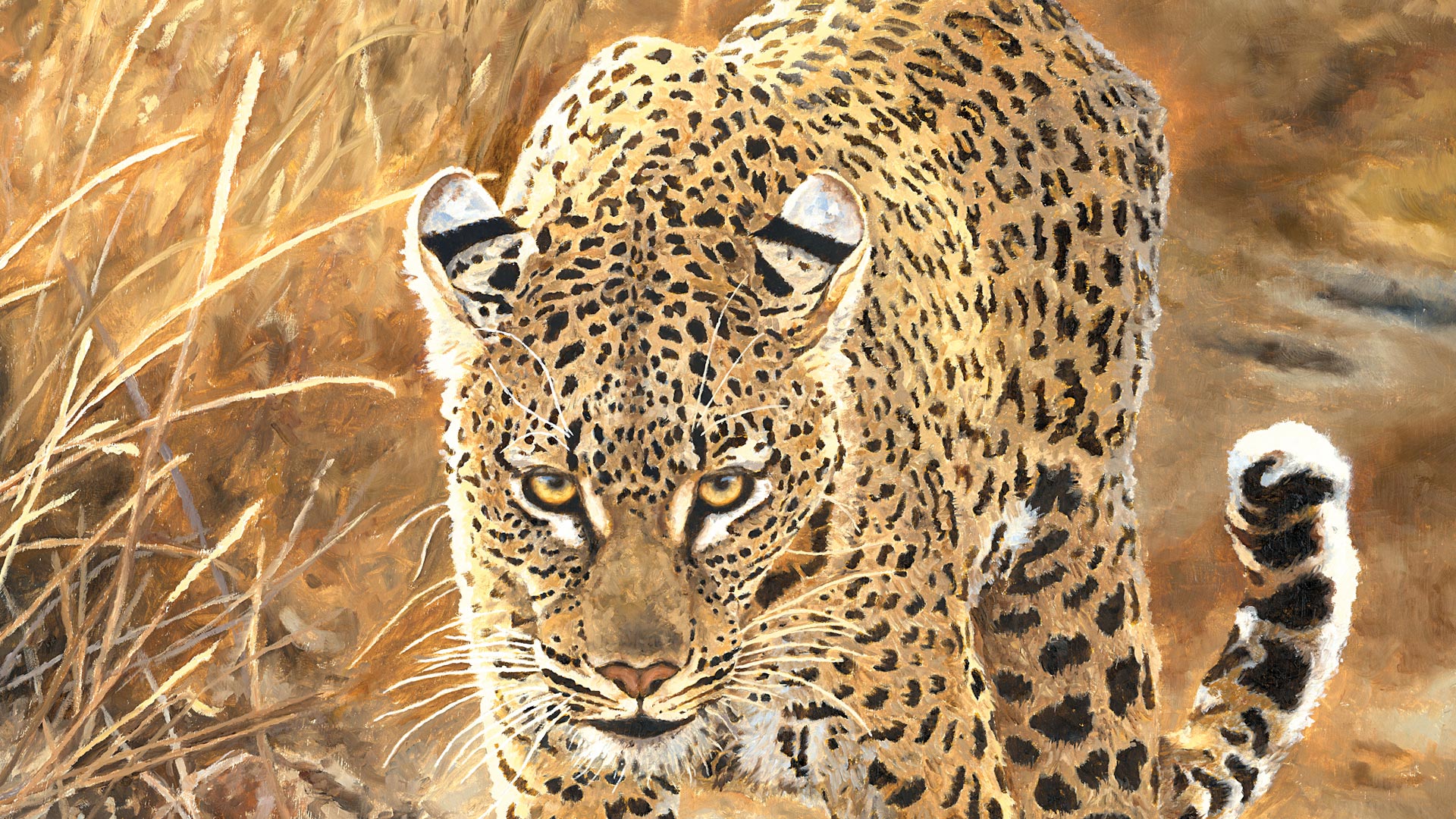
If you spend enough time observing wild animals, you might start to wonder: Are you following them, or are they following you? This is precisely the question that fine oil painter Linda Besse ’81 explores in Tracking, a portrayal of an interaction between a leopard prowling the African plains and a human observer.
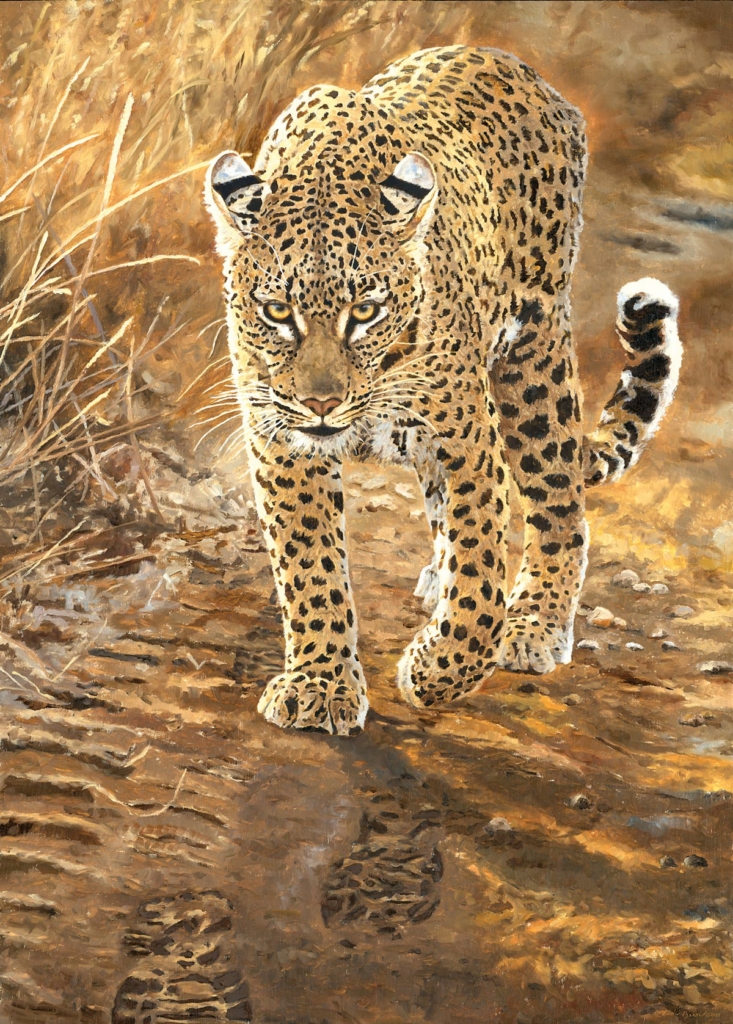
Besse, who encountered the subject firsthand, was inspired after seeing it during an African safari. Captivated by a ripple of tire tracks beneath the leopard’s paws, she snapped a photo to reference in the painting. “In the final product, I added some footprints to visualize the interplay between tracking an animal and, maybe at the same time, being tracked by them,” she says. Using a wet-on-wet paint technique, Besse blended the lifelike rendering of spotted fur amidst a field of golden grasses, positioning the animal moving toward the viewer.
Besse attributes her skill for rendering accurate portrayals of nature scenes, in part, to her time researching geology at Colgate. “Studying geology develops a keen observational eye,” she says: “Mountains have structure, rivers change the landscape, and plains can be remnants of a particular sedimentary layer. All of that comes into account for a painting depicting the natural world.”
It wasn’t until a later trip to Hawaii with her husband that she, without formal lessons, “just went for it,” beginning to paint in her free time. “On that trip, I saw someone painting outside, and I thought it looked like fun,” she says. “So I went home, bought the art supplies, and started painting.” Today, she lives outside of Spokane, Wash., where she is surrounded by muses — deer, coyotes, and wild turkeys — right in her backyard. Her portrayals of wildlife have merited several awards, including honors from the American Academy of Equine Artists and Oil Painters of America.