

I graduated from Colgate as an English major with a plan of attending either law school or business school. I was never one for studying science; I was firmly in the liberal arts camp. Sure, I had always loved the outdoors, camping and hiking, but not as a course of study.
As time wore on, I got more and more interested in the natural world. I started learning about tree identification. I learned how to identify the North Star in the night sky. (Hint: It is not the brightest object in the sky, not even close. But once you spot the Big Dipper, it is pretty easy to locate.) I joined the Madison (Conn.) Land Conservation Trust and ended up serving six years as president.
The land trust received a request from a scientist at Southern Connecticut State University (SCSU), Steven P. Brady, to use its land to collect wood frogs (Rana sylvatica) so he could bring them to his lab for testing (how far they could jump, how tightly male frogs could hold female frogs, etc.), then return them to their home ponds. I contacted him and asked if I could tag along on his next trip to the ponds so I could learn more about his research.
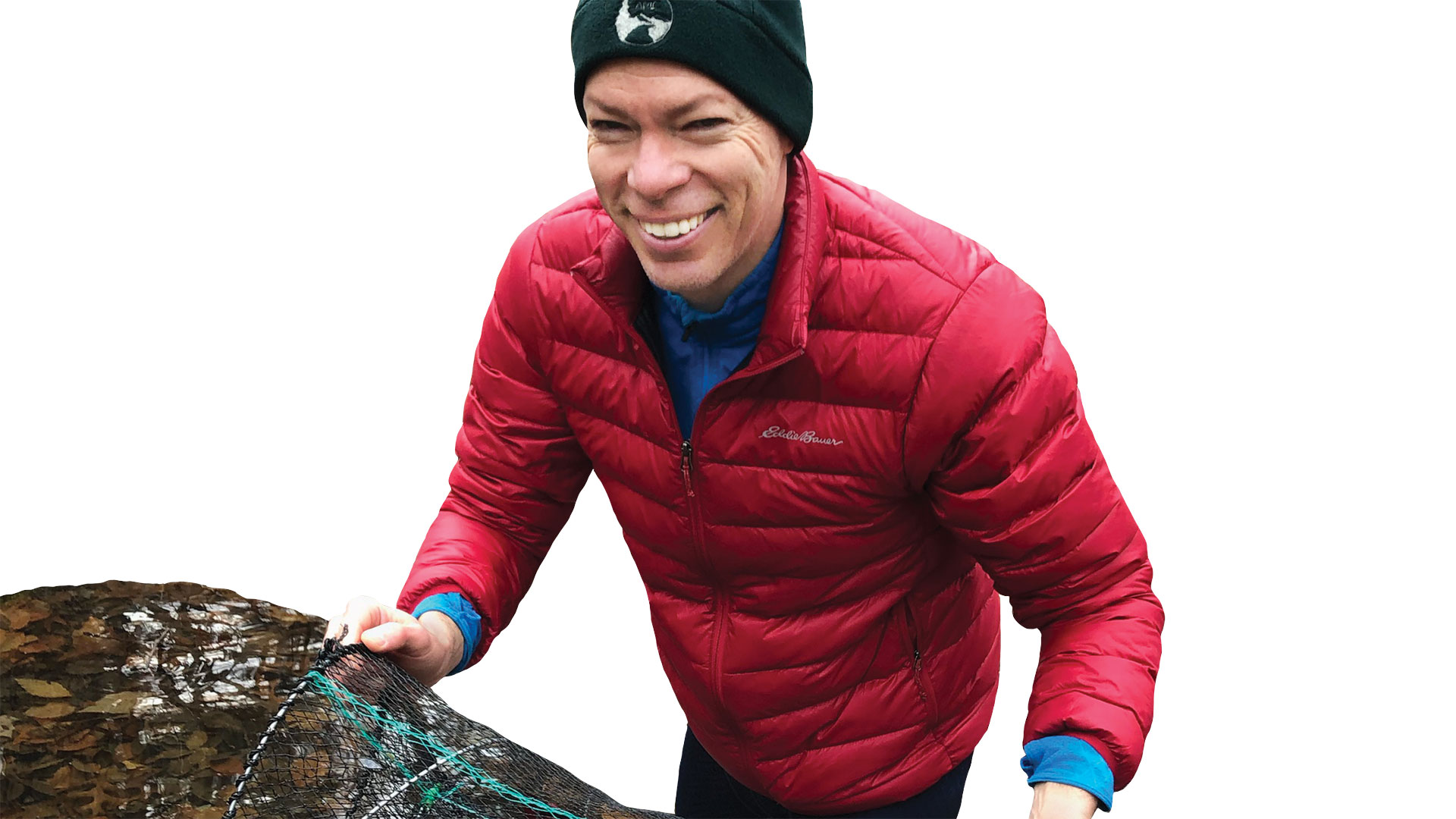
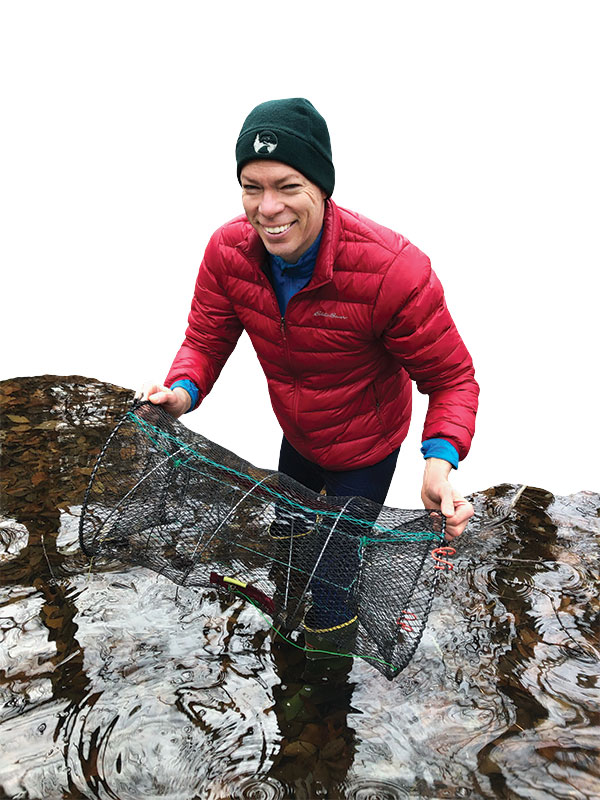
He let me accompany him on his rounds to collect frogs from eight different ponds. I offered to retrieve the frogs and deliver them to him to be tested, so for the rest of that mating season, I was in charge of the collection and identification of the wood frogs for the project.
The focus of the study, published this year, was the effects of road salt on amphibians in New England. Our study found that wood frogs living adjacent to roads are becoming severely bloated with edema during the spring breeding season, and this effect appears to be a direct consequence of road salt runoff. Bloated frogs are heavier and cannot jump as far as do unaffected frogs from unpolluted ponds. This detriment to locomotion may be a factor in the population decline. If you consider that salt accumulates all winter, then by the March/April breeding season, it is at its height, just when embryos and larvae (tadpoles) are developing.
The full article, “Salted Roads Lead to Edema and Reduced Locomotor Function in Amphibian Populations,” was published in the international journal Freshwater Biology, and I am listed as a co-author.
My experience with these researchers was fun, interesting, and rewarding. I spent several weeks alone in nature, I learned to identify the calls of all the frogs native to Connecticut, and was more and more amazed as I learned about those fascinating creatures. I was particularly taken with one aspect of wood frog’s freeze tolerance, and plan to sponsor a study through SCSU to examine in greater detail the role of urea in helping wood frogs survive the winter.
When Maloney isn’t in the woods studying frogs, he works as an insurance broker.