

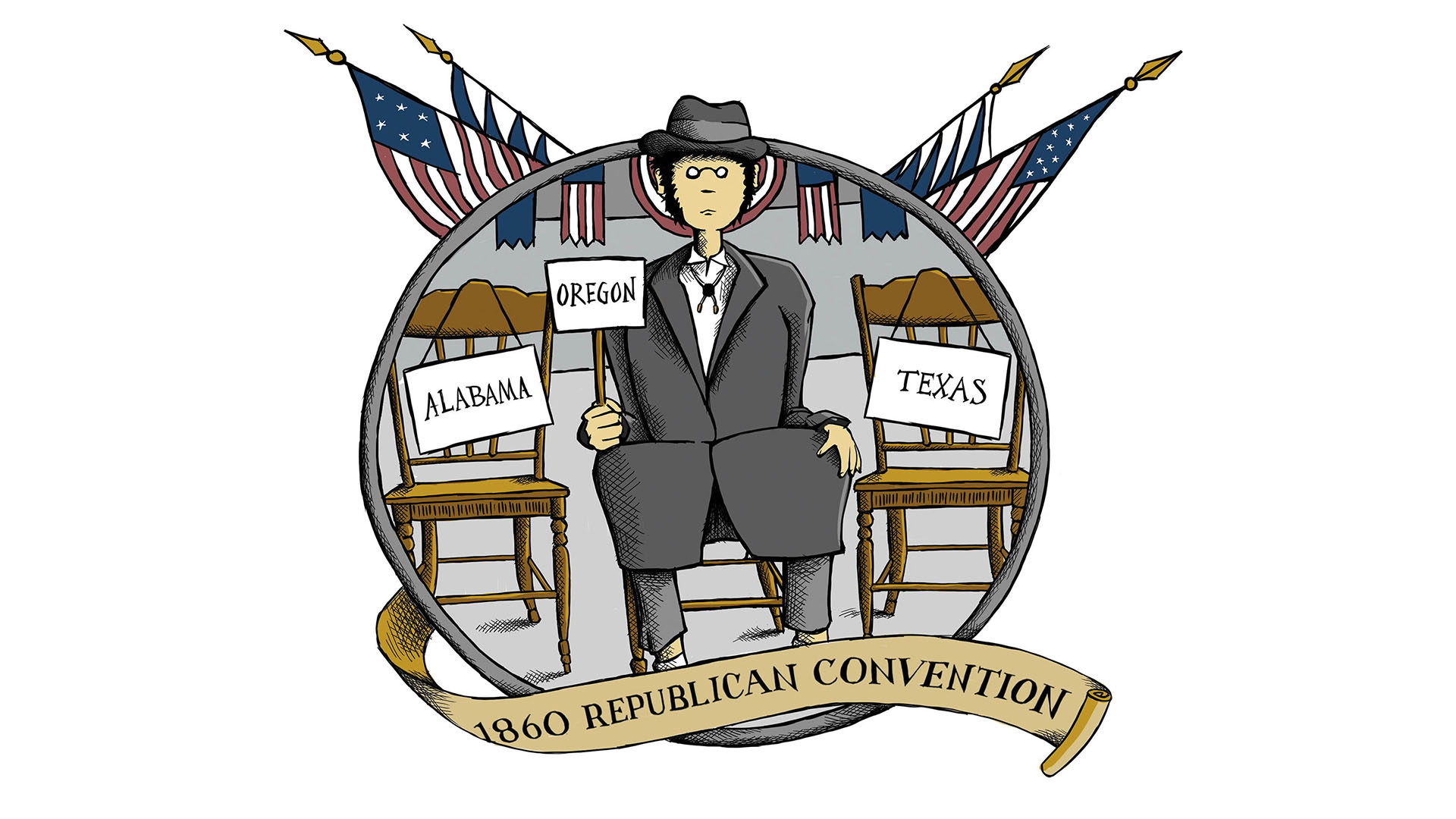
Imagine late May 1860, on the cusp of Abraham Lincoln’s presidency. The Republican National Committee, running low on funds and scrambling to fill their seats, asks you — a rising senior at Colgate (then Madison University) — to stop by Chicago to partake in their pre-election convention. Someone has to fill the committee-alloted seat, and you just happen to be traveling back east from Oregon City, Ore., to Hamilton, N.Y., to resume your theological studies. So you do what 23-year-old Frank Johnson, Class of 1861, did: You agree to make a pit stop in Illinois.
Held to nominate the Republican Party’s candidates for president and vice president, the 1860 Republican National Convention was one of the emptiest in American history, missing Southern delegates who withdrew due to the party’s anti-slavery platform. Selecting a reliable presidential candidate, then, depended on gathering the most complete committee possible — even if it meant pulling in a student. With six seats allotted for Oregon, the state faced a special challenge: it was distanced from Chicago by several weeks of travel. Because Johnson was already planning to pass through that area on his way to Hamilton, he could stop by.
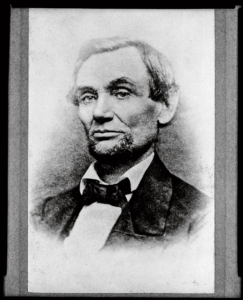
When the committee finally met at the convention, the ragtag composition of their delegates made all the difference in determining a historic presidency. At the outset of the convention, it was assumed that Sen. William H. Seward (N.Y.) would be the front-runner. But it was ultimately his opponent, Abraham Lincoln (Ill.), who consolidated the most votes from committee members. This phenomenon and Johnson’s unexpected appointment to the committee are explained in The Lincoln Miracle: Inside the Republican Convention That Changed History by Edward Achorn (February 2023, Atlantic Monthly Press).