

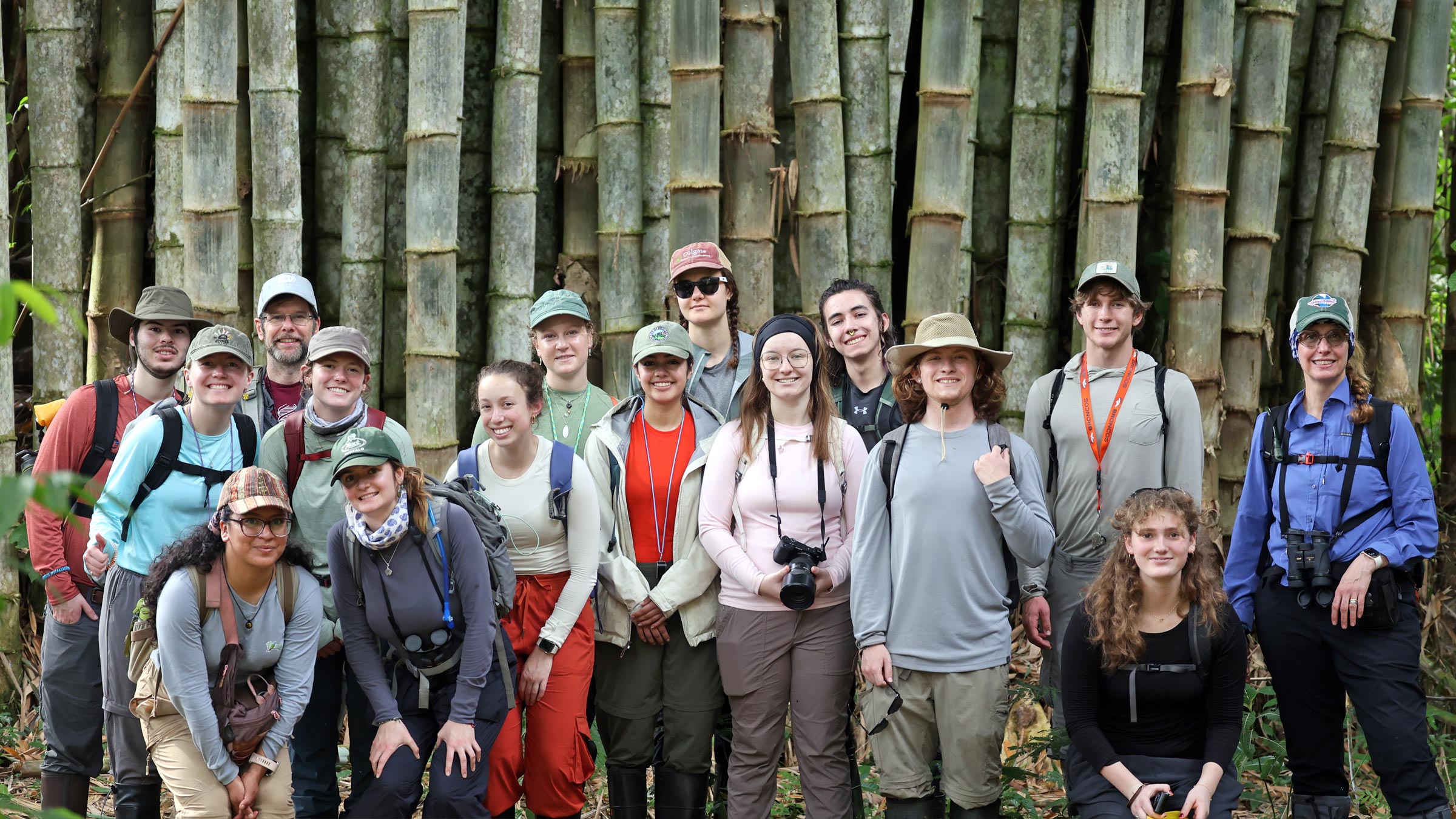
Students leapt out of their textbooks and across the hemisphere this past winter. After a semester studying ecological theory and research methods, students in professors Catherine Cardelús and Eddie Watkins’ Tropical Ecology extended-study course took a three-week excursion across Peru, conducting research from the Amazon rainforest to the Andes Mountains.
Students tackled rigorous preparations before embarking: designing research projects, getting comfortable with advanced statistics and biology, and gaining sociocultural insight into the regions they would explore. The greatest challenges, however, came in the field: braving harsh and unpredictable weather, gathering data in taxing conditions, and developing presentations and papers on their findings under the canopies and atop mountains.
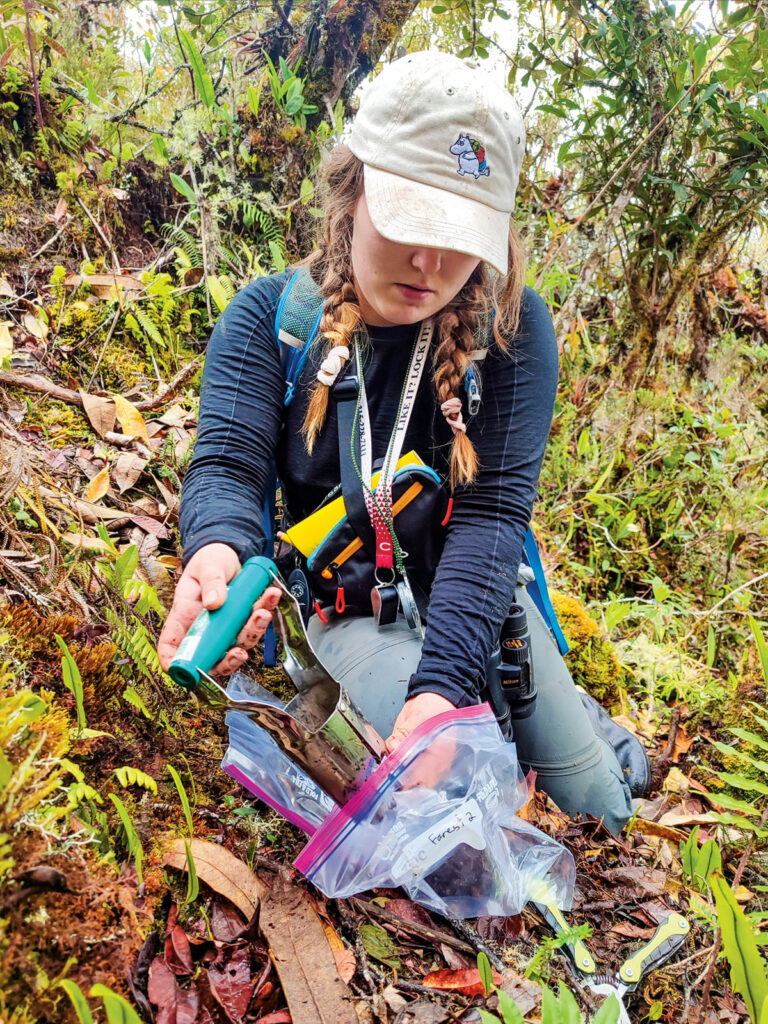
The course’s central mission is immersion: Students physically interact with the ecosystems they studied in the fall semester, getting their hands dirty as they learn beyond theory. Advanced scientific coursework and background provided a solid foundation, but nothing could fully prepare them for the realities of fieldwork — anything goes in the jungle and on the mountain.
Cardelús, a field biologist, teaches the course from a theoretical standpoint, while engaging students in interactive field research, sparking their passion for physical environmental learning. “Students learn to think critically about theory from the literature, and then they test those theories in the ecosystems themselves,” she explains.
Across three distinct elevational gradients, students learned to watch birds, collect and analyze soil samples, and measure trees, facing unforeseen challenges at each site. There was thin air and freezing temperatures at higher elevations, while lower elevations welcomed the researchers with relentless rain, stiff humidity, and limited amenities. While adapting to these conditions, students balanced active research, precision in new data analysis, and creating group and individual presentations, while moving between lab sites and elevations with all their gear. The real test of the grueling trip — or “crucible,” as Cardelús endearingly calls the exploration — was measured in their mental strength and scientific growth.
“Many students don’t realize how well prepared they are or how capable they are of success. Watching [students] discover more about themselves is the absolute most exciting part,” Cardelús says.
The Peruvian excursion began in Cusco, with a highlight being a two-day boat trip from Manu to Tambo Blanquillo and the Los Amigos Biological Station. This experience allowed students to absorb the glory of the forests while also confronting the impacts gold mining has — an ongoing ecological issue they studied throughout the semester.
“The time we spent in nature gives us more reason to go out and protect it,” reflects Daytona Doherty ’26. “We do not protect what we do not know. You can’t experience this just by reading a book; you need to go out and be a part of it.”
The trip inspired Doherty, a biology and psychology double major, to consider new protection strategies for these diverse ecosystems through the lens of conversational psychology — studying the reciprocal relationship between humans and nature to promote sustainable and productive climate action. Students connected their classroom work and realworld experiences to explore the impacts of climate change on biodiversity, cultures, and local communities.
Amid grueling hikes, 4 a.m. wake-up calls, and mosquito-ridden nights, the cohort became a family. Students supported each other through humor, capturing memories and challenges on their blog, and soaking up unique aspects of the terrain together.
“Fieldwork in the rainforest was challenging both mentally and physically, from smelly clothes to fear of being stung by a bullet ant,” reflects Lottie Allen-Emerson ’28. “But it brought me closer to my peers in a way I never would have without this shared experience. You learn a lot about a person when you’re pooping in the rainforest while hunting for dung beetles, or birding at 5 a.m., looking out across the cloud forest, but also in the simpler moments, like sharing meals, enjoying a view, or playing cards between project meetings.”
Cardelús emphasizes student independence and curiosity as a key component of the trip. “I love watching students surprise themselves at their own capacity — taking risks and embracing the discomfort,” she says. “They start out relying on [professors], but by the last site, they don’t need me anymore, and they can’t believe it. That is my whole goal.”