

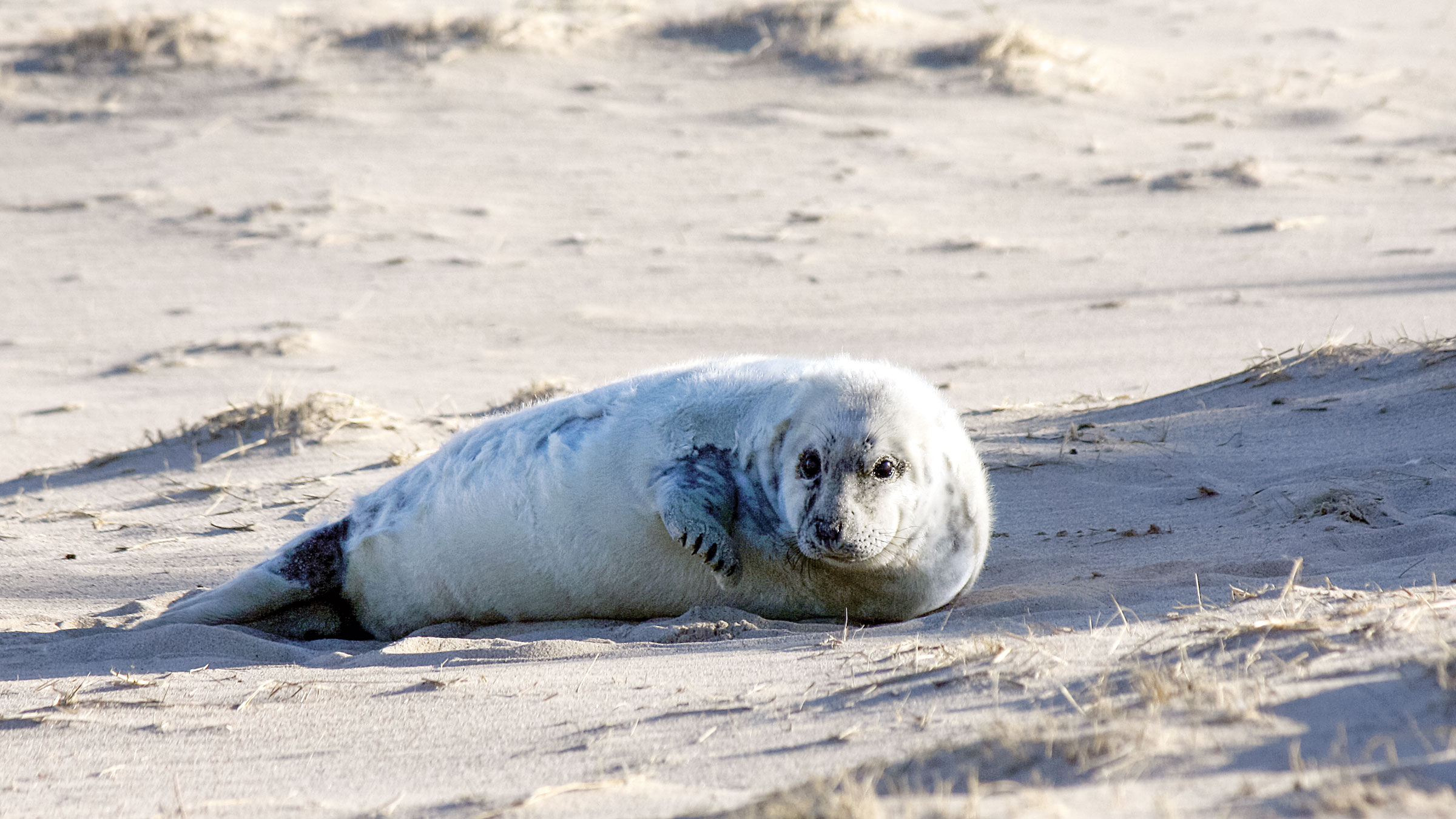
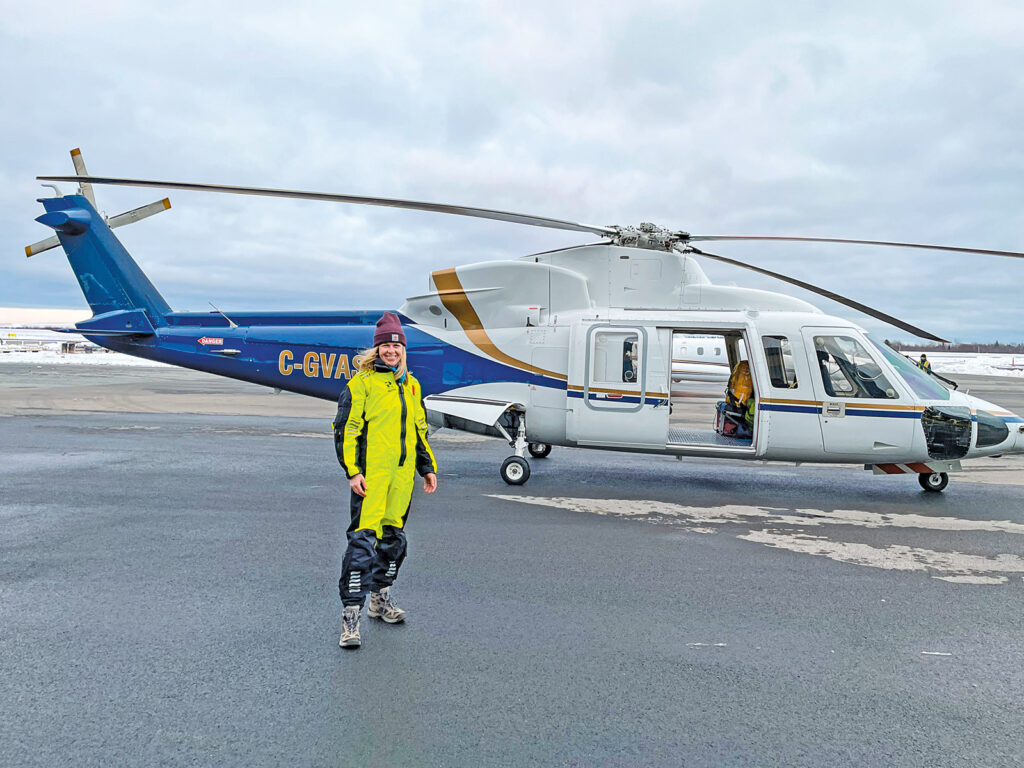
Environmental journalist Alix Morris ’05 reached remote Sable Island in the dead of winter 2023. Nearly 200 miles off the coast of Nova Scotia, surrounded by feral horses and sunken shipwrecks, she witnessed an ancient ritual: roughly 400,000 gray seals “hauling out” of the ocean onto the beach to give birth, nurse, and mate before returning to the water.
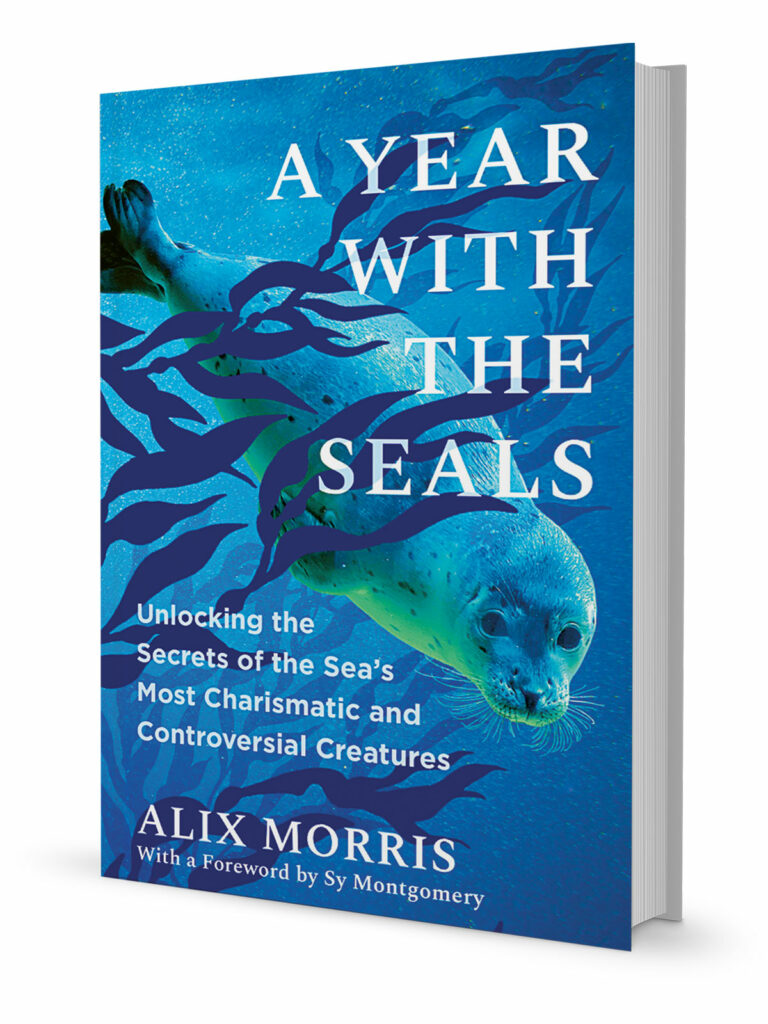
Her 2025 book, A Year with the Seals: Unlocking the Secrets of the Sea’s Most Charismatic and Controversial Creatures, recounts her travels by helicopter, plane, and kayak to spend time with gray and harbor seals — and with diverse human communities who impact and are impacted by North American seal populations.
The book is part adventure tale, part scientific storytelling, part personal journey. Its heart, Morris says, “is about learning to question my own assumptions about how to protect wildlife and to build empathy with people holding many different perspectives.”
The germ of Morris’ story began in 2020. News of a fatal shark attack reverberated up and down the Maine coast, where Morris had recently moved. “The media response focused on how large local seal populations lured sharks closer to shore and endangered public safety. There were calls to cull the seal population,” she says. “I was surprised to learn these cute, curious animals are very controversial, and I wanted to know how legitimate those calls were as a solution.”
Morris decided to “take the plunge” into writing a book about an increasingly relevant and complex issue: “As conservation measures and legislation are successful, animals are coming back in large numbers. That’s wonderful! And yet, now the same conflicts that originally caused humans to kill off these species are repeating themselves. This is where we’re at with seals and species like gray wolves and grizzlies. What do we do now as people and wildlife interact more frequently?”
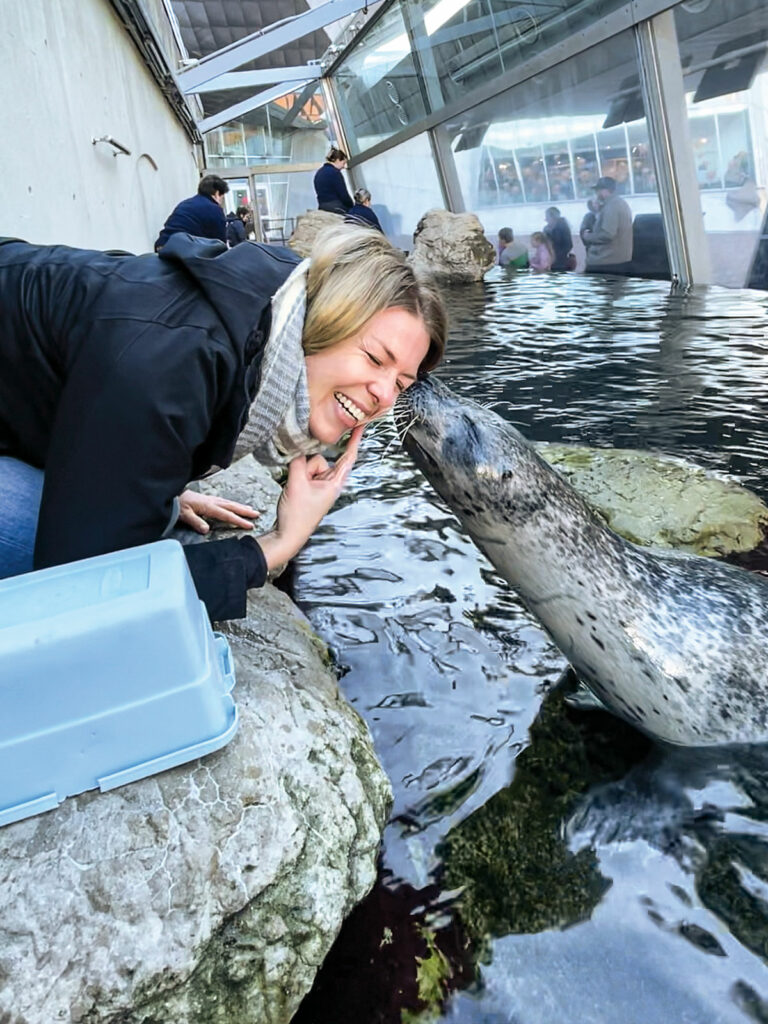
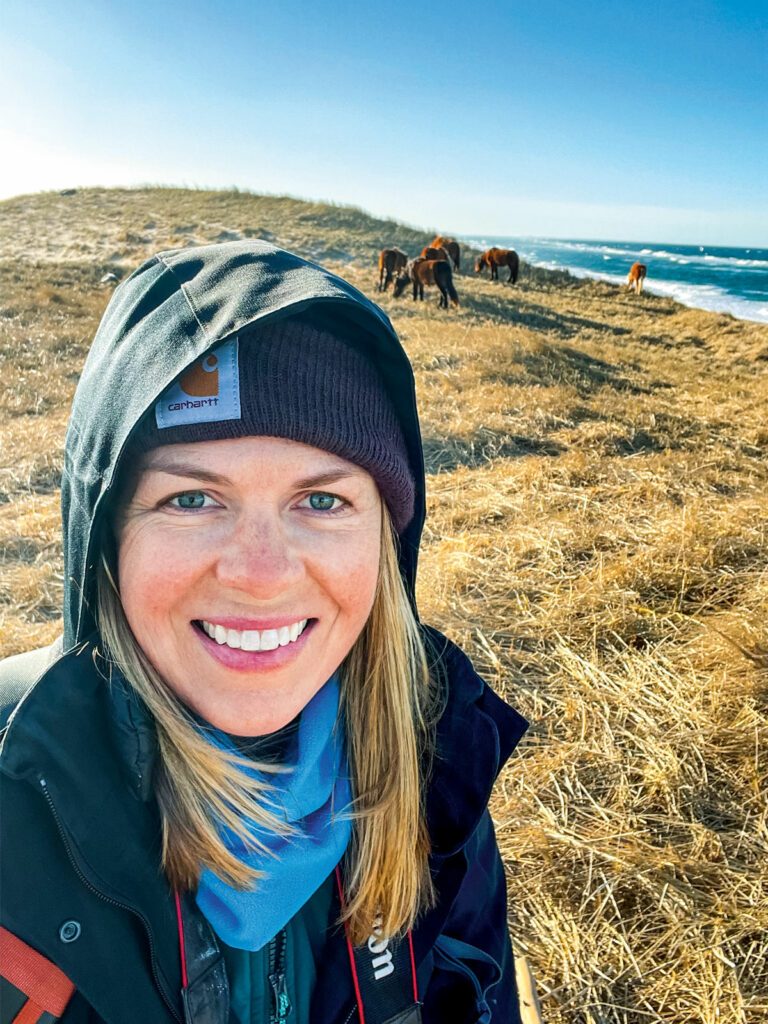
With grant funding from the Alfred P. Sloan Foundation, Morris began investigating the conflicts between humans and seals — and between humans with different perspectives on what’s best. She started her research in New England, then ventured north to Canada and west to Washington state. She spent time with seals, scientists, wildlife rehabilitators, local government representatives, surfers, and commercial and subsistence fishermen, among others.
To understand why some tribal communities in Washington state want to dismantle the Marine Mammal Protection Act — which Morris personally favors — she spent time fishing with a member of the Puyallup Tribal Council. “He told me about salmon’s central role in their culture and identity,” Morris recalls, “and how seals and sea lions gathering around dams have been devouring their salmon resources.” This impact comes on the heels of historical restrictions tribes have faced to their fishing rights and access.
“I had a split moment on the boat, watching this fisherman watch seals splash around playfully, seeing in them the loss of a way of life and livelihood,” she says.
“As a writer, there’s a great responsibility to do justice to the stories entrusted to me,” Morris says. “I couldn’t try to fit them into my own preconceived notions. I had to seek to understand people on their terms.” Morris continues: “When I was trying to wrap my head around how to conclude the book, I was also thinking about how incredibly polarized society is right now.” Rather than tying up the book with a bow made from prescriptive solutions, she instead sought to grapple with the lack of a single right solution. “I wanted to inspire myself and others to try to make sense of all the shades of gray, to accept when there aren’t just black and white and easy solutions.”
Now, nearly a year after her initial book tour, Morris continues to make space for other perspectives. She invites people she interviewed to join ongoing book events and tell their stories directly to her audiences.
“The questions I had to ask myself while I researched and wrote get at so many larger issues: How can I look outside my own assumptions? How can I build empathy?” Morris says. “If we can look beyond the surface of a conflict to understand what’s at the heart, I believe we can create more nuanced, context-specific ideas.”
And with ideas grounded in the heart of the matter, there’s greater hope of effectively protecting and benefiting both animal and human communities for the future.