

Academic Freedom and Freedom of Expression in Colgate’s Third Century
Can disagreements strengthen community?
Discuss.
– By Mark Walden –
Every fall, incoming Colgate undergraduates receive a stack of printed material. There’s a student handbook, a manual for student organizations, and a move-in guide. There are info sheets from Student Health Services and campus safety. And there is a booklet on academic freedom and freedom of expression, referencing faculty and administrative statements on faculty-student rights and responsibilities dating back to the late 1960s. It includes Colgate’s most recent statement on academic freedom and freedom of expression.
Debates over freedom of expression and academic freedom on U.S. campuses go back centuries — to America’s founding era. They have taken on great significance in the wake of recent global and national events. The general public and even some higher education institutions might have been caught off guard by this increased attention to matters of speech, but Colgate was not among them. Colgate has a long history of engagement with these issues. The faculty approved a statement on students’ freedom of inquiry in 1974. Campus expression was again explored by faculty and the Student Government Association (SGA) in 1980.
Upon President Brian W. Casey’s arrival in 2016, and following his charge to a task force, the University undertook an intensive effort to articulate even more plainly its principles concerning freedom of expression, not simply as a bureaucratic exercise but as a community endeavor that goes to the heart of the University.
In winter 2017, President Casey was settling into office as Colgate’s 17th president. In the nation’s capital, America’s 45th president was also beginning his term. The U.S. election that brought Donald Trump into the White House was divisive and triggered heated nationwide debates over political, social, and economic issues. Protests and walkouts took place on campuses across the country, and in March of that year, protestors at Middlebury College injured a professor who was moderating an event with political scientist Charles Murray.
Within this national context, Colgate was busy. There was a bicentennial to plan, and Casey intended to use that moment to propel Colgate into the future by drafting with the campus a long-term road map for the University’s third century. This would require the Colgate community — faculty, staff, students, and alumni — to commit itself to sustained, generational development across all areas of the University. But current events could not be ignored. General encouragement toward openness and expression aside, the University had little specific guidance on how community members should conduct themselves when engaged in heated disagreements. Even the foundations for such guidelines were reopened for discussion: What constitutes free speech and freedom of expression on today’s private college campus? How does it contribute to or detract from the academic mission and from student life? Was divisive argument bad for a community?
Meanwhile, the Chicago Principles of Free Expression were the center of attention in higher education circles. This broad positioning statement was published in 2016 under the leadership of Casey’s longtime mentor, Robert Zimmer, president of the University of Chicago 2006–21, with whom Casey worked at Brown University. In the months and years that followed, a number of colleges and universities adopted the Chicago Principles as their own. “I saw drafts long before they became public,” Casey remembers. “Bob said, ‘Colgate should sign on to the Chicago Principles.’ I said that simply adopting someone else’s principles would not be effective. An institution has to wrestle with this on its own; we have to do our own work.”
That work began in summer 2017 when Casey charged the faculty, Board of Trustees, and Alumni Council to elect delegates and form a Task Force on Academic Freedom and Freedom of Expression. He asked the president of the SGA to join as well, and Casey tapped Professor Spencer Kelly to serve as chair — Kelly was already leading the Academic Freedom Committee for Colgate’s chapter of the American Association of University Professors. Kelly was known to host “speakeasies” at the Colgate Inn, where one or two faculty members began a conversation on a topic (e.g., civility, the purpose of the University, or biblical marriage) before guests broke into small groups for further dialogue.
“
An institution has to wrestle with this on its own; we have to do our own work.
President Brian W. Casey
Casey’s decision was risky. There were plenty of other initiatives that could absorb the community’s focus. “It didn’t strike me as a bad idea, but it did feel a little bit idiosyncratic,” says Provost and Dean of the Faculty Lesleigh Cushing, then a rank-and-file faculty member. “Learning about him as a leader and how much he had been influenced by Bob Zimmer, it made more sense because this is an intellectual legacy that he inherited. Then it became an interesting thing to think about: How do you do this when the topic itself is potentially so fraught?”
The president was determined, and his charge to the task force was clear:
“Academic freedom and freedom of expression being central to the academic mission of Colgate University and to the enterprise of higher education generally, the Colgate Task Force on Academic Freedom and Freedom of Expression is charged with reviewing the history of academic freedom and freedom of expression policies and developments at Colgate University and drafting a statement on academic freedom and the freedom of expression as it relates to all sectors of the University’s community. The task force will recommend the statement for consideration by the faculty, the Board of Trustees, and the Student Government Association.”
Eight faculty members, one senior staff member, three trustees, and the SGA president began weekly meetings in pursuit of their mission.
Taking a page from former Chief Justice Earl Warren’s playbook, Kelly didn’t jump right into the issue at hand. He spent time building community within the committee. “I made a strategic decision early on,” he says, “to invest heavily in getting to know each other and where we were coming from — why we were interested in being part of this committee.”
When that was done, Kelly asked the committee to take another moment to reflect. “Before we talked about academic freedom and freedom of expression at Colgate,” he says, “we had to step back and ask, ‘What is our goal at Colgate as a university?’”
In search of an answer, they read and dissected the “13 Goals of a Colgate Education” as well as the University’s mission statement. Neither source gave them a single response to the question, but both documents pointed toward a direction on which all committee members could agree: Colgate should aim to create and share knowledge. “It might sound obvious,” Kelly says, “but if you talk to enough people, you realize even that can be controversial.” For example, creating and sharing knowledge does not equate to the pursuit of social justice, which some members of the community endorse as a goal of a university and others do not.
If the creation and sharing of knowledge was the North Star, Colgate’s constellation of values should point directly to it. But what are Colgate’s values? The committee members came from a variety of backgrounds, worked in a variety of disciplines, and had their own perspectives, but they coalesced around “empathy, curiosity, warmth of spirit, concern for others, and pride in our community.”
“
I wanted to be a part of the institutional voice task force because I wanted us to start with remembering what a university is for — what is our mission?
Professor Spencer Kelly
The Chicago Principles hold that a nearly absolute free marketplace of ideas is the highest ideal and caution against restricting speech in the name of other values, such as empathy, sensitivity, and care. But while members of Colgate’s task force agreed that unfettered freedom of expression was of paramount importance, they also had a more nuanced perspective. What about our values around community and care? “We saw these values not as competitors to free expression but conditions that can strengthen it,” Kelly says. Embracing values helps us consider others’ perspectives more fully, making speech more likely to land well. Conversely, when these values are absent, speech can miss its mark — or worse, disrupt understanding and learning.
“It was heavy,” Kelly says about the task force process. “There were emotions, and it was not a light deliberation.” Yet members met each other where they were, found points of commonality, and grounded themselves in their shared love of education and Colgate. They did their reading. They argued and persuaded, met with special guests, held forums, and modeled the behavior they were trying to describe. When it came time to write the report — an initial version was drafted by Board of Trustees Vice Chair Michael Herling ’79, P’08,’09,’12, who would go on to chair the board — the parameters had been established. Apply Colgate’s values to its purpose, while setting freedom of expression as a priority, and you have a shared commitment “to learning, inquiry, and community that encourages individuals to listen and speak with care, so that all voices among us are heard.”
The Report of the Task Force on Academic Freedom and Freedom of Expression was approved by the Board of Trustees, the faculty, and the SGA in the fall of Colgate’s Bicentennial year, 2018–19. It affirmed Colgate’s commitment to ensuring that every member of the community has the right to explore ideas and questions to the fullest, regardless of whether those ideas and questions are offensive to others. It also clarified that Colgate reserves the right to limit public speech based on considerations of time, place, and manner to ensure the continuity of University operations. Threats or incitement to violence, punishable under Colgate’s academic code of conduct, could not be confused with academic inquiry and free expression. It also said that Colgate needed to commit itself to the care of members of the community. It saw these values — free expression and community care — as conditions that the University had to tend to. It needed to do both.
In these ways, Colgate’s report finds inspiration in the Chicago Principles. But Colgate did its own work, basing its intentions on the University’s particular mission and the values of its distinctive community of scholars.
Associate Professor of Religion Jenna Reinbold is chair of the Task Force on Institutional Voice.
Dean of the College Paul McLoughlin II
Institutional Voice
“When we finished the task force, there were some people who felt that our work was done,” Kelly says. “But the report didn’t solve any problems. It just gave us a way to handle problems in the future.”
One facet of those problems inverted the question of individual freedom of expression and academic freedom, applying it instead to the institution. George Floyd’s murder in 2020, Russia’s invasion of Ukraine in 2022, and the Oct. 7, 2023, Hamas attack on Israel all presented moments when the public looked to institutions and brands for general statements of support. “Before George Floyd, we really weren’t talking about that as often,” says Dean of the College Paul McLoughlin II. “Then it felt like you needed to say something about everything. Spotify was telling me something, Target, Hulu — any business that I was doing business with felt the need to tell me how they felt about something.”
By 2024 many of those institutions were retreating to a place of neutrality.
“I am often called upon to issue statements on many topics on behalf of the University, some dealing with current events and political matters, others in recognition of historical milestones,” Casey wrote to the campus community at the beginning of the 2024–25 academic year. “It is time to consider the usefulness and wisdom of such statements and to consider the effect they might have on academic freedom and discourse on the campus. When should Colgate use its institutional voice or speak to matters beyond the campus?”
Again, Casey used governance structures to assemble a task force of community members who would consider the question. The group was chaired by Professor Jenna Reinbold, and it was a good fit — Reinbold’s research focuses on the intersection of religion, politics, and culture-war controversies. She regularly exchanges ideas and delves into differing perspectives with political science professor Tim Byrnes, the Peter L. Kellner Third Century Chair in philosophy, politics, and economics, in front of their respective classes to model intellectual dialogue.
The Task Force on Institutional Voice met weekly, and, like the original Task Force on Freedom of Expression, it comprised a number of diverse voices and opinions. Like its predecessor, it started by reviewing available documents, including the “13 Goals of a Colgate Education” and Colgate’s mission statement. It leaned heavily on the academic freedom and freedom of expression report.
Freedom of Expression at Colgate
Check out some of the texts that have informed debate over freedom of expression and academic freedom at Colgate in recent years:
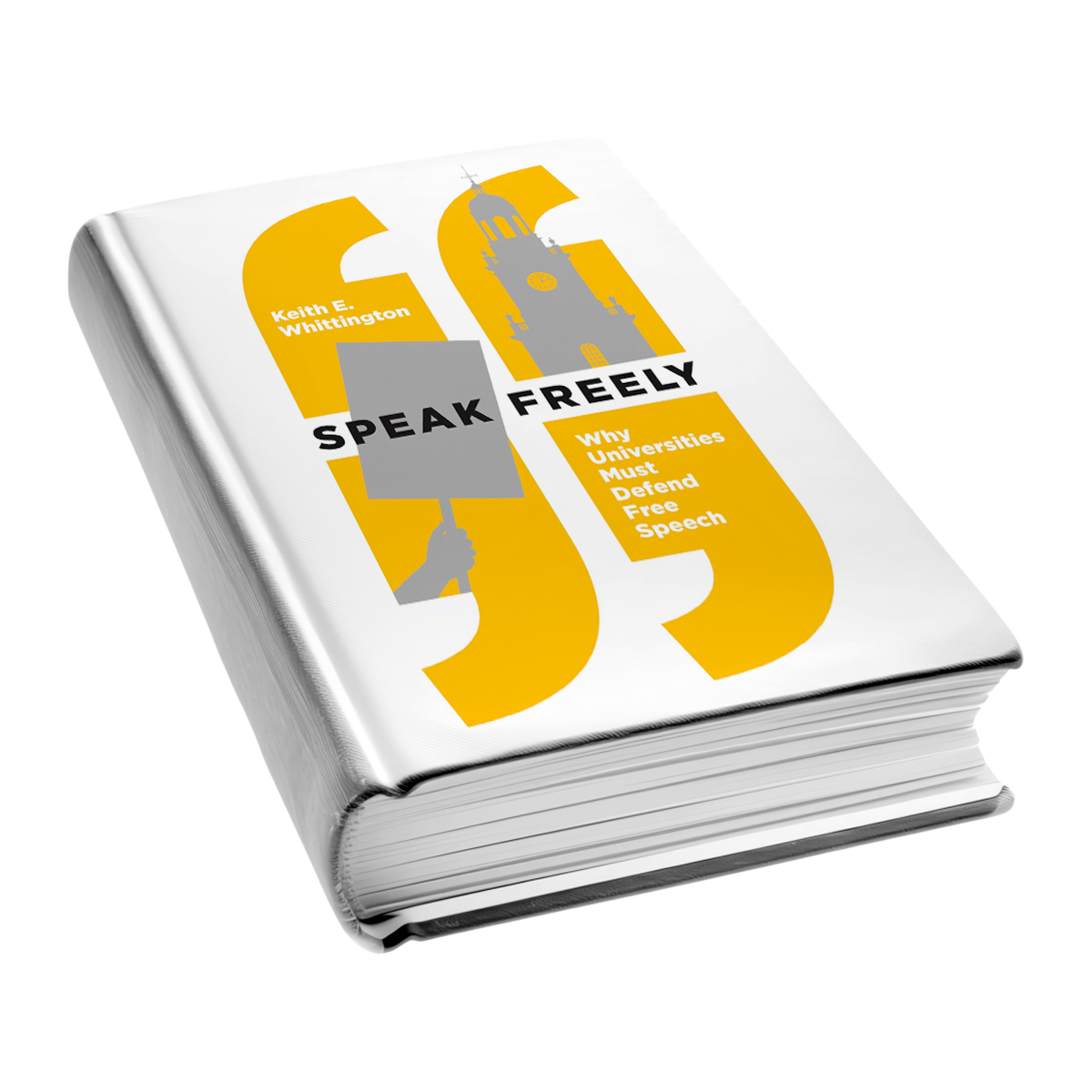
Speak Freely: Why Universities Must Defend Free Speech
This book takes a look at the institutional perils of suppressing free speech on campus — written by constitutional law expert Keith Whittington, the David Boies Professor of law at Yale Law School and visiting fellow at the Hoover Institution.
Campus Free Speech: A Pocket Guide
Harvard Law School professor Cass Sunstein, founder and director of the Program on Behavioral Economics and Public Policy and administrator of the White House Office of Information and Regulatory Affairs during the Obama administration, reviews the legalities around free speech on college campuses.
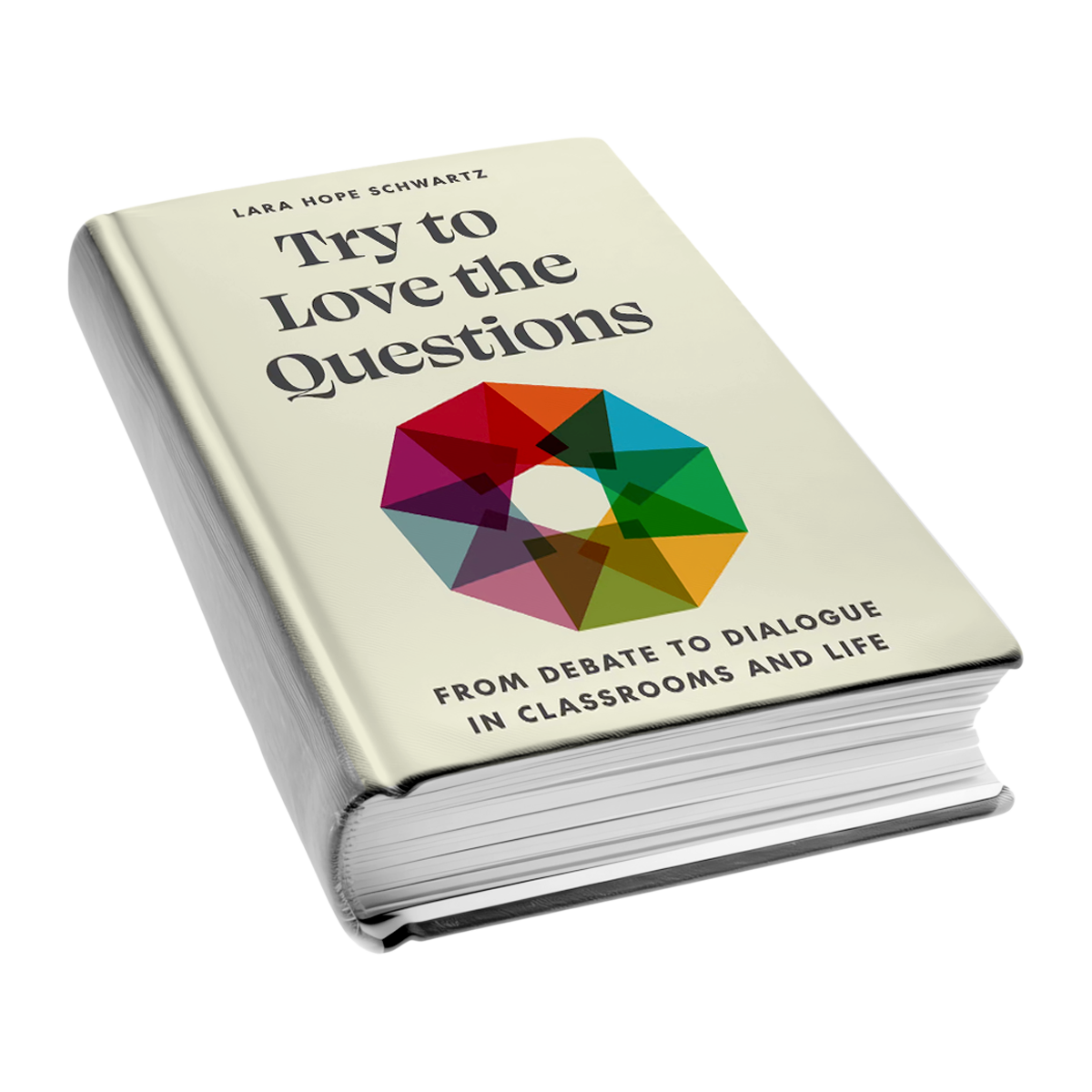
Try to Love the Questions: From Debate to Dialogue in Classrooms and Life
Lara Schwartz is a civil discourse expert, instructor, and the founding director of the Project on Civil Discourse at American University. Her book is a long-form letter to new college students (and their professors), with descriptions and definitions of the concepts that make up freedom of expression and academic freedom on college campuses.
I Never Thought of It That Way: How to Have Fearlessly Curious Conversations in Dangerously Divided Times
According to Cushing, this book by journalist Mónica Guzmán helps with “thinking about the polarization of America and how places like Colgate can push against it by giving faculty better tools for encouraging difficult conversations in their classrooms as appropriate.”
The name of the task force was intentional. Other universities and companies were issuing neutrality statements, but “there’s a benefit to refuting the idea that institutions of higher education are radically neutral in some way,” says Reinbold. “I think it’s untrue, and I think it’s problematic to imagine that somehow there are no values built into what we do as an institution.” She wasn’t alone. According to Reinbold, the committee quickly concluded that, far from being neutral, Colgate was home to thousands of opinions, wide-ranging expertise, and lived experiences that informed an abundance of perspectives and perceptions. Furthermore, the University, by its own admission, prepares students for engagement with the outside world in all of its complexity, and ignoring current events erodes the quality of a Colgate education.
But what did that acknowledgment demand of Colgate? “Some wondered if there was remedial work that needed to be done because institutions of higher education had already spoken so vociferously in favor of certain kinds of values and not others — should Colgate make statements on absolutely everything? What does it mean to do that remedial work?” Reinbold says. But through its deliberations, the committee came to agree that this road did not necessarily lead to clarity.
In the end, they came back to the same framework outlined by the freedom of expression task force. In fact, says Kelly, “I wanted to be a part of the institutional voice task force because I wanted us to start with remembering what a university is for — what is our mission? When you talk about institutional voice, whatever you say has to be relevant to what you are.”
Colgate community members are empathetic. They pursue knowledge, and they share it. That said, “I have colleagues who are much better informed about certain things that are going on in the world than I am,” Reinbold says. “I would never presume to speak on those things when I know that I work with experts. We should all have a little bit of that attitude.”
If the University itself speaks with a single voice on any topic, some of its experts could find themselves at odds with the institution and think twice before following their intellectual curiosity down certain paths. It could make them wary of presenting contrary facts in classrooms, seminars, and meetings. What if community members initially agreed with an institutional statement but then changed their minds based on available evidence? Could Colgate University change its mind too?
In the end, the Task Force on Institutional Voice focused on Colgate’s purpose as a place that pursues knowledge and encourages lively, respectful conversations. In their report, members called on the president not to speak for the entire University, but rather to ensure that there were ample opportunities to discuss issues, learn from experts, and understand deeply. In its final report, accepted by the president in 2024, the task force stated, “While individuals have freedom of expression as members of this community, it is our recommendation that Colgate’s institutional voice be used solely for the promotion and support of educational venues … except in circumstances where the specific operations of the University are directly affected.”
This is not neutrality. It is an acknowledgment of intellectual vitality. “Rather than reducing the diversity of campus perspectives to one institutional statement — which risks marginalizing some voices and limiting open, rigorous, and ongoing inquiry,” the task force writes, “the University should actively facilitate such open inquiry throughout our campus. This approach leverages the expertise of faculty and the insights of the broader community — students, staff, alumni — while remaining responsive to the collective knowledge and needs of all.”
While her task force was debating, deliberating, and drafting, Reinbold was teaching a course on theories and methods in the study of religion. The class included discussion on the role and presence of religion in American politics, and the two parts of her life would sometimes bleed together. “It turned into a little bit of a teaching moment,” Reinbold says. “They had lots of questions about what it means to create educational venues. Who does the work of making these venues happen — which I think is a great question. I reminded them that at least one of the venues in which it happens is literally where we are in the classroom.”
“Our values are that we live in community with one another and we owe each other respect and thoughtful consideration of each other’s views. But we owe ourselves the ability to push back against ideas that we think are intellectually unsound or sometimes morally suspect.”
Provost and Dean of the Faculty Lesleigh Cushing

Provost and Dean of the Faculty Lesleigh Cushing (end of table), the Mark S. Siegel University Professor in religion and Jewish studies, hosts salons in her Kendrick Street residence. Here faculty and staff members engage with ideas and with each other, embodying the spirit behind the report on academic freedom and freedom of expression.
Beyond Reports
“This is an institution that doesn’t just want to create reports and statements,” says McLoughlin. “We want to make sure that the way people are living and experiencing this place — as a student, a faculty member, a staff member — that they have a sense of freedom of expression. They know what academic freedom is and what it isn’t.”
In tandem with the Task Force on Institutional Voice, Casey formed a working group, led by Cushing and McLoughlin, to review Colgate’s various policies and handbooks to ensure that they are in keeping with the Report of the Task Force on Academic Freedom and Freedom of Expression. They have also been asked to take the original task force report and, with input from members of that group, publish a document that clearly encapsulates and articulates its important points for all University audiences.
There are practical considerations to address when moving from reports to University policies. The task force wrote about the University’s guiding philosophy on freedom of expression; it didn’t offer a list of do’s and don’ts. What exactly are the times, places, and manners that prompt restrictions? “If you were to say something that in any other context might be protected under the First Amendment, it actually could keep you from being a good campus safety officer, for example,” says McLoughlin. “So there are limits to what people can say in the workplace. But, by and large, we want people to understand that when we say ‘We want you to be authentically you,’ we mean it.”
Furthermore, the task force encouraged toleration of offensive speech, but “certain kinds of offensive language are actually encoded in New York State law as grounds for sanction,” says Cushing. “[The task force was] saying ‘offensive’ in the colloquial sense — offensive shouldn’t be grounds for censoring something. So we are trying to thread that needle.”
Threading the needle has required, yet again, a collective trip back to purpose, mission, and values. “Our values are that we live in community with one another and we owe each other respect and thoughtful consideration of each other’s views,” Cushing says. “But we owe ourselves the ability to push back against ideas that we think are intellectually unsound or sometimes morally suspect.”
The working group developed its own reading list to deepen and broaden its thinking. In particular, members have turned to legal scholar Cass Sunstein’s book Campus Free Speech: A Pocket Guide for clarity on what is required and what is preferred when developing concrete guidelines for debate and discourse. Kelly, Reinbold, and other task force members are serving as expert resources as the working group moves closer to a completed statement, which will be issued prior to the 2026 academic year.
Cushing has found ways to bring the entire campus into the thought process. She offered copies of Cass’ book to any faculty or staff member interested in reading it and set up a series of salons to facilitate campuswide conversation on the contents. It’s a model she has followed up with other books, including Try to Love the Questions, by American University’s Lara Schwartz, and I Never Thought of It That Way: How to Have Fearlessly Curious Conversations in Dangerously Divided Times, by Mónica Guzmán. On multiple occasions, a dozen teachers and administrators might be gathered around a lunch table in Merrill House or the dining room of the provost’s residence on Kendrick Avenue, debating the best ways to draw students into productive interactions, both with course content and with each other. She also hosts salon dinners on other topics, walking the walk, in a way. “The only rule during those dinners is that we stay as one conversation,” she says. “It gives you ways to think about [debate and discourse] when you go back to your classroom — what worked in that setting?”

On the Menu: A Chance to Connect
Each semester students, professors, and staff members gather in the Hall of Presidents for a meal and guided conversations, sponsored by the Division of the Dean of the College. Participants take up challenging topics listed on cards. Here are a few examples to encourage discourse at your own dinner table:
→ What belief or value has most shaped how you see the world, and how has personal experience, data, or tradition influenced or challenged it over time?
→ What’s a time when your perspective shifted after hearing someone else’s story or opinion?
→ What role should colleges play in protecting or limiting speech that some find offensive or uncomfortable?
→ Should the U.S. have a moral responsibility to intervene in global conflicts, or should we focus on problems at home first?
→ Can artificial intelligence ever be truly ethical, or is bias and inequality always built into the code?
→ Where is the line between protest and disruption, and who gets to decide when an act crosses it?
Why Wait?
Brainstorming slates of texts that could be used in the Core Conversations track, Professor of Philosophy Maura Tumulty and her faculty colleagues Liz Marlowe and Ferdinand von Muench were fascinated by the 1789 French “Declaration of the Rights of Man and of the Citizen.” That particular text was not chosen as an official part of the program, but Tumulty brought it into her own classroom, later alongside the First Amendment of the U.S. Constitution and Colgate’s task force report, as a way to engage her students on free speech and freedom of expression. She quickly realized that there was a fundamental misunderstanding among many of her pupils.
“A number of students seemed to be thinking that, if they were hearing faculty praising freedom of expression and freedom of inquiry, those faculty were praising the idea that they can literally do whatever they want in their classrooms verbally,” Tumulty says. “They weren’t thinking about the difference between the First Amendment — what I can shout on the town square, which is really expansive — and educational norms, Colgate’s mission, or even educational law.”

Maura Tumulty was part of a group of professors who reviewed best practices for civil discourse in the classroom.
In truth, academic freedom allows faculty members to speak broadly and without restraint on those topics within the sphere of their discipline. It ensures that they have the freedom to conduct research and teach courses without the worry that an administration, a dean, or any other authority will be displeased with their line of inquiry. If a chemistry professor, however, decides to deviate from the syllabus to spend 50 minutes opining on race relations in the American South, University censure is a possibility. Restrictions on time, place, and manner apply to faculty too. Tumulty gives students the comic example of trying to teach a philosophy course, only to be interrupted by an improv theater class entering the classroom and doing warm-up exercises. “I’m empowered to say, ‘Beloved colleague, you have to use a different space. It’s not about the content of what you’re saying — my students don’t have a space in which to continue the conversation we’re having.”
Bridging the gap between 1789 and 2025, Tumulty asks students to review two opposing pieces on how to think about freedom of expression in the context of higher education. Is it OK, for example, to show a Persian painting of Mohammed during an art history class, provided everyone has the chance to opt out? She will divide the class in two and tell them that she doesn’t care what their opinions are — for the next five minutes, they will argue a particular side of an issue. Then she flips the sides, and they will argue the opposite. Or she might ask them to consider an issue, form an opinion, and then ask themselves what the first objection might be to their point of view. “We’re giving them practice saying words that other people will disagree with, but that are not marked as their own words,” Tumulty explains. “They need a little bit of nudging and a little bit of scaffolding, but they can figure out how to talk about something hard without struggling or insulting.”
Tumulty is one of many faculty members who are making discourse a part of the syllabus, and the number is growing. Statements like this are appearing on course documents: This class covers subjects on which people disagree, sometimes strongly. I value your perspective and want you to bring it into your work for this class. Even if I disagree with you, I will not penalize you for your views: In all written work, you will be judged by how well you support your ideas and how effectively you express them.
A group of professors, including Tumulty, went further by spending considerable time during the 2024–25 academic year reviewing best practices for promoting civil discourse in the classroom. The effort is sponsored by the Arthur Vining Davis Foundations, and it is led by Cushing and George Carleton Jr. Professor of Philosophy David Dudrick, who now serves as co-director of the Kraynak Institute for the Study of Freedom and Western Traditions.

The Colgate Union is a dedicated, nonpartisan center for discourse, where the Colgate community and leading figures in politics, policy, current events, and culture can discuss and debate important issues of the day. Such an enterprise adds to campus intellectual life and complements the rigorous work that already takes place in classrooms and academic departments across the University.
On a ‘Colgate Union’
Discourse on campus is “as important to me as the trees, and I’ve planted a lot of trees,” Casey says.
The roots of Casey’s love for discourse run deep — all the way back to his days at Stanford Law School, which is known for the use of the Socratic method in the classroom. He fondly remembers those days, when a professor would ask him to stand up and present arguments made on behalf of the plaintiff in a historic case. Then he’d be on his feet again to give the argument for the respondent. “It was a thrilling way to think,” he says.
If discourse in the curriculum is exemplified by those Stanford years, debate, for Casey, is most visible in the Oxford Union at Oxford University. Oxford is composed of dozens of colleges founded by different denominations. Because of these sectarian ties, students in the early 19th century felt unable to freely explore questions of faith and politics. In 1823 they banded together to purchase land near campus, and they built the Oxford Union, where they could gather, debate, and question each other without fear. They created their own rules to govern these events, and at the end of each, the audience would exit the hall through doors marked Aye or Nay to cast votes for a winner. The tradition continues to this day.
“But debate is but one tool to discern the truth,” Casey says. “It’s not the only way people can tackle complicated things. There is conversation, there are classroom discussions, there is dialogue in hallways and dining halls. How do we build on those things already happening on the campus, and make them more manifest, more available to more people, more a signature endeavor for Colgate when people are looking at our University?”
During an alumni event on Oct. 22, 2025, at Ruggles Hall in Chicago, Casey announced his intentions publicly — during a conversation with Tony Banout, the inaugural executive director of the University of Chicago’s Forum for Free Inquiry and Expression — to consider making more formal a place on campus for the work that has been ongoing on the campus since the original task force report (and even earlier). He asked the audience to imagine a place on West Campus, where students who were dedicated to the principles of the task force could live together and pursue that work in tandem with their studies. This residence will be called Hurley House, thanks to a leadership gift from Becky ’81 and Chris ’81 Hurley, P’12,’12.
With goodwill at its heart and through many conversations with faculty and students, the idea of a “Colgate Union” is beginning to be shaped. Casey initiated a series of conversations to gauge student support for the project during the fall 2025 semester, expecting to hear from a dozen undergraduates. By midsemester, more than 50 had raised their hands. He has had many conversations with numerous faculty members. The questions are: How do we do this well? How do we build on existing strengths on campus?
“I watch our students who sometimes are unsure of how to communicate because they live in a culture where they endlessly self-censor,” Casey says. “They’re terrified of taking a position in the classroom, not because of the potential institutional damnation of that position, but because of the self-censoring that happens from peer pressure.” Here is the twofold problem and opportunity: remove self-censoring behavior by normalizing debate and free inquiry and grounding it in goodwill — leading to academic and interpersonal experiences that open minds and expand understanding.
The Colgate Union’s programs — in the final form they take — must also open the University up to engagement with the world, because turning inward is fatal for an institution that aspires to be a vital national and international resource. “We can run the risk of always being inclined to talk to ourselves, and that’s a dangerous thing for a university,” Casey says.
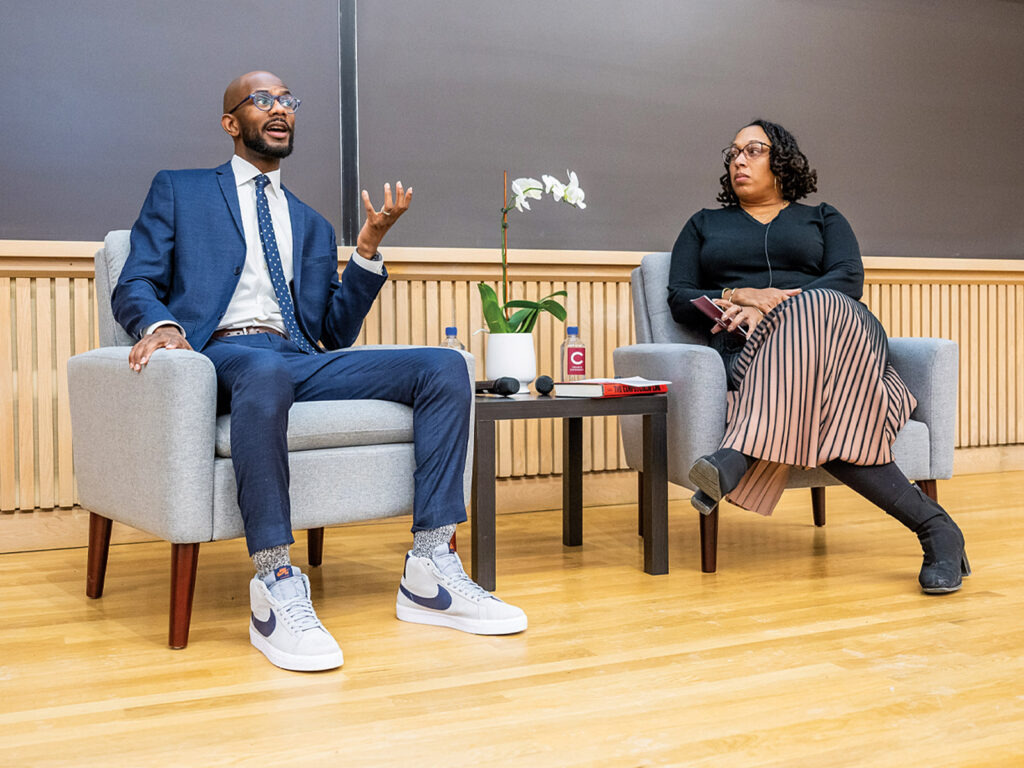
UCLA professor Eddie Cole discusses “The University and the Public Good: The Role of the American College in Our Time” with Vice President and Chief of Staff L. Hazel Jack during the 2024–25 Presidential Speakers Series.
Affirmative Crystallization
Casey has spent his career not only running universities but also studying them. He knows that great institutions don’t have five-year strategic plans — they pursue long-term road maps. They don’t just say, “We need a new building for computer science.” They ask, “How do we teach computer science at the highest level now and in the future?”
He knows, too, that any lasting decisions about the life of the campus have to come through established forms of University governance. Presidents come and go. Individual professors and staff members are hired and retire. The faculty as a gathering of scholars, the Board of Trustees as a fiduciary body, the SGA as a voice for students — these entities exist generation to generation. Their decisions transcend the moment.
In 2017 Casey was faced with a question: How does Colgate become known as a proactive place where freedom of expression and academic freedom are hallmarks of the experience? The answer has taken time to develop. It has drawn in dozens of Colgate faithful and demanded thousands of their hours. Now we have to see what the next step can be — and this will take time as well. But if this president has made anything clear during his years at the helm, it’s that he’s more than willing to plant a seed and watch it grow.
Read both task force reports at colgate.edu/president.