


In fall 2019, after she’d concluded her eight-year term as the 53rd mayor of Syracuse, Stephanie Miner joined Colgate as the Charles Evans Hughes Visiting Chair of government and jurisprudence in the Department of Political Science. The city’s first female mayor, she is a graduate of Syracuse University with degrees in political science and newspaper journalism. She earned her JD from the University at Buffalo School of Law and served as a Syracuse common councilor for five years.
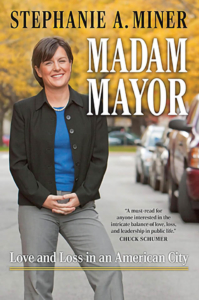
Miner has authored a new book, Madam Mayor: Love and Loss in an American City (University Press of Kansas), and she appeared on a recent episode of the University’s podcast, 13. Here are snippets from the conversation:
“I was a practicing attorney in Syracuse, which is where my great-grandparents came after Ireland … the streets I walked on, the houses I saw, the places were places that they had been. I had a real connection to the community through my family and through this history. I saw [the city] going in a direction I thought I could change, so I ran [for mayor] initially to say, ‘I want to be part of the solution. I want to help it be welcoming to people like it once was to my ancestors.’”
“One of the things that really attracted me to local politics is you touch the issues that affect people’s daily lives. You have a real sense of helping people and being in a community. Also, with a city the size of Syracuse, you could implement ideas or policies, check them in real time, and then fix them if they didn’t work.”
“Part of what I felt very proud of was my ability to attract a high caliber of person to work for the city of Syracuse. Together, we did innovative work in infrastructure and public education and policing, and, in many ways, also became a voice for small cities.”
“I teach two classes [at Colgate]. [One is] on state and local politics, which is really a class on federalism. I [also] teach a class called The View from the Mayor’s Desk, which is a deeper dive into housing, infrastructure, education, and free speech.”
“I started writing this book because I knew I’d always been interested in politics. Then I started and never thought I would finish… The students at Colgate were fantastic. They were interested in what I had to say and [would] talk to me both before and after [class] and at office hours about politics and local government. They wanted to hear lots of war stories. I thought, well, if they want to hear these war stories, then maybe other people do too.”
The students at Colgate were fantastic. They were interested in what I had to say and [would] talk to me both before and after [class] and at office hours about politics and local government.
“It’s been my honor to teach the students I’ve had at Colgate. They’ve been thoughtful, engaged, and want to learn. What I say to students who take my class is, think about ideas and think about how the other person thinks about something too. The best politicians I have ever seen are people who are able to almost viscerally understand both. They can hold different ideas at the same time so they can have their thoughts about how a problem should be solved, but they can also listen to other people and adapt to that.”
“The ability to listen and think and be respectful is a hallmark of our democracy. We’re struggling with that right now. But I think the people who want to be involved in politics should be involved in politics as citizens of a democracy. We all have a responsibility to do that…. You’ve got to vote…. You have to let people know whether you agree with how they’re conducting themselves or whether you don’t agree with how they’re conducting themselves. Because if you don’t, other people will.”
— Interview by Daniel DeVries