

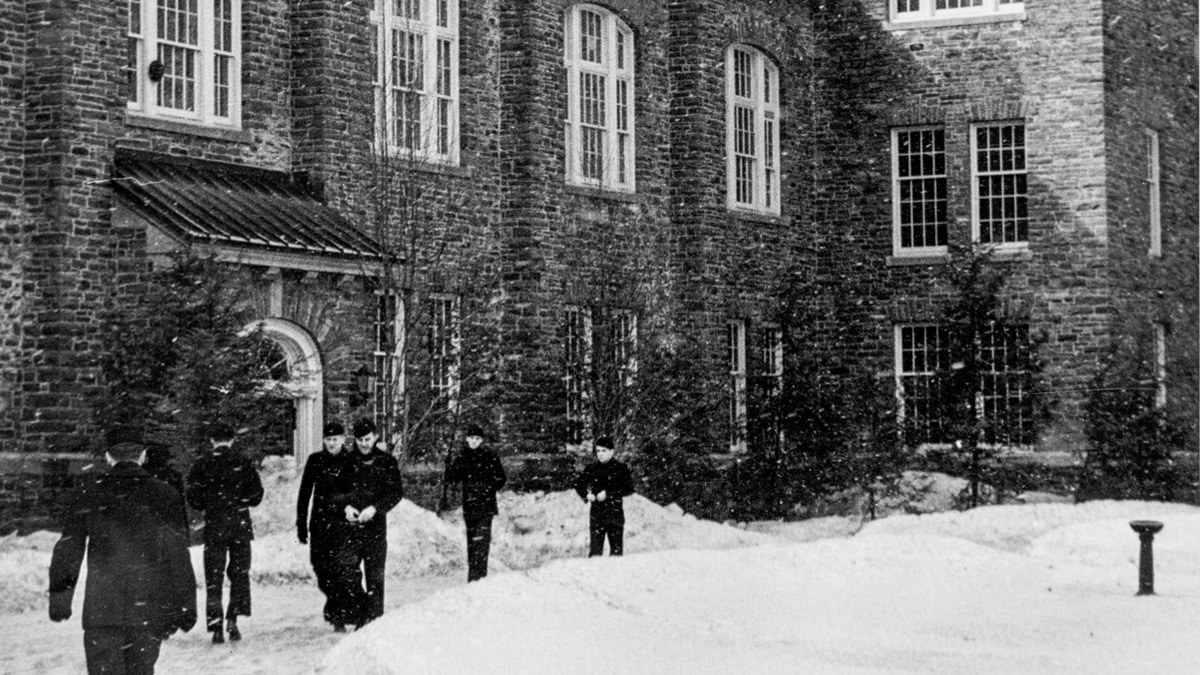
A century has passed since the first plough tore through the soil where Huntington Gymnasium stands today. The groundbreaking in June 1924 was met with celebration and relief. At last, Colgate would have a state-of- the-art facility that was desperately needed to meet the athletic requirements of an institution where enrollment was growing rapidly.
The history of Huntington Gymnasium goes back as early as 1911, when Colgate officials began discussing the need for a new athletics facility. At the time, the University’s entire athletics program operated from a building that was simply known as the “old gymnasium.” Meanwhile, Colgate’s enrollment was on the rise. From 1900–25, the University went from a student body of 300 to more than 800 — and the Board of Trustees had approved a plan to raise the total to 1,000.
Years before the first shovel dug into the ground where Huntington Gymnasium now stands, Colgate struggled to accommodate the demand for new athletics programs. The old gymnasium, built in 1893, had become inadequate. In the old gym building, basketball practices were conducted on a small court. Some programs, like winter track, had no opportunities for indoor practice. The building did not contain the facilities for aquatic sports.
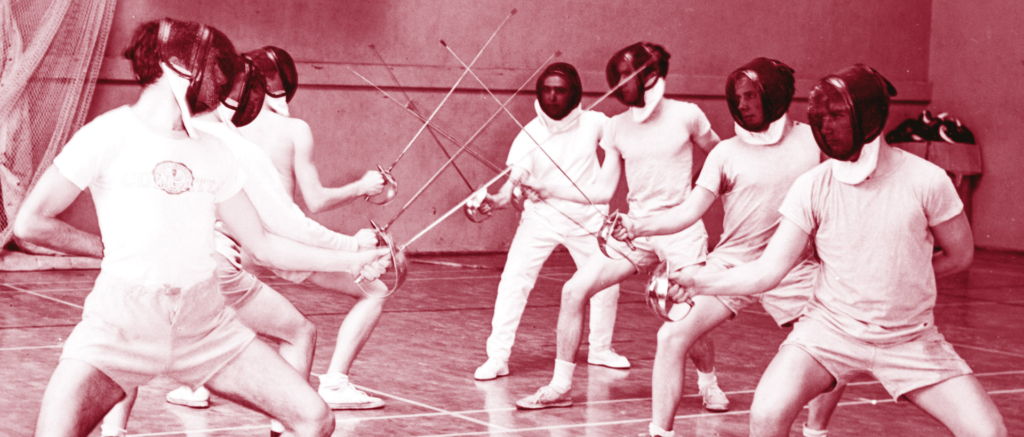
The 1927 yearbook staff wrote: “Our athletic teams also have been greatly handicapped due to the lack of space and equipment.”
The Colgate Alumni Corporation launched a massive fundraising effort to build the $400,000 Huntington Gymnasium. Alumni and undergraduates were required to help raise money, and gifts arrived in all amounts. Some people showed their love for Colgate by making huge sacrifices to donate. One alumnus, who suffered from paralysis and relied on a $75 monthly check from the government, donated that payment.
As architects conceived designs for the new building, Colgate officials visited gymnasiums around the country, including those at Cornell, Dartmouth, Yale, and Syracuse. Their research allowed architects to include the best features of modern gymnasiums in their plans.
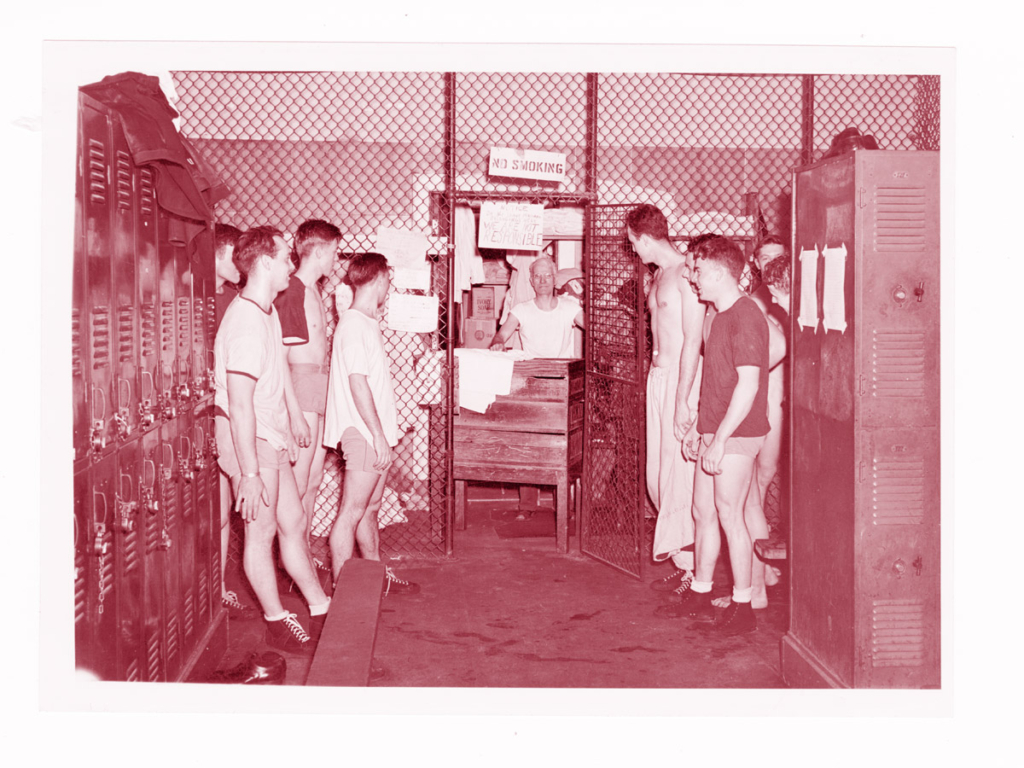
Huntington Gymnasium was designed as a three-story structure, made of natural gray limestone, with a court suitable for basketball, a swimming pool, new locker rooms, and sufficient space to accommodate all of its programs. It also included offices and storage rooms.
On the day of the groundbreaking, President George B. Cutten and Alumni Corporation President George Cobb, Class of 1894, were dressed in full academic regalia as they handled the plough to make the first cut in the soil. The task required the help of 119 seniors who were clad in caps and gowns, and hundreds of alumni were on campus to celebrate.
Huntington Gymnasium was built in less than two years, and the arrival of a new facility came at an impeccable time: A few months before the grand opening, a fire destroyed the old gymnasium.
The new building was named after Ellery C. Huntington for changing the lives of countless students as director of physical education in his 25 years at Colgate. Known as “Doc” Huntington, he not only healed wounds but also helped students overcome whatever difficulties they encountered.
In the 1926 April–May edition of the Colgate Alumni News, Huntington provided an update on the construction, which was near completion. “It stands as a magnificent monument to the sacrifice of all who have and all who will, through the Alumni Fund, give of their generosity,” he wrote. “This building will provide for future generations of Colgate men that necessary development of body, which is such an essential part of the development of mind.”

As the University has expanded over the years, so has Huntington Gymnasium. A new fitness room, weight room, and natatorium were added. Plus, the additions of other buildings, like the Reid Athletic Center, have allowed the University to refit Huntington for new purposes.
And with a new athletics facility under Colgate’s Third-Century Plan in development, Huntington Gymnasium’s function will again be reshaped.
“Physical education, recreation, and athletics play an important role at Colgate and are core to the mission of the institution,” says Vice President and Director of Athletics Yariv Amir ’01 (who spent considerable time in Huntington Gymnasium as a student-athlete, when he served as captain of the men’s rowing team).
“Huntington has been home to physical education, recreation, and athletics for many generations of students and will continue to be that in Colgate’s third century,” he adds. “As we work to finalize plans for a new athletics building, I think of Huntington with the hope that we’ll design and build another building that will serve the next generations of students.”