

Colgate University chaplain and Protestant campus minister has been sworn in as an Army reserve chaplain.

There have been more than 30,000 suicides among active military personnel and veterans since 2001 — compared with approximately 7,000 deaths in duty — according to a study by Brown University. When Rev. Corey MacPherson, University chaplain and Protestant campus minister, learned of this mental health crisis, he wondered how he might be able to help soldiers and veterans, even in small ways. “There’s such a tremendous need, and I thought, if I can help, I’m willing to help,” MacPherson says.
MacPherson took the Army Reserve oath in October 2023. After rigorous training at Fort Jackson in South Carolina this past summer, he was assigned to the 403rd Civil Affairs Battalion in Syracuse, N.Y., where he travels once a month for battle assemblies to continue training in preparation for the unlikely case that the unit should be deployed.
The work of an Army Reserve chaplain: MacPherson summed it up in a sentence. “There’s a common saying that we learned about Army chaplains: to nurture the living, care for the wounded, and honor the fallen.” The main duties of chaplains are to offer support and counseling (both emotional and spiritual) to soldiers and their families. Chaplains are also the only confidential resource in the Army, which allows soldiers to share their thoughts without worry of damage to their careers.
Colgate prepared him well for his new role: As a chaplain and minister at Colgate, MacPherson has learned which situations call for the pluralistic spiritual support of a chaplain versus the Christian perspective of a Protestant minister. In the training classrooms, MacPherson felt he contributed by helping newer chaplains understand the importance of separating their chaplaincy work in the Army — where they serve people of various religious traditions — from their personal religious practices.
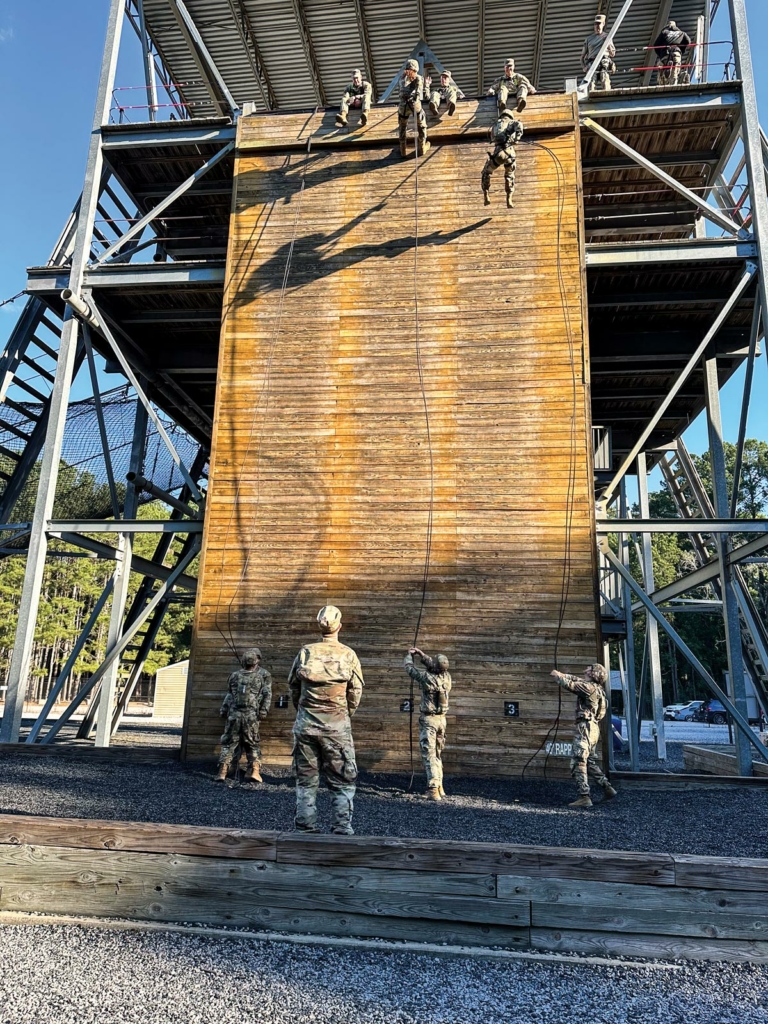
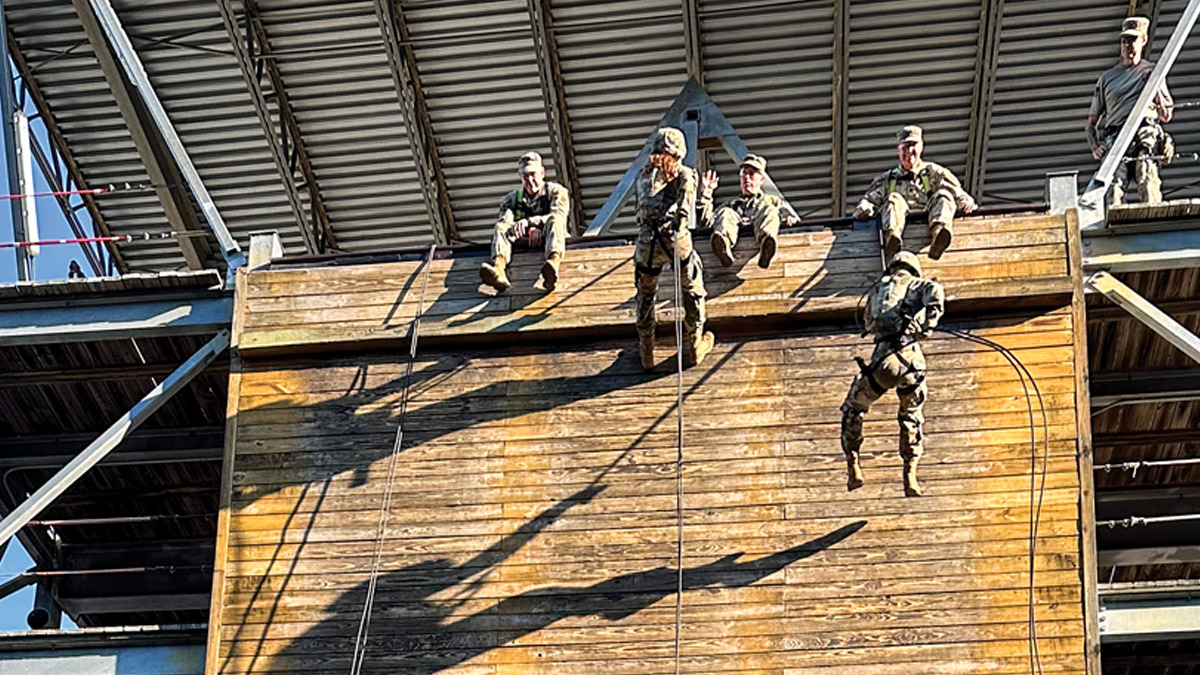
Chaplain training was more than he anticipated: When MacPherson arrived at Fort Jackson, he didn’t expect a full Army training. He soon learned the importance of such physical preparation. “Chaplains are embedded with their units wherever they go,” MacPherson says. “So I fully agree and [understand the need for] physical readiness because the last thing I’d want to do is to slow a unit down.”
What keeps him motivated: MacPherson shared that he struggled during training. “Four or five weeks in, I was truly miserable, like praying to God saying, ‘I don’t know why I’m doing this, I just wanted to help. I shouldn’t have to go through all this just to help,’” MacPherson remembers. His perspective changed when he was with a few hundred basic trainees one morning and reflected on their sacrifices. “It occurred to me that those kids are there so my kids don’t have to be, and because those kids are there, Colgate students don’t have to be,” MacPherson says. “So in that moment, something in me shifted where I felt like I had a responsibility to finish my training and do all I can to help care for and support soldiers, veterans, and their families.”