

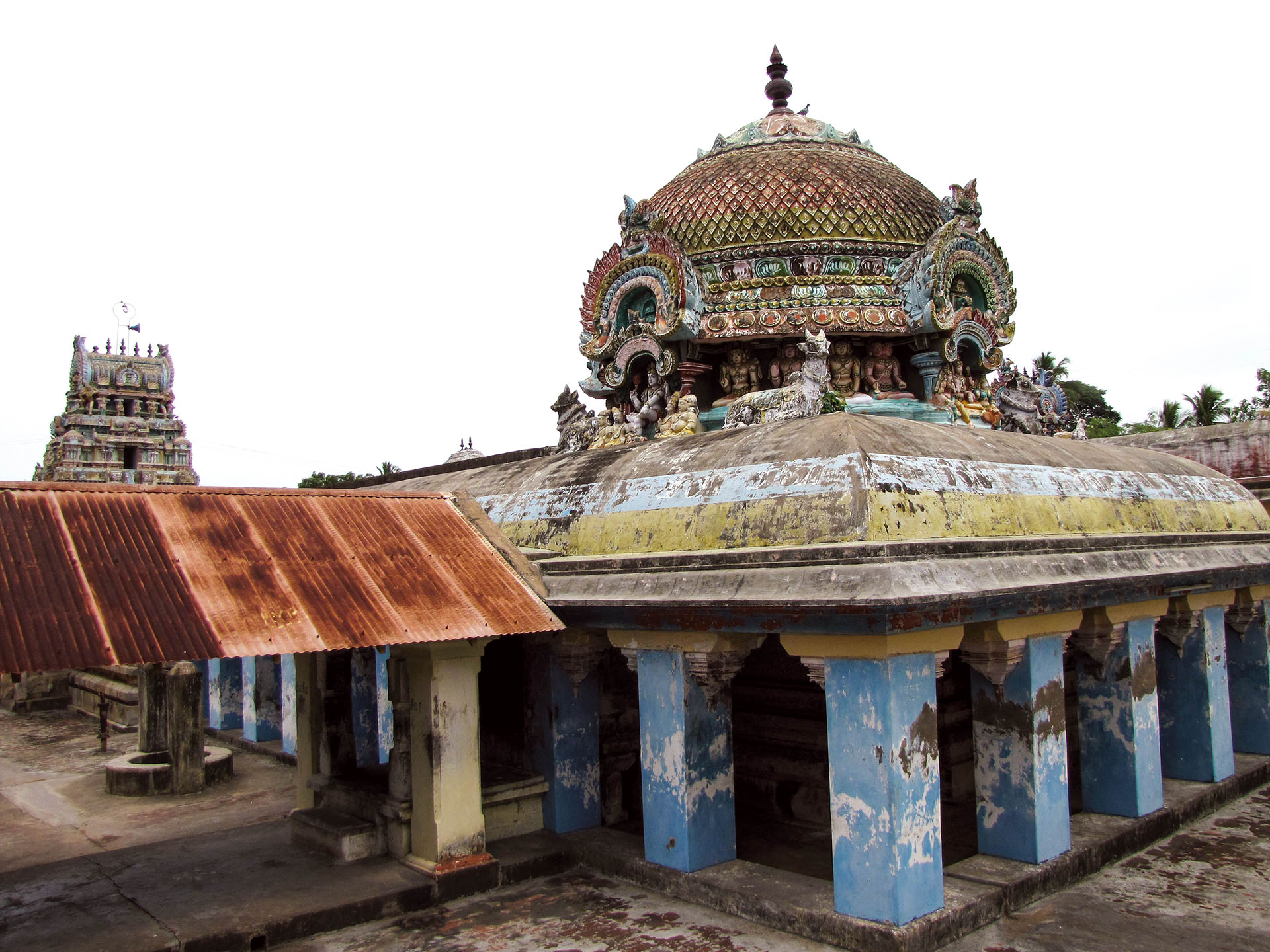
Art and IT collaborate to aid those who study and save antiquities.
Batza Professor of Art Padma Kaimal has spent decades visiting central Tamil Nadu, India. She has collected nearly 10,000 images and assorted location data from 100 temples that were built during the first millennium CE. Thanks to a partnership with Colgate’s Office of Information Technology and a series of institutional grants, those images are going online, where they can be studied by art historians and investigators around the globe.
The Kaveri Mapping Project has taken time to develop — for good reason. Kaimal always intended to publish a scholarly compendium of some sort, though the specifics were undefined. But the market for stolen Indian antiquities soared during the last three decades, and she worried that thieves might turn her trove of content into an illustrated shopping list, complete with directions to the emporium. So she set the project aside and went about her other work, writing and publishing a new book, Opening Kailasanatha: The Temple in Kanchipuram Revealed in Time and Space.
As she pursued other priorities, time and space revealed new reasons to revive her ambition.
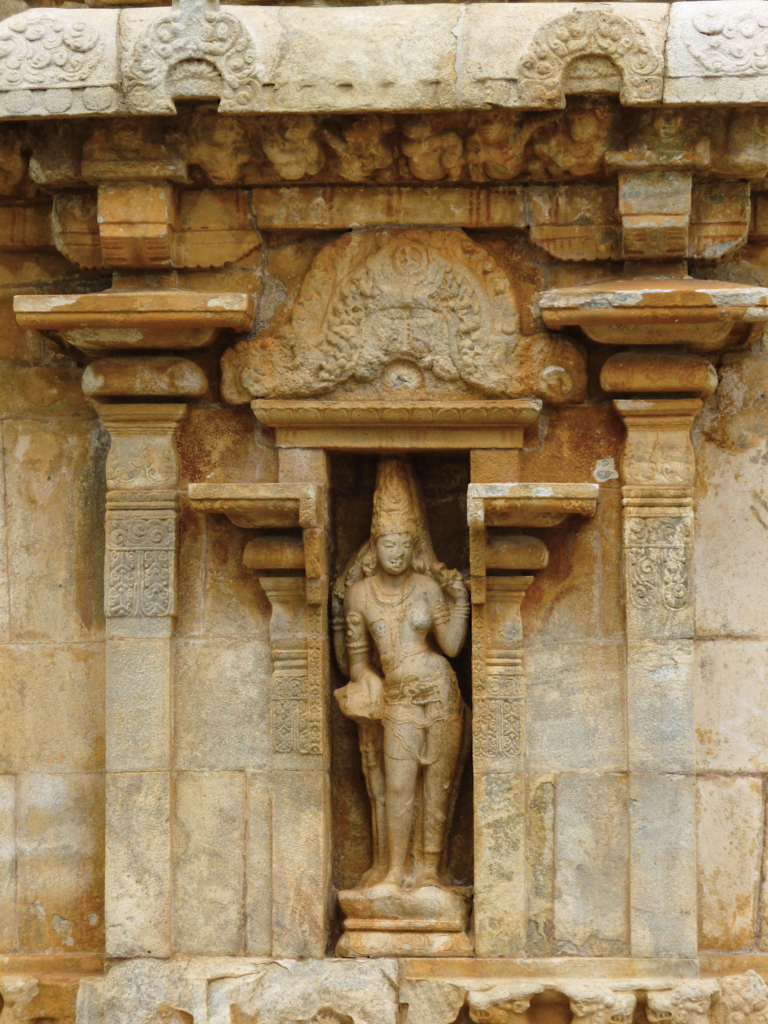
First, as more and more Indian temples have fallen prey to looters, posting photographic evidence online has actually helped investigators track, identify, and return elements of cultural heritage.
The United Nations adopted its Convention on the Means of Prohibiting and Preventing the Illicit Import, Export and Transfer of Ownership of Cultural Property in 1970. “Before that, it was open season,” Kaimal says. “People were scooping this stuff up and helping themselves. Now, if you can document that an object was there after 1970, and it suddenly shows up on the international art market, then you can make a case that that piece needs to
be returned.”
Kaimal’s archive includes photos of pieces that have since been stolen, and publishing those pieces could be a boon to police and the bane of those who would keep their private “collecting” habits private. “Publishing on the internet flipped from being a way to make an art catalog for thieves into a way of documenting and protecting objects in place in situ,” she says.
Second, GIS technology has developed to the point that Kaimal’s extensive portfolio can now drive visualizations that take art history research to new levels. Kaimal has spent countless hours uploading scans and metadata into database software. Research assistant Sara Varanese, from Rutgers, built a GIS prototype map for visualizing the data geospatially. They have partnered with Colgate’s Information Technology Services staff members Ahmad Khazaee ’05, Kai Tsoukalas, and Tolga Dincer and Visual Arts Resources and Programming Manager Lesley Chapman, who are using the database to power image retrieval interfaces and interactive maps. Jeff Nugent, co-director of the Center for Learning, Teaching, and Research, “helped put the team together and now helps them keep the big picture in focus,” says Kaimal.
The results, now approaching pilot phase, could provide answers to questions that Kaimal has been asking herself for decades: “What if I could take the data that these objects represent and project them against a map? Maybe I start to see some geographic patterns in the appearance of certain features or the scale of the buildings and the elegance. Are they correlated to geographic features like the availability of water, or are they correlated to political centers? Are they avoiding political centers? Are they stronger in outlying regions?”
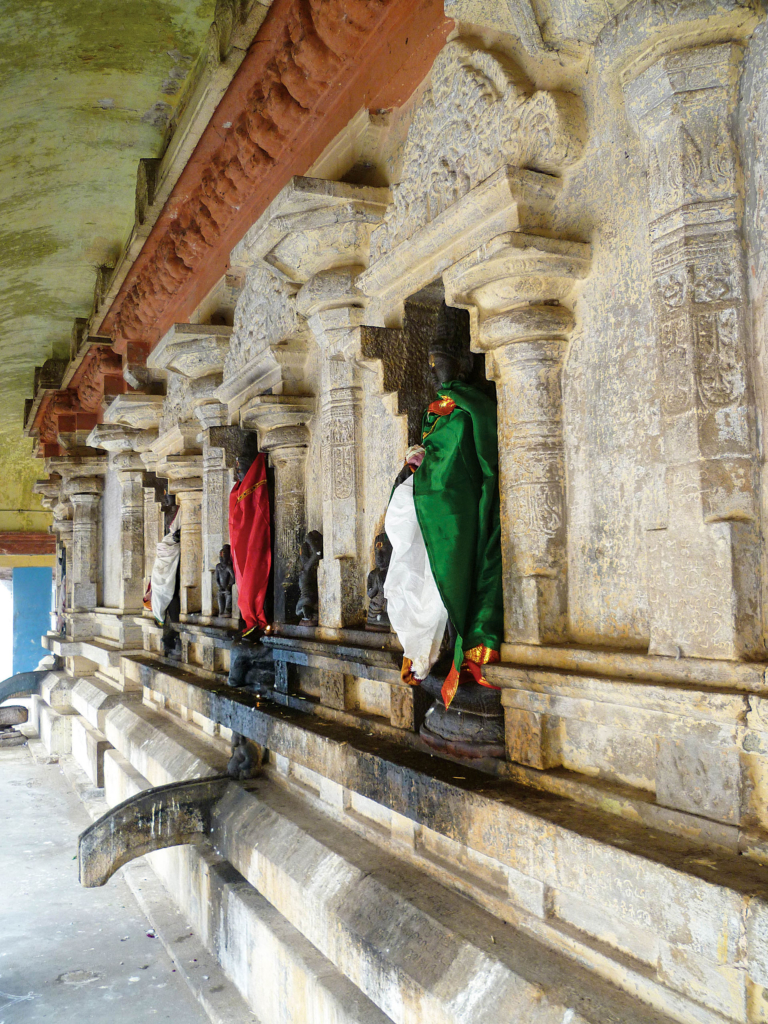
Even as Kaimal, Chapman, Varanese, and ITS staffers build and test their program, the images themselves are simultaneously appearing in academic databases such as JSTOR, giving scholars immediate access to high-resolution files — some of which show the state of temples, for better or for worse, over time. Photos can be compared side by side with other pictures taken by other researchers and galleries at institutions around the world.
Kaimal’s image library is just the beginning. “I hope that I have a number of colleagues who would like to add their photos to the archive so we could expand this beyond this region — we could expand it across South Asia,” she says. “When you’re entering a search in this tool, you would have access to, we hope, hundreds of thousands of images.”
Scholars, rejoice. Thieves, beware.