

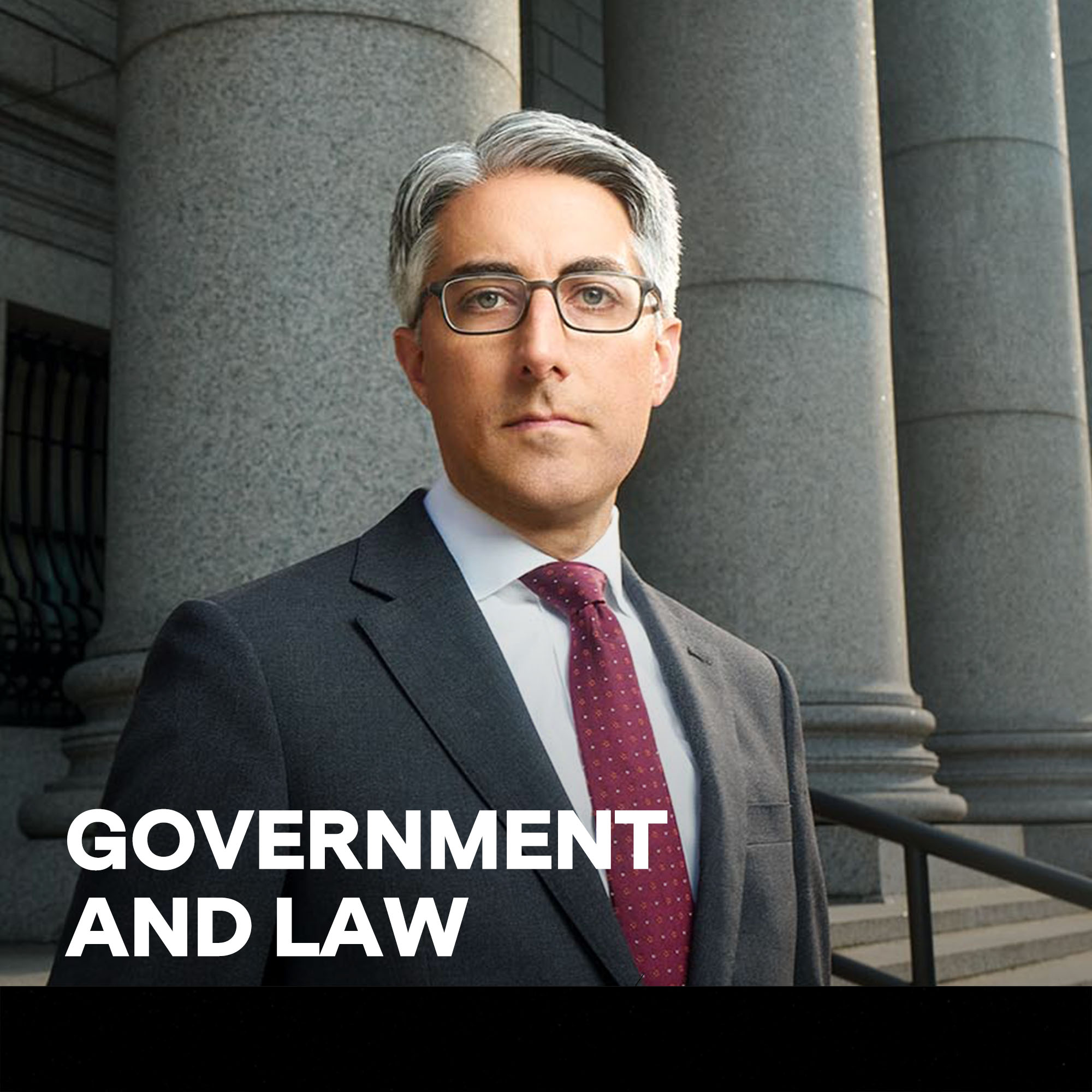
When AI Meets the Law
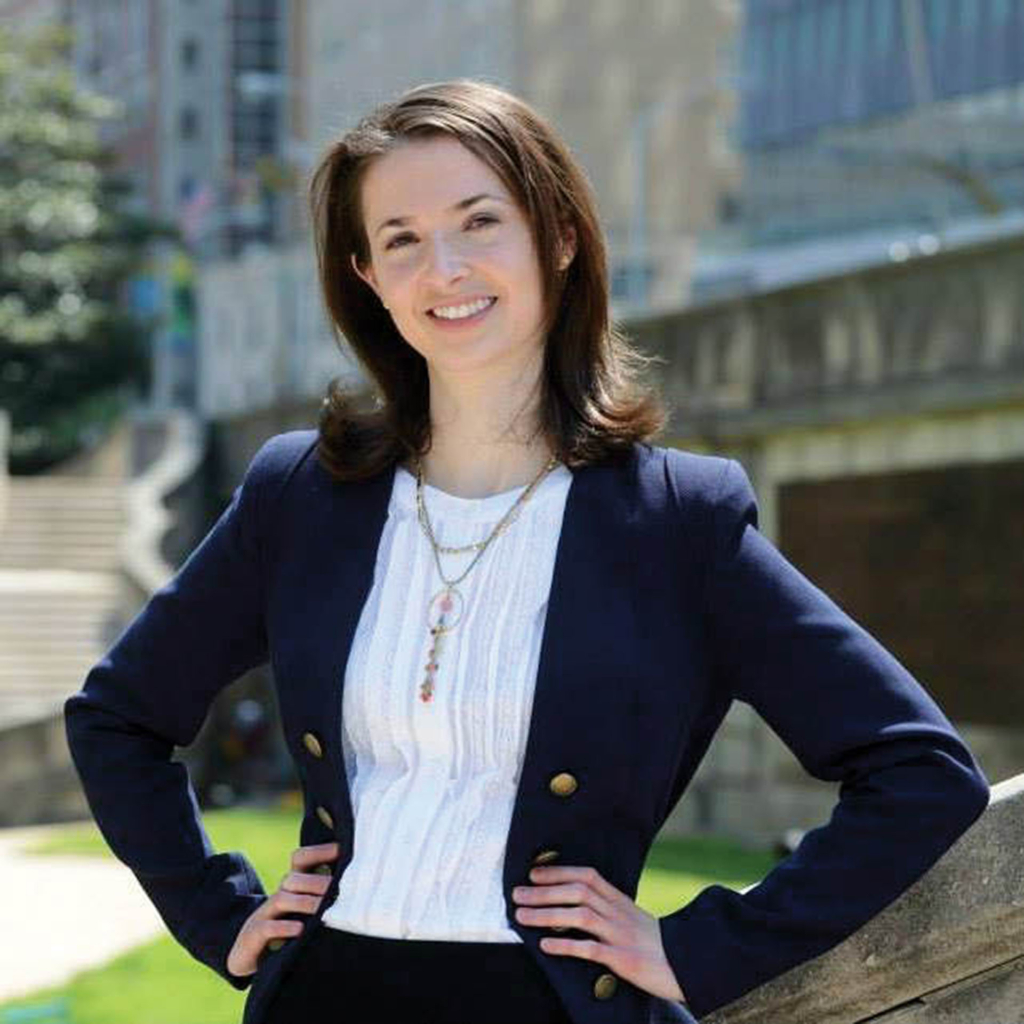
After 15 years in the legal world, Avery Blank ’08 has found her niche as a tech policy expert. She currently works as a counsel in the U.S. Senate, focusing on artificial intelligence.
On being a “bulldog ballerina”: “Three words: strong, graceful, and persevering. That’s the core of who I am.”
On being well rounded: “One of the exciting things about working in Congress is that you have to be really dynamic. You can’t just know the law and the policy, you have to appreciate and be good at the strategy and the politics. You have to appreciate the communication side of it.”
On working in AI: “It’s hard because, as our team says, you have to legislate at the speed of relevance. How do you write policy, regulations, and laws that go slower than the technology developments? You have to try to think about the future as much as you can, and that requires meeting as many people as possible — stakeholders and experts — to understand what’s going on now and what will come. [You also have to] write legislation and policy that’s somewhat flexible; you don’t want it too broad, but you want it broad enough so that when things develop, the law still is relevant.”
On motivation: “What makes me motivated is impact — knowing that I’m working on a hard topic that is at the front and center. That’s what keeps me excited. Service, recognizing that I’m doing this in hopes of making sure that this benefits society. And, finally, working with quality people.”
On risk: Blank’s legal career has included work at the American Bar Association and at her eponymous consulting firm. Her writing has appeared in Forbes, the Washington Post, and TIME. “The overarching thing that I’m most proud of having accomplished in my life thus far is having the courage to go after what I want and taking strategic risks. That includes starting my own business, going back to school, reaching for the stars to work in Congress. It took some guts … and I went for it.”
“The first thing that always comes to mind [when I think of my time at Colgate] is the relationships I had with some of the female professors [who were] experts in their field. In particular, Nina Moore [Dr. William L. Boyle Jr. ’55 Endowed Chair in political science and professor of political science]. It was a class in which I wrote a paper on female representation in Congress. Mind you, I had no idea and no dream of working in Congress at that time. But I found the project fascinating. Then I was asked to present to the class of 100+ students, so this was my first big formal presentation, and I loved it.”
Hearing Immigrants’ Stories
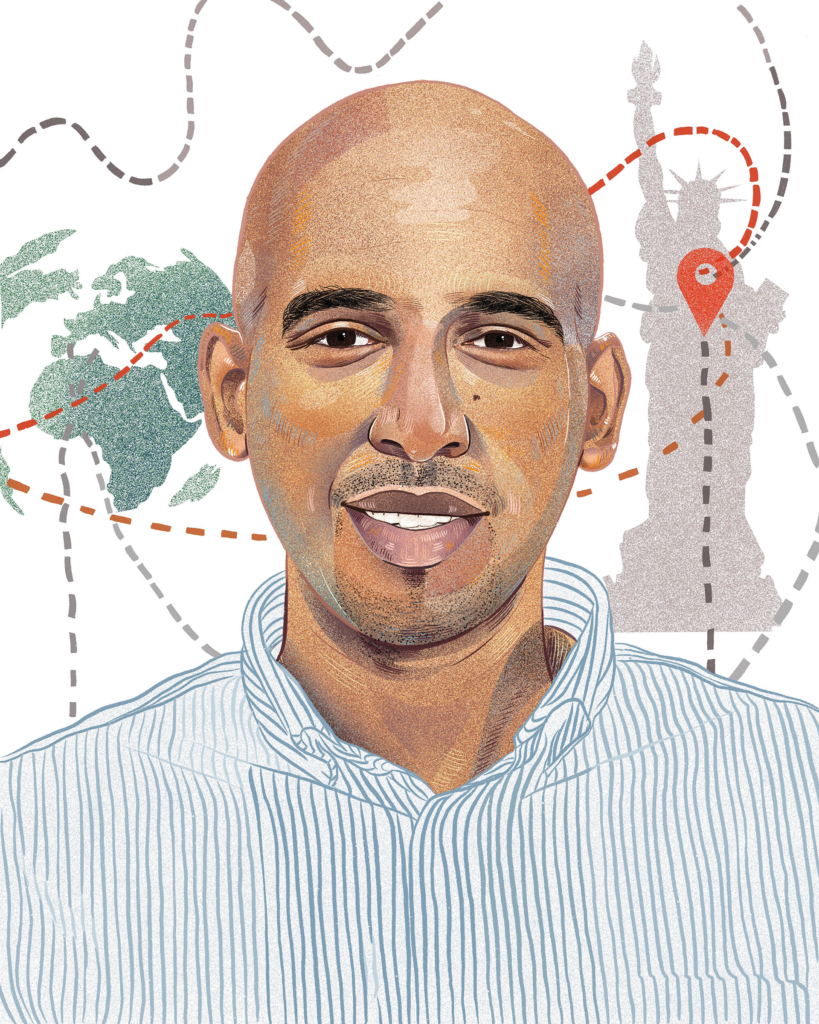
Do something positive — that credo has been ingrained in Henoch Derbew ’07 by his parents since he was a child. “You have to give back,” Derbew says. “We don’t really celebrate it, per se. It’s just what you do.” His father and most of his family came to America seeking asylum from war-torn Ethiopia in the early 1980s, and they consider it a “minor miracle” that they were able to come to the U.S. Now Derbew is an asylum officer with the U.S. Citizenship and Immigration Services (USCIS), meeting people who have the same hope. Derbew was in D.C. teaching at a Jesuit school and uncertain of his calling when he met LeRoy Potts ’85 at an Alumni of Color gathering in 2021. Potts was working at USCIS and encouraged Derbew to apply. After five-plus months of training, most of it legal, Derbew began his work with USCIS and has been stationed in Chicago since 2023. In his interviews with asylum seekers, Derbew’s job is to determine if they legally qualify to stay in the U.S. “You meet a lot of people, and you have the privilege to hear their stories. It’s humbling,” he says.
Derbew is in his first year serving on the Alumni Council. As a student, he majored in history and classics, and he was a member of Brothers, CUTV, WRCU, African American/Black Student Union, Newman Community, Urban Theater, Model African Union, and Zambia Extended Study Group.
Around the Globe with Zakaria Imessaoudene ’18
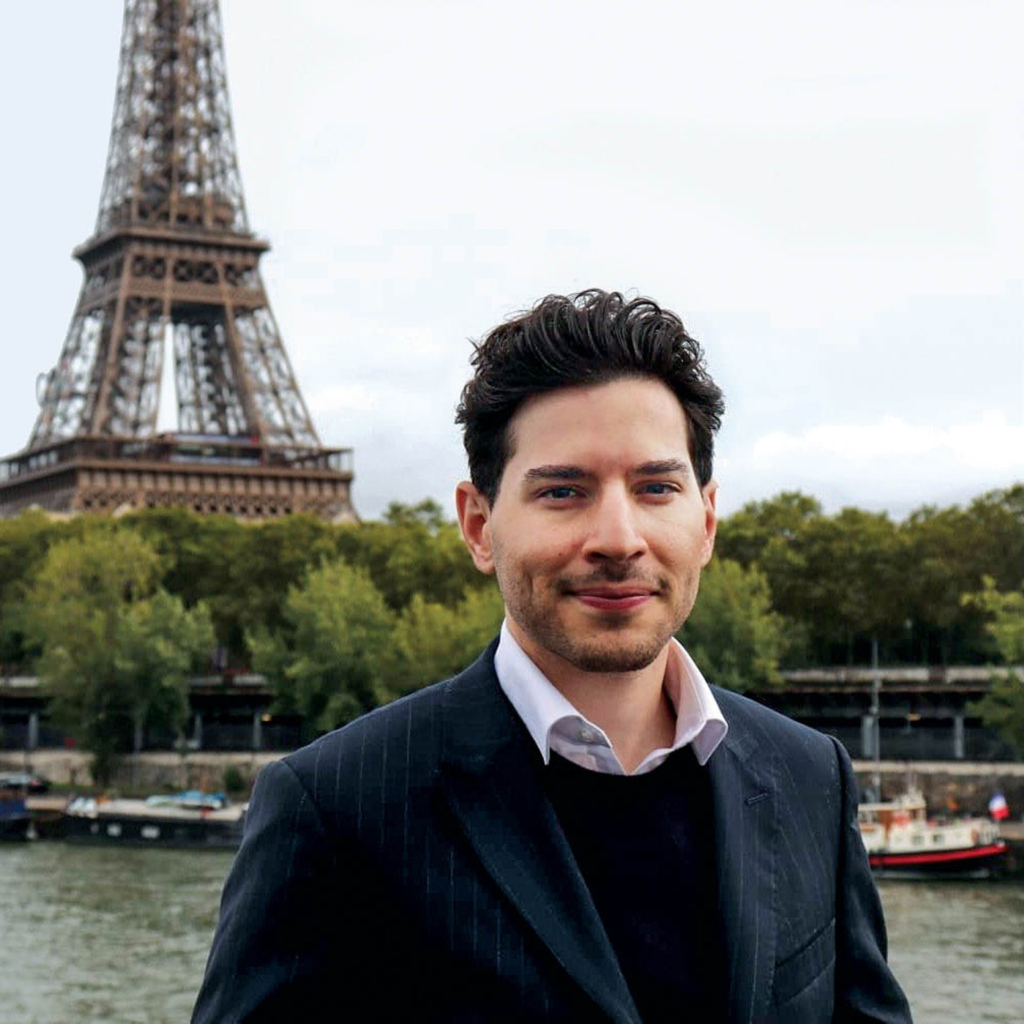
Living abroad isn’t always easy,” says Zakaria Imessaoudene ’18, whose career has taken him to various parts of the world, “but I’ve appreciated the opportunity to be outside of my comfort zone and take advantage of the experiences that come with it.” Imessaoudene is currently a policy analyst at the Organization for Economic Co-operation and Development (OECD) in Paris. His previous work has included time at the World Trade Organization (WTO), the Middle East Institute, and the United States Mission to International Organizations.
Rutherford, N.J.: Hometown
“I’m a Jersey boy through and through.”
Hamilton, N.Y.: Undergrad
“Nothing you study goes to waste. I can tell you from what I’m doing now, that anything from computer science all the way to the humanities and the life sciences has come in handy. That’s really what the liberal arts is all about, right?
“What sets [Colgate] apart from even graduate school [is] that you meet professors who are invested in students’ intellectual growth. I appreciated the fact that you can just knock on anyone’s door and build a personal relationship with them.”
Washington, D.C.: Research analyst at the Middle East Institute
“My time at the Middle East Institute was a good segue into policy work. The think-tank culture in D.C. is its own world, and it gave me exposure to leading research fellows while deepening my knowledge of the Middle East and North Africa. That experience ended up being useful since I’ve now been working in the region for the last few years.”
Geneva, Switzerland: Study abroad, internships, and grad school
“I took part in Colgate’s Geneva Study Group in 2017. Not only did I get exposure to ‘International Geneva,’ which is the hub of many international organizations, but I also got introduced to the university where I ended up getting my master’s degree. I earned a degree in international relations and political science, and I became interested in political economy and geoeconomics. That led me to places like the WTO and, eventually, the OECD.”
Paris, France: Policy analyst at the OECD
“[The OECD is] a club of 38 advanced economies that all come together to discuss ways to learn from each other’s policy experiences and exchange ideas and best practices in economic and social policy.”
Jordan and Yemen: OECD work
Imessaoudene worked on the EU-OECD Project on Promoting Economic Resilience in Yemen, focusing on private sector development across several sectors. The project involved assessing structural challenges and tapping into the organization’s expertise to hold capacity-building workshops and dialogues in places like Amman, Jordan, with public and private sector stakeholders. His work has also led him to collaborate with development partners like the World Bank. “It gave me the opportunity to apply the skills and knowledge I’ve developed all these years — diplomacy, analysis, communication, and foresight.”
Cairo, Egypt: OECD work
Imessaoudene’s current work has led him to explore investment policy and how it could be used to bridge the infrastructure gap in emerging economies. “This is an area I’ve become fascinated by, given its importance in our daily lives. We don’t realize it, but building things like quality railways not only lets you enjoy taking the scenic route when traveling but also plays a huge role in spearheading development.” One of his projects focuses on sustainable development in Egypt and how it can achieve its development goals through infrastructure investment — which will take him to Cairo later in the year.
Next Stop…?
“What drives me is the fact that I want to work in a field where I can see tangible, and ideally, meaningful results. When you work in policy, especially development, you might not see results right away, but give it five, 10 years, you’ll be able to point to something and say, ‘I had a hand in that.’ I’m not sure where I’ll be next, but I’m looking forward to keeping on learning and hope to make a positive impact along the way.”
On the Hill

My job is to make sure that what we’re doing every day matches [Congresswoman Nikki Budzinski’s] overall vision and strategy,” says John Lee ’15, her chief of staff. Working for the congresswoman (a Democrat from Illinois and a former senior staffer to Hillary Clinton and Gov. JB Pritzker), he’s used to juggling bird’s-eye and worm’s-eye views. The same was true in his Colgate years, when he invested in his local community through SGA but also studied abroad in Geneva. During his time in Washington, he’s helped establish 988 as the dialing code; add LGBTQ-specific services to the National Suicide Prevention Lifeline; and secure formal recognition of the 1908 Springfield, Ill., Race Riot National Monument. Lee also advocated for climate legislation, which earned him a spot on the Forbes 30 Under 30 – Energy list.
Semper Fi: Andrew McCormick ’13, Major, U.S. Marine Corps

Why he joined the military: “When I was younger, my dad spoke about his dad, who flew a B-24 Liberator in the Pacific during World War II. His co-pilot wrote a recollection of the places, sights, smells, and sounds. I wanted to experience all of it, to help and protect people. I think that’s the power of storytelling. World events, like 9/11, have continued to confirm my calling. I’m from Pennsylvania; Flight 93 went down not far from where I grew up. I knew I wanted to do something to help keep my neighbors and my family safe. [The military] felt like the correct blend of using my brain and my body to do so.”
Why the Marines: “I wanted to be a Marine for many of the same reasons that I love Colgate. The pride, the tradition, the intense camaraderie, a sense of belonging to a community. [Also] I like trying to solve complex problems. I like being physically challenged. Lack of sleep, food, water; hot, cold, snowing, sleeting, raining — I thrive in those environments.”
His current role: “I’m an air and fires officer with Marine Forces Special Operations Command. I advise commanders on all things aviation related.”
Previously: “For several years, I flew the AH-1Z, the Marine Corps’ attack helicopter. I’ve done a few deployments — primarily training with partners and allies — in Okinawa, Japan; mainland Japan; the Republic of Korea; Australia; Indonesia; and the Philippines.”
At press time: “I am typically in North Carolina. I’m in Yuma, Ariz., right now; I’m attending the Weapons and Tactics Instructor Course, hosted by Marine Aviation Weapons and Tactics Squadron One.”
His two favorite Colgate classes were: Weapons and War, Professors Karen Harpp and Nancy Ries, and Manny Teodoro’s Street-level Bureaucracy and Organizational Theory. “Both helped hone my critical thinking skills and ability to look at problem sets holistically. I rely on those skills regularly.”
Also at Colgate: “I was a volunteer firefighter with the Hamilton Fire Department, in Theta Chi, a member of Konosioni, and an enthusiastic member of Link Staff. I was also a member of Brothers; social, political, and economic issues affecting men of color should be important to people who are not men
of color.”
Where he sees himself in 10 years: “In the defense, national security, or policy realm, using the experience I’ve had as a Marine officer in ways that can solve similar problems — but using my words instead of my weapons. I’ve sworn an oath to support and defend the Constitution. I believe in the document; I believe in its promise. I fundamentally believe in the goodness of people, and I want people to be able to exercise the totality of who they are and live their lives in meaningful ways.”
She’s Working in Service of New Jersey Citizens
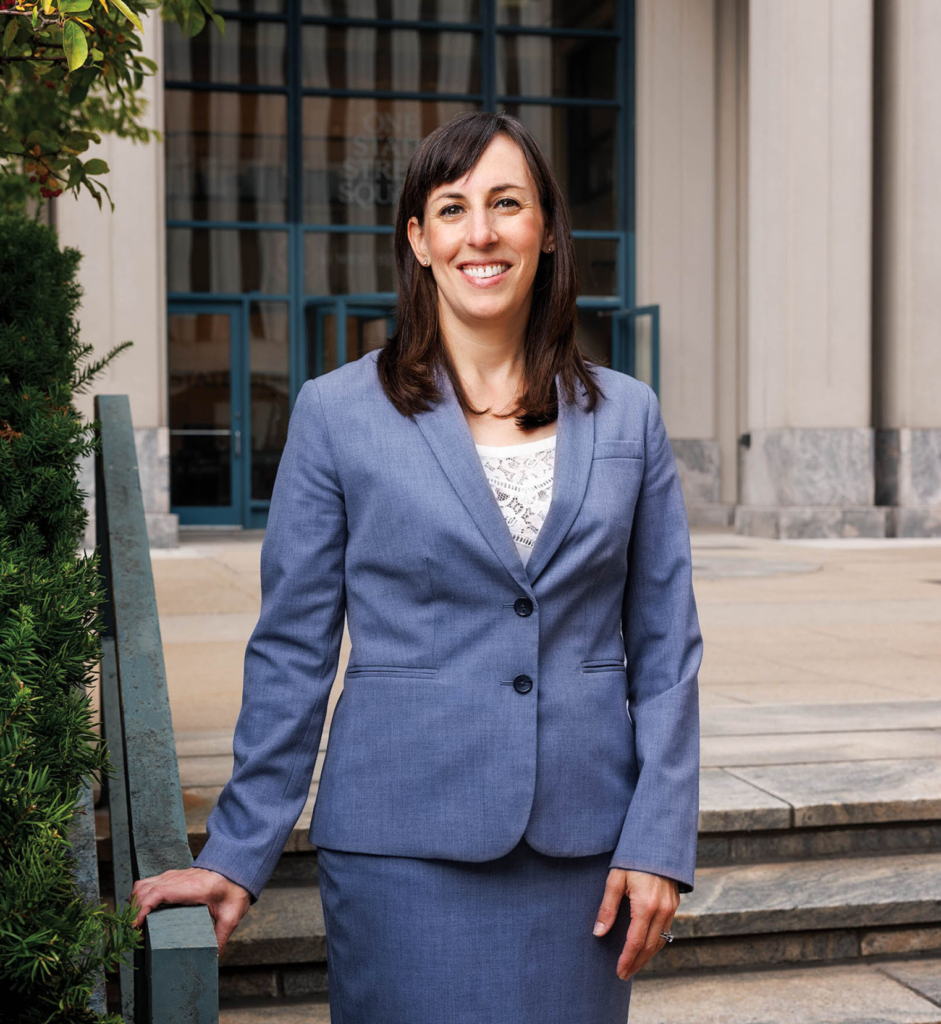
Whether it’s children who have been abused, community members affected by crimes of violence, or New Jersey citizens whose lives or businesses have been impacted by ineffective enforcement of state laws or government corruption, attorney Lauren Realberg ’07 has spent her career “giving a voice to those who might otherwise not be heard,” she says. Realberg currently serves as counsel for the New Jersey State Commission of Investigation, an independent agency whose mission is to investigate waste, fraud, and the abuse of government taxes. She oversees and works with a team of investigators and forensic accountants to develop investigations, then brings people in for sworn testimony, and lastly makes recommendations to the legislature, such as closing legal loopholes or imposing more stringent penalties. Previously, Realberg was senior attorney for the Philadelphia Law Department, working with the Child Welfare Unit, and before that was an assistant district attorney in Philadelphia. Becoming a lawyer, Realberg notes, is how she’s tried to “seek justice for victims, ensure that our communities are safer,” and today, focuses on “protecting the integrity of governmental processes on behalf of New Jersey residents.”
The LinkedIn Lawyer
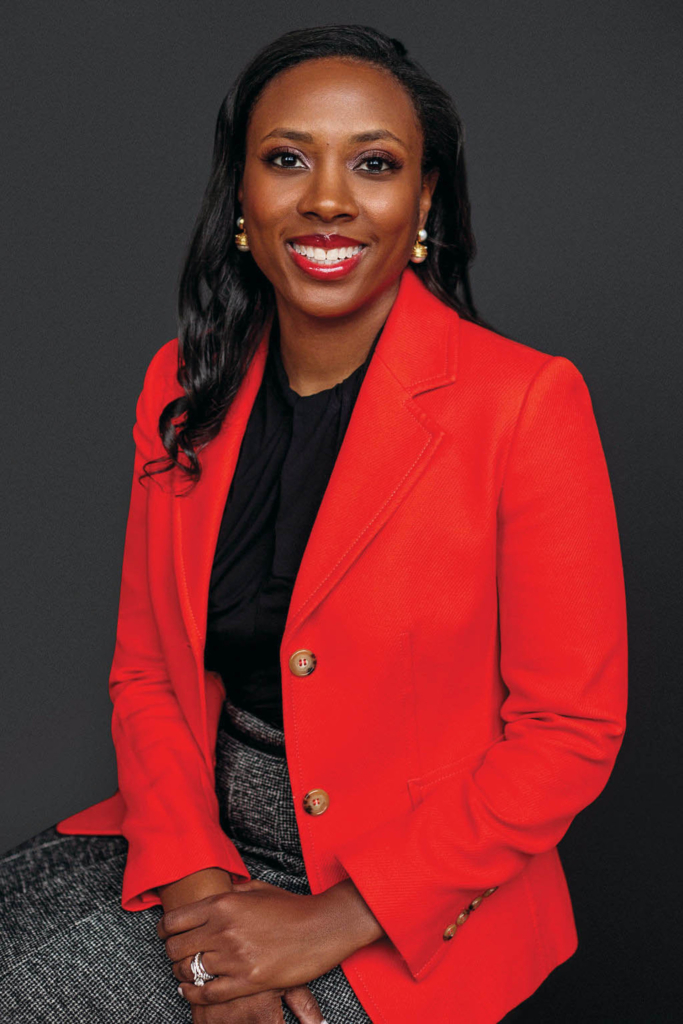
As LinkedIn’s senior director of legal, Clarissa (Polk) ’10 Shah manages her fair share of negotiations and contracts. But, she says, “one of the things I’m most proud of is actually not the day-to-day legal work I do.” In early 2020, when the pandemic kept everyone at home, she was juggling pregnancy, a 3-year-old, and managing LinkedIn’s legal team. “It was a lot,” she says. Then came the news about Ahmaud Arbery, who was murdered while jogging in Georgia. Arbery reminded Shah of her youngest brother “who’s also very tall and likes to jog; and it was almost overwhelming to think about.” Working for a social media platform, where people post about current events, Shah found it harder and harder to compartmentalize her work life from “what was happening in the external world,” she remembers. “I was speaking with a lot of employees who felt the same way,” Shah adds. She decided to approach her general counsel with the idea of starting a discussion series through the Diversity, Inclusion, and Belonging group that Shah had been co-leading. Since starting the discussion series, Shah has noticed that “pressures are released and people think freely; we communicate better and we produce better ideas, which is ultimately a benefit for everybody.” A few months later, Shah had another lightbulb moment: She asked her general counsel if he could connect her department with other legal departments at leading tech companies. Within a day, she was in touch with her counterparts at a number of tech companies, including Google, Meta, and Microsoft. The group holds quarterly roundtables to share best practices on contributing to a more inclusive legal field. “Some of the ideas that have come from that group have enriched our department so much,” she says. “It’s made us better legal professionals.” As a Colgate Board of Trustees member, Shah chairs the DEI committee and is a member of the outreach committee. Her other Colgate connections are her two brothers, Caden Polk ’12 and Charles Polk ’16, as well as her husband, Tushin Shah ’10. “Being part of a team with him has made all of this possible,” she says of Tushin, her “guiding light.”
Representing the United States of America
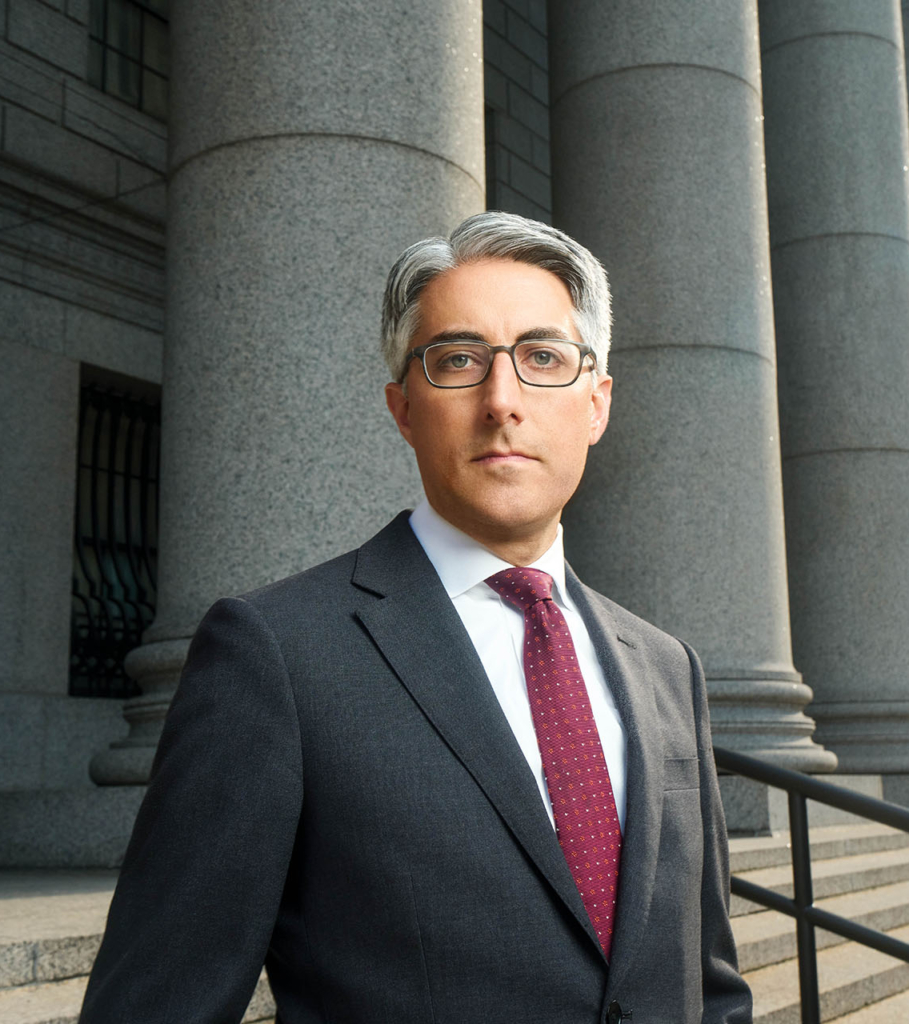
The cases against New York City Mayor Eric Adams, Sen. Bob Menendez, and political strategist Steve Bannon all have one person in common: Robert Sobelman ’08, chief of the public corruption unit of the U.S. Attorney’s Office for the Southern District of New York. These have been sensational news stories, but for Sobelman, “It’s about the mission. We are blessed to represent the United States of America. We work tirelessly to make sure we are doing the right things for the right reasons and doing them the right way.” At press time, Sobelman was supervising the case against Adams, and he previously supervised the case against Menendez. As an assistant U.S. attorney from 2016–23, Sobelman was part of the team prosecuting Michael Avenatti in 2022 for attempting to extort Nike for $25 million and then stealing hundreds of thousands of dollars from Stormy Daniels. Sobelman also handled the 2021 case against Real Housewives of Salt Lake City’s Jennifer Shah, involving 30 defendants accused of orchestrating a telemarketing scam targeting elderly victims. And he was on the team prosecuting four defendants, including Bannon, for defrauding donors to the We Build the Wall campaign in 2020. “Rob’s successful prosecutions of powerful political figures is a testament to how he always approached challenges at Colgate — with integrity and grit,” says David Kusnetz ’09, who met Sobelman through the debate team that went on to represent Colgate at the world championships. Sobelman majored in political science and chose his career path after Professor Stanley Brubaker’s constitutional law course. “We spent the semester reading opinions and being exposed to different ways of reading statutes, of interpreting the constitution,” Sobelman remembers. (Later, as a senior and the SGA president, Sobelman would rewrite its constitution with Kusnetz, the SGA speaker of the Senate.) While on the Washington, D.C., Study Group, Sobelman says, “Professor Brubaker created opportunities for us to interact with people who worked on those kinds of issues, including then-Justice Antonin Scalia.” Kusnetz, with whom Sobelman co-founded the Colgate Lawyers Association 12 years ago, says: “Rob’s work as a federal prosecutor on some of the toughest and most high-profile cases in the country is equally inspiring and unsurprising, as everyone at Colgate knew Rob was destined for great things.”
Sobelman and his wife, Deborah (Charney) ’08, just celebrated their 13th anniversary.