


Movie Producer, Palme d’Or Winner
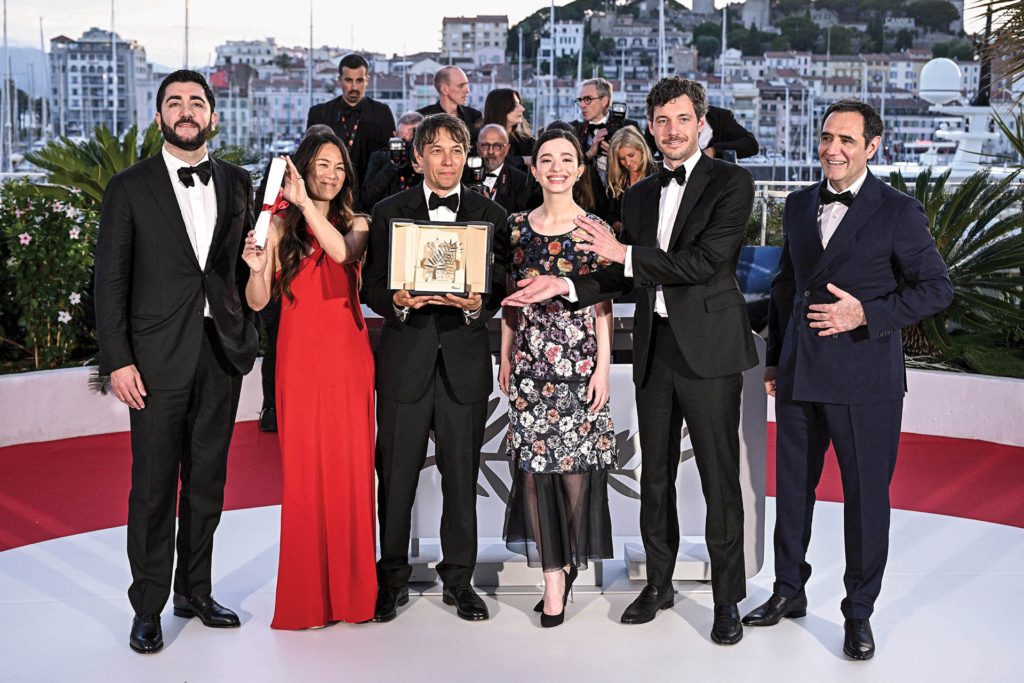
It seems like a dream sequence: You’re at the Cannes Film Festival, jury president Greta Gerwig announces your movie as winner of the Palme d’Or (the top prize), and at the after-party, she tells you she genuinely loved the film. “It was a magical experience,” says Alex Coco ’12, who produced the award-winning, dark romantic comedy Anora. (Pictured, second from right, with Vache Tovmasyan, Samantha Quan, Sean Baker, Mikey Madison, and Karren Karagulian.)
In fact, it was “the thing I always wanted to do — win that award. To be in that class and to be a part of history that way is pretty special.” Coco says he and writer/director Sean Baker had set their expectations low going into the festival last May. But after the premiere, “we felt better and better about our chances.” The audience was “fully engaged, and you could feel the energy,” he says, adding that the crew saw the glowing reviews online as soon as they left the theater.
Coco previously worked on Baker’s The Florida Project and Red Rocket; his other producer credits include The Sweet East and Pet Shop Days.
During the writers’ strike, he started building up a slate of smaller films ($5 million and below) “to cultivate more talent, which is what we need in this industry very badly — we need more young filmmakers,” he says. In addition, Coco has been producing commercials and music videos for stars like Childish Gambino, Addison Rae, and Vince Staples.
He describes his producer role as “soup to nuts with filmmaking.” Coco explains: “I’ve always tried to be as well rounded as possible. I’m involved in coming up with ideas, developing the script, taking it out to cast, taking it to agencies or talent directly, finding money for the project, building the budget and the production plan, executing the film on set, taking the film into post-production, and then working with sales agents if we haven’t sold the rights to the film yet.”
Growing up, he was the kid with his dad’s camcorder at family events and making movies with his friends. While in high school in New Canaan, Conn., Coco took a film class and saw David Lynch’s Eraserhead. “That movie destroyed me. It put me in a horrible mood. I wanted to take a shower. When I came out of that emotional state, I was like, ‘I didn’t know a movie could actually do that to you, and I didn’t know you could walk the line between art and storytelling in this way.’ David Lynch was able to bring those two worlds together, and I was like, ‘This is what I’ve been waiting for… I’ve found what I want to do.’”
Coco was recruited by Colgate for track (he ran the 110-meter hurdles) and, although he knew he wanted to focus on art and film, chose the University for its liberal arts education.
In the Know
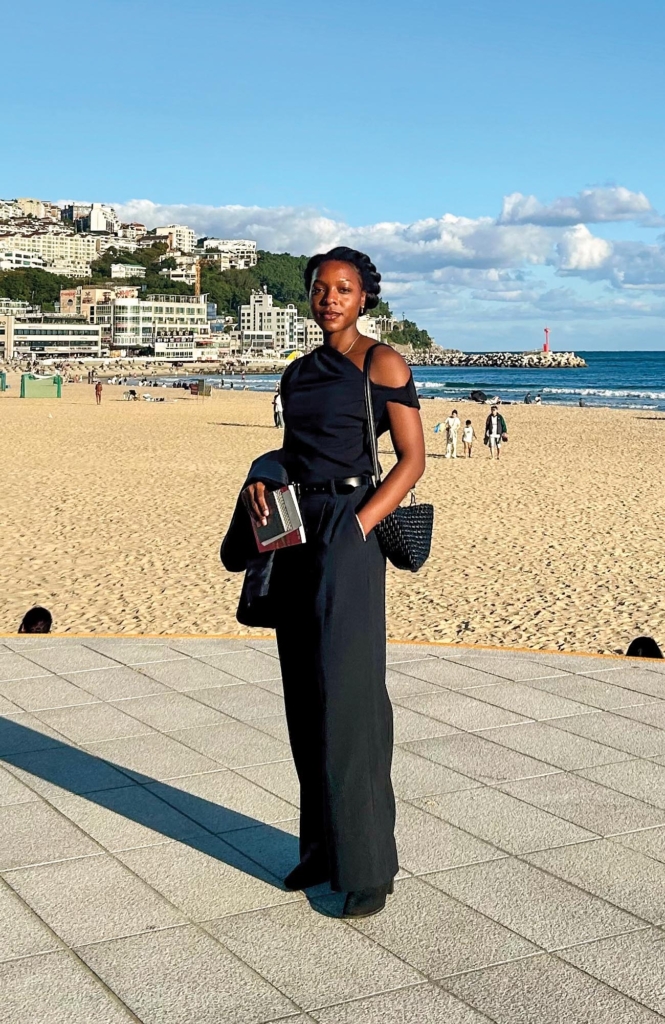
Imani Ballard ’18 predicts the future. A senior content curator with the streaming service Tubi, Ballard says, “The main part of my job is having an encyclopedic knowledge of the industry and what’s trending, looking at data and seeing what has performed well, and trying to forecast what will perform well.” Other streaming services “rely on an algorithm to show viewers what to watch; at Tubi, a lot of that is driven by a person like me, and we make containers of content.” Ballard will look at the platform, see what collections are missing, scour available content, and create these containers. For example, she built a collection based on true events and one on book-based content. She can also “niche down,” like creating a Shonen (for young boys) subcategory of anime. Ballard specializes in Asian cinema, sci-fi and fantasy, and international content, so she helped launch Tubi in the UK last summer. From personal projects like her Subcultural show on Spoon Radio to her professional experiences that have included working for Redbox and Fox Soul, Ballard has explored different ways of telling audiences “what’s popping in the zeitgeist.” Her ultimate goal is to bridge the gap between Asian cinema and U.S.-based stories about people of color — which might be how Ballard’s personal Venn diagram would look. Her fascination with Korean culture began at age 12, when her brother had a Korean roommate at school. She’s since been learning the language, was a member of Colgate’s Korean Student Association, studied abroad there, has traveled there on her own several times, and has developed a circle of close friends who live in Korea (one of whom she talks to daily, alternating between Korean and English conversations). When she joined Tubi three years ago, she told them that that’s where her interests lie. “Korean has opened up so much for me,” she says.
‘Picking Out the Pieces That Reveal Someone’s Character’
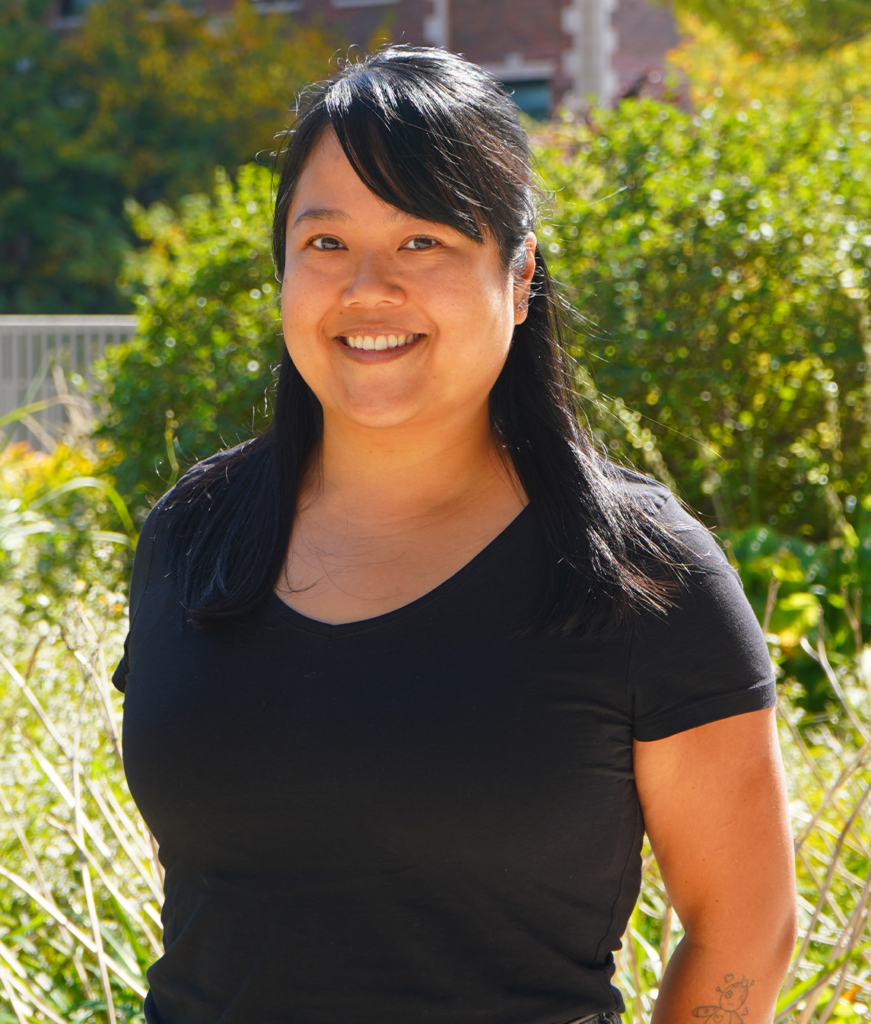
A sign Elizabeth Lê ’09 chose the right career: She often forgets she’s working. For a recent documentary on Jim Henson, Lê, lead assistant video editor for Imagine Entertainment, found herself watching hours of Muppet Show footage, looking for clips that demonstrated Henson’s before-his-time focus on acceptance and inclusivity. “I’d just get pulled in,” she says. Lê, an English major, got her start in post-production work for an ad agency, creating spots for Jif, Walgreens, and Folgers, among others. Soon, she was hired to work on a home renovation show for celebrity chef Bobby Flay’s production company and, later, created digital extras for TLC’s Say Yes to the Dress. When COVID-19 shut down production — “nobody was buying wedding dresses during the pandemic,” she quips — Lê transitioned to documentary-style work, including a Peacock series on Ghislaine Maxwell, a Judy Blume doc for Amazon Prime, and the Henson film, Jim Henson Idea Man, which took home five Emmy Awards last September. While her work involves hours of perusing content and working with complex editing software, she likens her job to something much simpler: “I’m a storyteller,” she says. “I’m combing through raw footage and picking out the pieces that reveal someone’s character.” Lê’s current project — a hush-hush docuseries on, at press time, an unnamed famous actor — is keeping her busy, but she hopes her future projects highlight people who often “get ignored or othered,” she says, relating her own background as the daughter of Vietnamese refugees. “Those perspectives and voices add texture,” she says. “And they’re stories worth telling.”
Supporting Storytellers
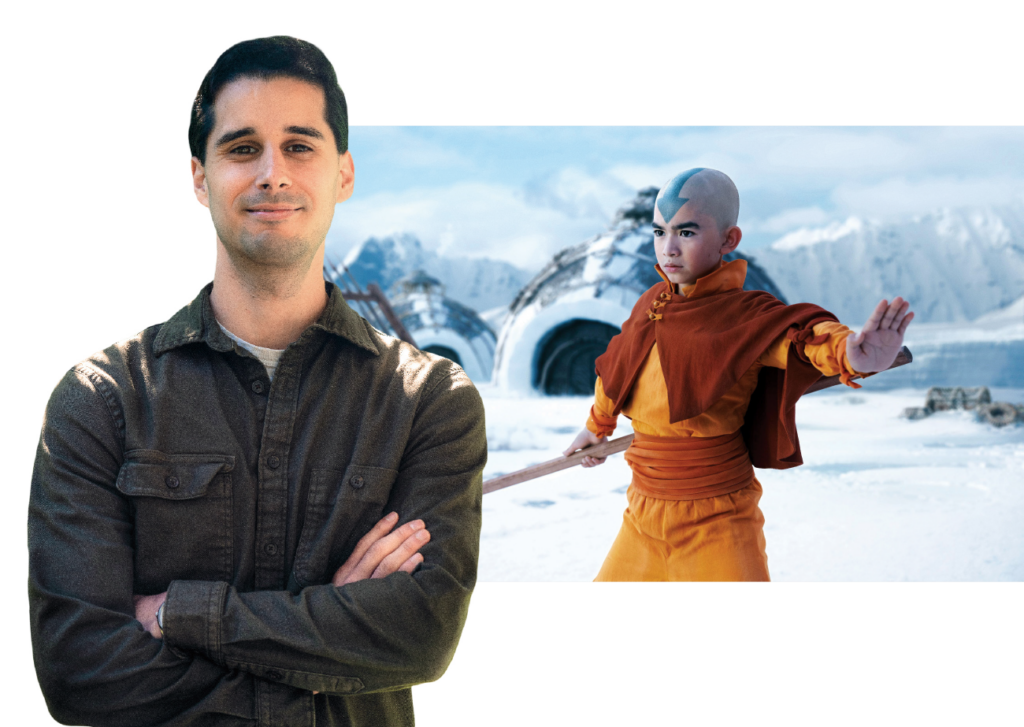
Michael LoFaso ’10 was primed for a career on Wall Street when he graduated from Harvard Business School in 2016. But after a stint at Morgan Stanley, he felt pulled toward Hollywood. LoFaso, a Buffalo, N.Y., native and Colgate mathematical economics major, had always loved movies (Christopher Nolan’s Batman trilogy is his all-time fave) and soon parlayed his business background into a career at the intersection of art and commerce. Now as co-CEO of the film and TV production company Rideback, LoFaso “supports storytellers in helping big, creative endeavors come to life,” he says. Some of Rideback’s recent endeavors: 2019’s live-action Aladdin, the LEGO movie franchise, and the adaptation of Stephen King’s It. He shares his insights on choosing projects with blockbuster appeal:
Make it relatable. “At Rideback, we always try to tell stories with universal themes that audiences can relate to — a coming-of-age or underdog story, for example. Even a movie like It, when you strip away the scares, is about a group of outcast kids who band together to face their fears. That’s something people can identify with.”
Make it immersive. “We’re drawn to projects that create distinct new worlds, so that when you take in something like [Rideback-produced TV series] Avatar: The Last Airbender, you’re immersed in an engaging visual setting.”
Don’t forget the grown-ups. “For family movies like the LEGO series or the live-action Lilo and Stitch movie we’re working on now, we like to lean into humor and heart that adults can enjoy too. When it works on different levels, we know we have a chance at making something memorable.”
The Newsmaker: Taylor Mooney ’17, Documentary Producer, CBS Reports

Teenage dream: “As a high schooler, I remember watching a 60 Minutes segment of Anderson Cooper speaking with marine biologists who were trying to save coral reefs, and I pointed to the screen telling my mom, ‘I want to do that.’ But I wasn’t talking about the marine biologists, I was talking about Cooper’s work — communicating science to the public through factual, visual reporting.”
Seeing stars: “Documentary producer Caitlin Grossjung ’13 helped me land my first job as a production assistant for National Geographic’s StarTalk With Neil deGrasse Tyson and a subsequent role with NatGeo’s docuseries Explorer. Now as a producer with CBS Reports, I’m researching stories, writing scripts, pulling material from archives, roaming court records databases, polling experts, and talking to anyone and everyone who wants to share their story with me.”
Rage bait: “Caring about something enough to find ways to make others care is an absolutely critical (and occasionally infuriating) process in developing a story idea. I’ve found that when I’m in a full rage spiral of ‘Why doesn’t anyone care about this as much as I do?!’ that means there is absolutely something there.”
No fake news: “Every single decision is fact-checked. My editor and I spend weeks choosing what shots and bites to use to ensure the proper framing of a story. I’ll spend hours rewording one sentence of narration to make sure it’s accurate but nuanced.”
Making Musk: “[Webby Award–winning CBS Reports documentary] Elon Musk, Inc. was a challenge from the beginning. At the time of Musk’s Twitter acquisition, there was news coming out every moment of every day, so our story was constantly changing — not to mention Musk and his various companies are notorious for not responding to media requests. Musk has defined his career by these extremely high-stakes business gambles, but digging a little deeper I found that, from a business perspective, [buying Twitter] was fundamentally different from his other ventures. So we leaned into that to provide a more comprehensive view of how it fits into the story of Elon Musk.”
Current projects: “I love human interest stories with a focus on marginalized communities. I’ve most recently been reporting on genderqueer youth and people with disabilities.”
10 Years, 37 Million Bottles Recycled

Siblings Jake ’16 and Caroline Danehy ’19 are co-founders of Fair Harbor, a New York City–based company that makes apparel from recycled plastic bottles. Jake is CEO and Caroline is CBO.
Milestone: Fair Harbor just celebrated 10 years
The company has repurposed more than 37 million plastic bottles.
Accolades: Forbes 2020 30 Under 30 list, EY Entrepreneur of the Year winners (2021)
Jake and Caroline both majored in geography at Colgate.
They come from a long line of alumni, including father Kevin ’83, uncle Jack ’46, cousin John ’78, grandfather Bud ’60, and great-grandfather Lester 1921.
“It’s been incredible to work with Caroline,” Jake says. “I remember it like yesterday when we would work on Fair Harbor in between classes at the Ho Science Center. Although that was a long time ago, we still work together every day and share the same vision for what we want Fair Harbor to become. It’s been an incredible journey, and I can’t wait to see what we accomplish together in the next 10 years.”
All the World’s a Stage
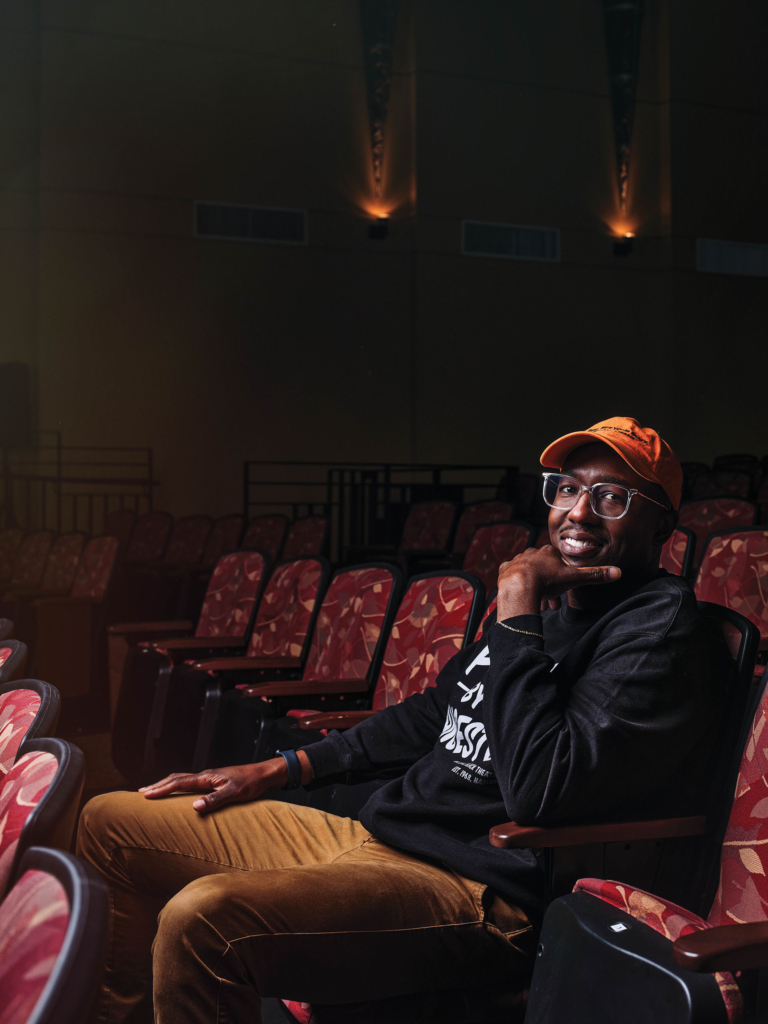
Electrifying,” “brilliant,” and “confident” were the praises sung by Washington, D.C., media when describing Jamil Jude’s 2024 directing of Topdog/Underdog. Jude ’09 directed a revival of the Pulitzer Prize–winning 2002 Broadway play in the nation’s capital last summer — one of his freelance gigs that he does when he’s not spending most of the year as artistic director of True Colors Theatre in Atlanta. At Colgate, Jude was on the pre-med track, but when his football teammate Will Arnold ’06 asked him to perform in an Urban Theater play, everything changed. “What was nice about Urban Theater was that it was for students of color; we got to see ourselves,” says Jude, who explained that in his previous experiences, “I was seeing that the theater is fairly white.” Urban Theater inspired Jude to start writing and producing his own student plays, and after graduating as an English major, he accepted an internship at Arena Stage in D.C. There, Jude met Tony Award–winning director Kenny Leon, who would become his lifelong mentor. The two kept in touch while Jude pursued his theater career in Minneapolis; then in 2017, Leon brought him on as associate artistic director of True Colors, and in 2019, Jude’s mentor gave him the reins. The nonprofit celebrates the “rich tradition of Black storytelling” and elevates “bold artists from all cultures.” Its 2025 lineup includes Broadway’s Jaja’s African Hair Braiding and Ain’t No Mo’. Jude will also be traveling to Indiana Repertory Theatre and Syracuse Stage for his production of King James, followed by a longer contract in San Francisco for a new musical called Co-Founders that “we hope, fingers crossed, is bound for Broadway.” Says Jude, who has received numerous awards and recently secured a $500,000 grant from the Mellon Foundation for True Colors: “This is the career that I never thought I would have 20 years ago, so everything I’ve achieved has just been icing on the cake.”