


Raiders report how they fuel their bodies for ultimate performance.
SOPHIA MANNERS ’22
Cross country
History and French double major
Hometown: Pleasantville, N.Y.
My eating is dependent on my practice schedule. If my practice is before 11:30 a.m., I won’t eat beforehand because running long distance on a full stomach is never a good idea. I will have breakfast afterward, consisting of either 10 ounces of yogurt with granola, four to five homemade chocolate chip muffins, or a breakfast sandwich. If my practice is in the afternoon, I will eat breakfast when I wake up, and possibly a small snack later. On harder effort days, I drink Muscle Milk after practice for extra protein.

Being a long-distance runner, we tend to lose so many calories during practice that I find myself needing to eat calorie-dense foods to make up the difference. Chocolate milk is a popular choice among distance runners for its taste and calories.
I drink my 17-ounce water bottle about once an hour. Drinking is one of the most important pieces to recovery, and I try to ensure that I am always hydrated.
I try to have the same premeet dinner no matter where I am: one to two servings of steak and a half-pound of pasta seasoned with garlic and oil. It gives me exactly what I need in terms of carbs and protein to perform my best the next day. I usually round out dinner with a vegetable as well as a dessert, which helps me to feel more satiated and allows me to get in more calories.
Favorite thing to eat after a race: I tend to not eat a lot the day I race to preserve my stomach, so afterward, I am looking to consume anything and everything.
The best advice I’ve received about diet: Eat by feel. If you’re hungry, eat. If you’re full, stop. If you want sugar, go for it. That is what your body is craving. In high school, I was much stricter [about] my diet, but since eating by feel in college, I have seen tremendous improvements to my body, performance, and most importantly, happiness. Happy runners are faster runners.
A.J. Desantis ’23
Football, offensive line, #65
Biology major
Hometown: Endwell, N.Y.
On a typical day, I aim to eat three to four meals. Breakfast in the early morning usually consists of an egg and cheese bagel sandwich with a Super Coffee. [Fun fact: The energy drink was cocreated by former football captain Jim DeCicco ’15.] For lunch, I will eat a sandwich, usually turkey, cheese, and lettuce on a sub roll with a bag of chips and a glass of either water or juice. After practice, I have dinner. An ideal dinner for me is grilled chicken with broccoli and a side of rice. This tends to be a bigger meal because it is post-practice. Depending on the day, I will eat a small snack while studying and doing homework. All of this food is made by our great cook at Delta Upsilon, Suzi Bradbury, who does an amazing job to feed many of the football players who require a lot of food during the day, and we are all very thankful.
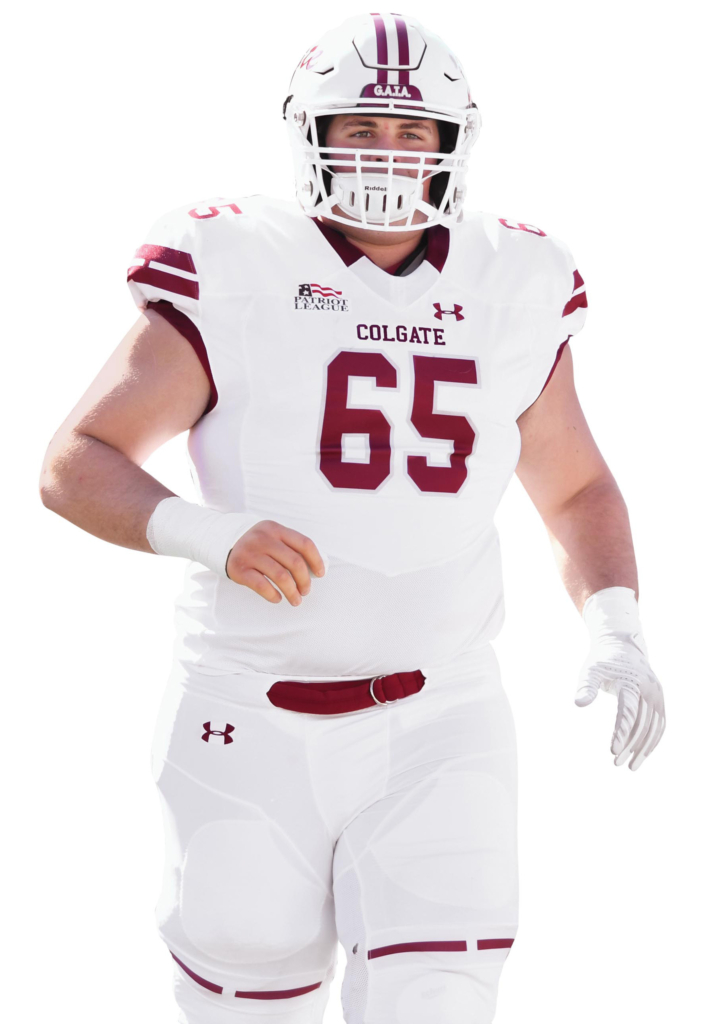
Staying hydrated: Along with a lot of water, I tend to mix in sports drinks because our bodies need the electrolytes to stay hydrated.
A pregame meal consists of two meals the night before, during which I try to eat a lot of carbohydrates and get hydrated. This is usually a bigger meal: steak, chicken, pasta, and water and sports drinks. At the end of the meal, I tend to eat dessert, like ice cream. The day of a game, I do not eat a lot because I feel the best way to be prepared is to be going into it a little hungry. I usually eat eggs, a breakfast meat, and orange juice. I am constantly drinking fluids to help prevent cramps and other setbacks during a game.
After a game: I love to eat two chicken sandwiches, a bag of chips, and a cookie. I will usually go see my parents after the game and eat pulled pork sandwiches or pizza.
Calories: In season, between 5,000–7,000 calories per day to maintain weight.
Malia Schneider ’22
Ice hockey, forward, #18
Sociology and theater double major
Hometown: Millarville, Alberta, Canada
In a day: For breakfast, I will eat eggs with spinach, a cup of coffee, and water. Lunch, I will try to eat salad, usually with chicken, tomato, cucumber, chickpeas, and other veggies. A classic dinner would consist of protein like chicken or fish, carbs like rice or bread, and then a side salad or veggies.
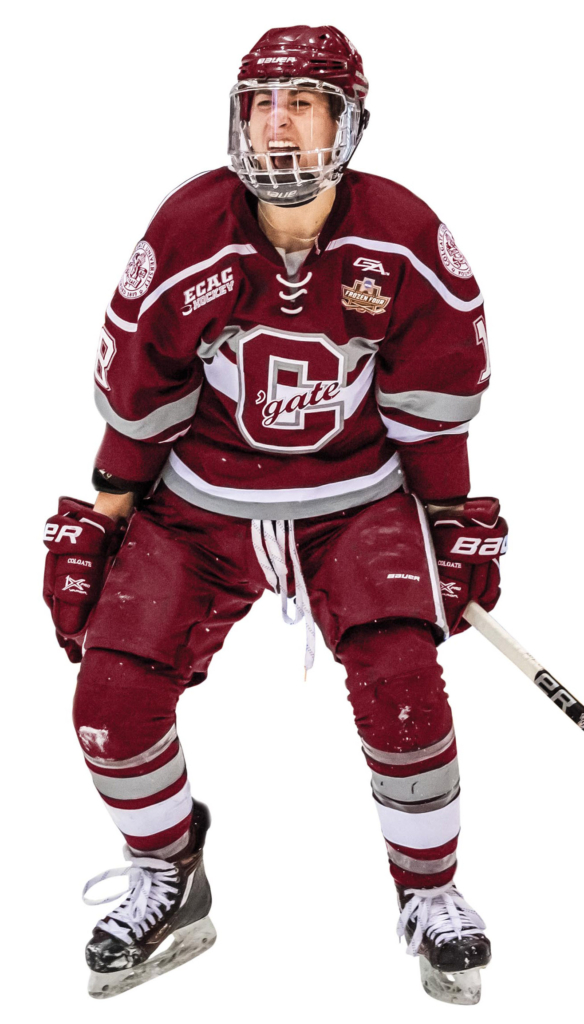
Staying hydrated: I shoot to drink a gallon of water a day.
Pregame meal: chicken, rice, and sides like broccoli, asparagus, or other veggies.
Eating on the go: I always bring snacks with me — granola bars, trail mix, fruit, or veggies.
My favorite thing to eat after a game is Lucky Charms cereal as a snack. As a post-game meal, I love steak.
The best advice I’ve received about diet: Food is fuel. What I put into my body is going to either help or hinder my performance. If I do not provide my body with the proper nutrition, I am not going to be able to perform at the high level I want to be able to compete at.
Ryan Krueger ’22
Soccer, forward, #15
Computer science major
Hometown: Wilmette, Ill.
I tend to cook myself breakfast: eggs, Greek yogurt, and a granola bar. Thanks to my mom’s influence, I make sure I have something green for both lunch and dinner.
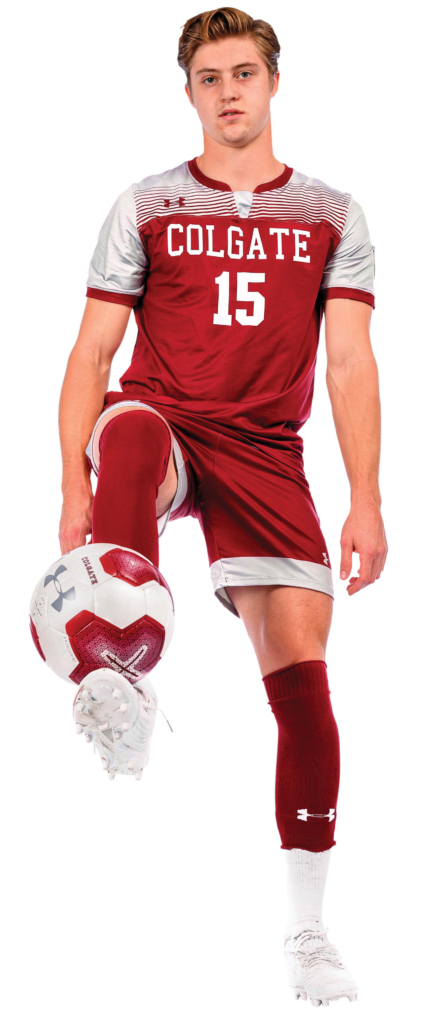
I do not aim for a certain calorie count each day. However, if I recognize I’ve eaten a lot of calories one day, I tend to reel it back the next — and vice versa. I track my weight on a weekly basis.
I have a water bottle on me at all times. Starting three days before a game, I drink one to two Bodyarmors per day. I like to consume a lot of electrolytes in the lead-up to games with consistent water intake.
The night before a game: I make sure I eat a ton of carbs. This started in high school with carb-fests, in which we would devour pounds of pasta. Knowing I will burn off most of what I eat, I like to stuff myself. With the combination of a good rest, in the morning, I feel ready and energized.
Pregame meals are a tradition for the men’s soccer team. You can always find us at Rusch’s eating chicken, rice, salad, and those delectable rolls.
Favorite thing to eat after a game: fruit. I usually pair either strawberries, raspberries, bananas, apples, or mango with some source of protein.
The best advice I’ve received about diet: the importance of sleep. Getting the recommended hours of sleep not only helps brain and physical function, but also helps rebuild your body with the good food choices you make during the day.